
Published: November 9, 2025
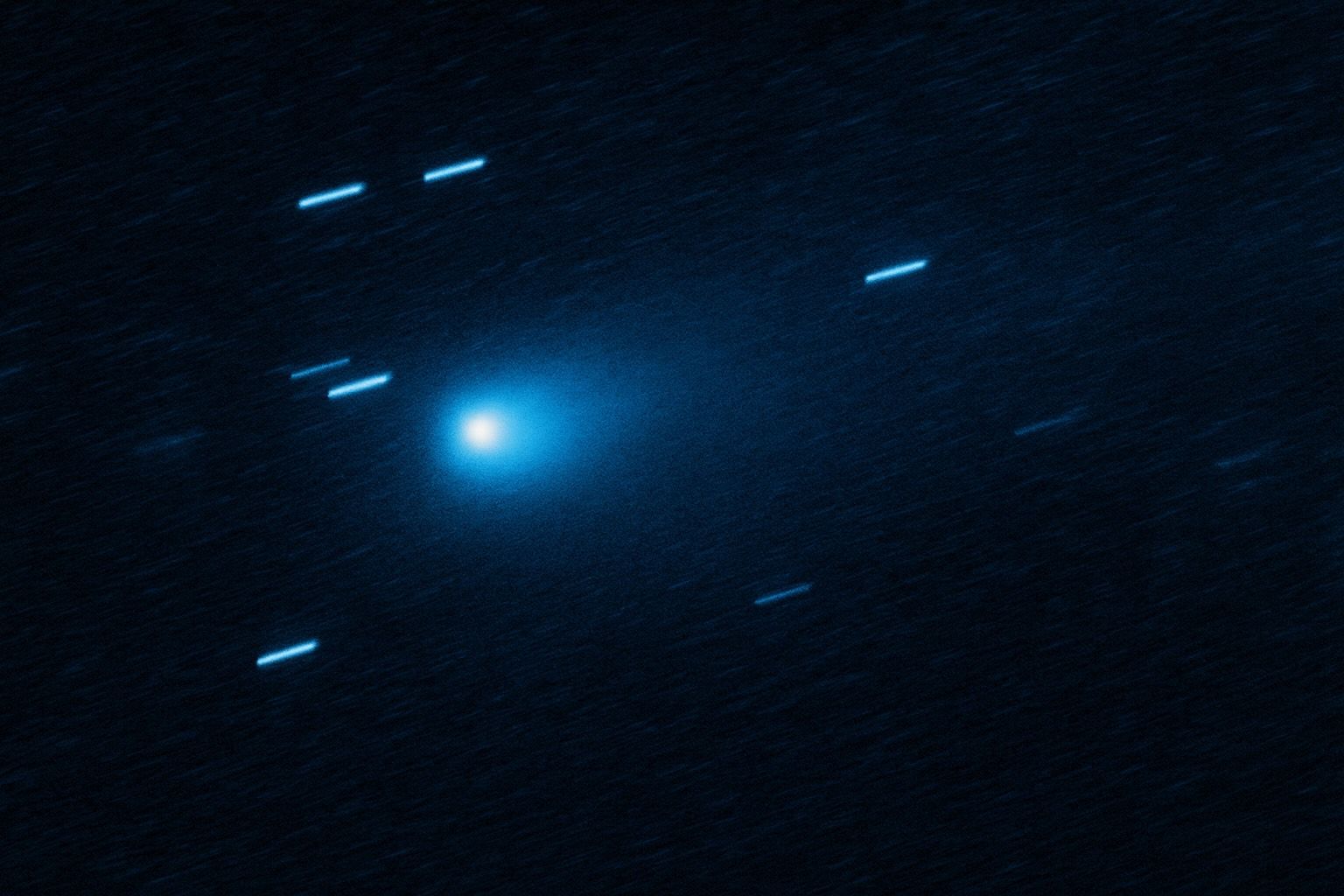
Comet 3I/ATLAS (C/2025 N1) — only the third confirmed interstellar object to sweep through our solar system — has reemerged from behind the sun and is sliding into the predawn sky this week. Fresh spacecraft imagery, a flurry of social media claims about its “missing tail,” and ongoing questions about color changes have made it the most watched rock‑ice visitor of the season. Here’s what’s new today, what’s reliable, and how to see it yourself. Space
Key updates on Nov. 9
- Back in view before sunrise. 3I/ATLAS has returned to amateur‑telescope range after its Oct. 29–30 perihelion. Observers are picking it up in the constellation Virgo low in the eastern predawn sky. Expect a small, fuzzy glow rather than a showy naked‑eye comet.
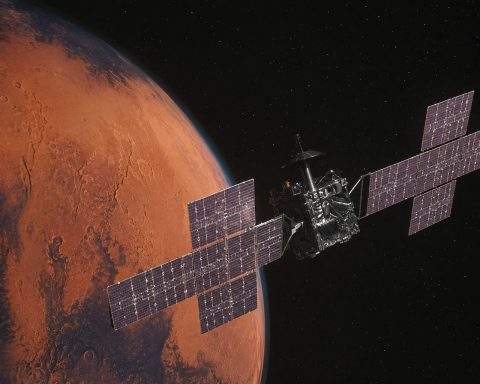
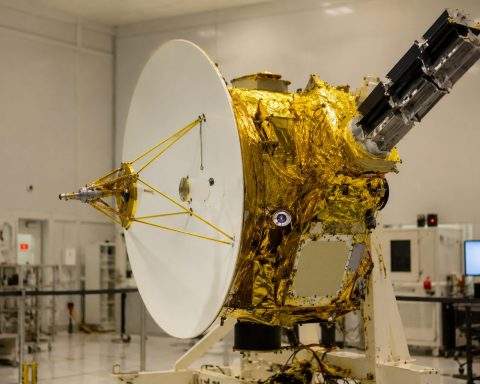
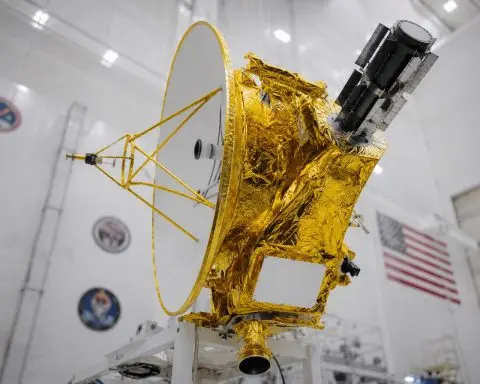
- China’s Tianwen‑1 imaged it near Mars. Following the comet’s close pass of Mars on Oct. 3, China’s Tianwen‑1 orbiter released images confirming the interstellar visitor’s activity, adding valuable data from a vantage point no Earth telescope could match.
- “Where’s the tail?” Depends on the geometry — and it’s there. Viral posts claim the comet has “no tail.” High‑quality post‑perihelion images show the tail can be hard to notice when viewed nearly head‑on, while astrophotographers and observer databases report a faint, complex tail several arcminutes long. In other words: real, but subtle. Live Science+2TheSkyLive+2
- Color‑change chatter is overcooked. Stories about dramatic color shifts (red → blue → green) have circulated for weeks. Specialists caution there’s no sound evidence for a sudden, permanent color flip; any green tint commonly arises from diatomic carbon (C₂) fluorescence in many comets.
- NASA status & data trickle. With a U.S. federal government shutdown still in effect, NASA notes it’s not updating parts of its comet portal, and some data releases (e.g., Mars Reconnaissance Orbiter imaging) remain delayed. That’s slowed official image flow — not science itself.
What astronomers agree on
- It’s interstellar and safe. 3I/ATLAS is on a hyperbolic (unbound) path from beyond the solar system. It poses no threat to Earth; its closest approach to our planet will be about 1.8 AU (~270 million km) in mid‑December.
- Perihelion is past. The comet passed closest to the sun around Oct. 30, 2025 at ~1.4 AU, well inside Mars’ orbit. Post‑perihelion, we watch how its coma and tail evolve while it recedes.
- Ancient, irradiated surface layers. Early James Webb Space Telescope work points to a crust altered by billions of years of cosmic‑ray processing, likely affecting what we see now versus the pristine interior — a reminder that “odd” behavior can still be natural. Live Science
Fact‑check: today’s most shared claims
“It has no tail — must be artificial.”
Not so fast. A nearly head‑on viewing angle can suppress the apparent tail, and multiple independent reports show faint jets and a low‑surface‑brightness tail. The Comet Observers Database (via TheSkyLive) lists a tail length near 8 arcminutes (Nov. 7); veteran imagers also documented multi‑stream structures on Nov. 8. Extraordinary claims (e.g., “alien craft”) require extraordinary evidence — and the present evidence supports cometary activity. TheSkyLive+1
“It just changed color again.”
Experts caution there’s no robust confirmation of dramatic, sustained color changes. Where images do show a greenish hue, that’s consistent with C₂ emissions common in comets. Space+1
“New Japanese image revealed!”
A widely shared post asserts JAXA released a definitive image; no such press item appears on JAXA’s official channels as of publication. Treat screenshots without provenance as unverified. global.jaxa.jp
How to see 3I/ATLAS this week
- When: About 1–2 hours before local sunrise on clear mornings through mid‑November.
- Where: In Virgo, low toward the east at first, climbing higher day by day. A small telescope (15–20 cm / 6–8 in aperture) helps; long‑exposure imaging will show more detail. Space.com has a plain‑English finder overview for November.
- What you’ll see today: A soft, star‑like haze (magnitude ~9–10 recently reported), sometimes with a very faint tail in longer exposures. TheSkyLive lists today’s coordinates, rise/set times and an observed magnitude ~9.4 from recent COBS entries, plus real‑time ephemerides.
Today (Nov. 9) snapshot: Virgo placement; distance ~2.18 AU from Earth (~326 million km); observed mag around 9 in recent logs. Numbers vary with location and sky conditions — use live ephemerides before you head out.
What’s coming next
- Closest to Earth: Around Dec. 19, 2025, still a comfortable ~1.8 AU away — far too faint for the naked eye, but a prime window for telescopes and spectroscopy.
- More spacecraft views: Expect continuing analyses from ESA Mars orbiters (Mars Express, ExoMars TGO) and China’s Tianwen‑1 dataset. Event‑driven observations by various missions (Hubble, Webb, SOHO, Juice, others) are planned as geometry allows.
- Community observing: The Virtual Telescope Project has opened its post‑perihelion observing season and plans a live online session on Nov. 17 — a good chance to see calibrated images and ask questions in real time.
- Precision astrometry push: The International Asteroid Warning Network (IAWN) runs a coordinated 3I/ATLAS astrometry campaign Nov. 27, 2025–Jan. 27, 2026, to refine measurements and techniques for active comets.
Quick background (for new readers)
- Why “3I”? The “I” designates interstellar; this is the third such object after 1I/ʻOumuamua (2017) and 2I/Borisov (2019). Discovery came on July 1, 2025 by the NASA‑funded ATLAS survey. NASA Science
- Distances & safety: NASA reiterates no risk to Earth; minimum distance ≈ 1.8 AU. Closest approach to the sun was ~1.4 AU (just inside Mars’ orbit).
- Why it looks “odd.” Interstellar comets can carry irradiated crusts that suppress gas/dust release until warmed; viewing angle can also hide tails. These natural effects explain much of 3I/ATLAS’s “weirdness” without invoking exotic physics. Live Science+1
Observing tips
- Dark, steady air beats aperture alone. Aim for clear, dry mornings with good seeing.
- Use live charts. Pull a current ephemeris and finder chart the night before you go out. TheSkyLive’s 3I/ATLAS page aggregates COBS observations and live coordinates.
- Log what you see. If you image the comet, share photometry and astrometry with COBS or your local astronomy society — those data help professionals, especially during the IAWN campaign.
Sources & further reading (selected)
- NASA Science: Overview, distances, perihelion timing, safety.
- Space.com: Predawn visibility in Virgo; how to observe.
- TheSkyLive/COBS: Live ephemerides, observed magnitude, tail length.
- LiveScience: Why the tail can appear missing; green C₂ glow explained; JWST crust findings.
- ESA & CNSA/China: Mars‑orbit vantage observations; Tianwen‑1 imagery.
- Virtual Telescope Project: Post‑perihelion images; Nov. 17 live session.
- IAWN: Coordinated astrometry campaign details.
- NASA Shutdown Notice: Why some U.S. mission images are delayed.
Bottom line for Nov. 9, 2025
3I/ATLAS is behaving like a faint, active comet that’s tricky to image head‑on in the morning sky. There’s no credible evidence of artificial origin; do expect more refined imagery and spectra in the coming days as viewing geometry improves and data pipelines unclog. For the next week, set that alarm early, point your scope toward Virgo, and use a live chart — the interstellar visitor won’t be back.
Editorial note: This article emphasizes verified agency releases, peer‑reviewed analyses and established observing networks. Sensational claims circulating on social media are treated as unverified unless supported by primary sources.
Related articles: Space Exploration