
CoreWeave, Inc. (NASDAQ: CRWV) has become one of the most watched—and most debated—AI infrastructure stocks of 2025. As of December 21, 2025 (a Sunday, with U.S. markets closed), CoreWeave shares are sitting near $83, after a sharp late-week rebound that followed weeks of volatility and “AI bubble” hand-wringing across Wall Street.
The timing matters: the stock’s latest surge didn’t come from a single earnings print. Instead, it arrived at the intersection of (1) new/renewed bullish coverage from Wall Street, (2) fresh credibility signals from government and NVIDIA, and (3) investor anxiety about leverage, customer concentration, and data-center execution risk—the “boring” stuff that still moves markets.
Below is a full roundup of the most current news, forecasts, and analyses available as of 21.12.2025, plus what investors are watching next.
CoreWeave stock price today: where CRWV stands on December 21, 2025
With markets closed on Dec. 21, the most recent tradable snapshot shows CoreWeave around $83 per share.
That price level captures the core paradox of CRWV:
- The stock is still up substantially since its March 2025 IPO, according to multiple recent market write-ups.
- But it’s also far below its mid-2025 highs, after a steep drawdown that’s become a lightning rod for “AI infrastructure is overbuilt” narratives. Barron’s+1
This “rocket ship with a turbulence problem” profile is exactly why CoreWeave is showing up in both bullish “next big AI winner” pieces and bearish “debt-fueled bubble” warnings.
What’s moving CRWV right now: Citi’s “Buy” (with a warning label)
The immediate catalyst for the late-week bounce was Citigroup resuming coverage with a Buy rating—paired with a “High Risk” designation and a lower target than Citi had previously carried. Barron’s+1
MarketBeat’s aggregation of analyst actions shows Citi’s most recent move as a price-target cut from $192 to $135, still implying meaningful upside from the ~$80s, but with much more explicit risk framing.
At nearly the same time, other analysts have been pulling in the opposite direction—tempering expectations as sector sentiment cooled:
- MarketBeat lists Mizuho with a $92 target (notably closer to where the stock is trading), reflecting a more cautious stance on near-term execution.
- Recent trading-week commentary has also highlighted customer concentration, capital intensity, and competition as persistent overhangs.
The result: the market got a tradable “reason” to bid CRWV up—while still keeping the debate alive.
The December 2025 news cycle: three developments investors are reacting to
1) CoreWeave joins the U.S. Department of Energy’s Genesis Mission
On December 18, 2025, the U.S. Department of Energy announced collaboration agreements with 24 organizations to advance its Genesis Mission, an AI-driven scientific research initiative. CoreWeave is explicitly listed among the participating organizations.
CoreWeave also issued its own announcement the same day, saying it plans to make its purpose-built AI cloud platform available for advanced scientific workloads—and tying the move to its growing public-sector push, including CoreWeave Federal and preparation for requirements such as FedRAMP.
Reuters’ reporting on the DOE agreements underscores the scale and the company it keeps in this initiative (major cloud and chip players, plus frontier model builders).
Why the market cares: Government work won’t “replace OpenAI overnight,” but it can:
- broaden the customer mix,
- improve credibility with enterprise buyers,
- and support a narrative of CoreWeave as infrastructure-grade, not just “hot AI trade.”
2) CoreWeave claims a performance milestone: first NVIDIA GB200 Exemplar Cloud
On December 19, 2025, CoreWeave published a technical blog stating it became the first cloud provider named an NVIDIA Exemplar Cloud for training workloads on NVIDIA GB200 (Grace Blackwell) systems, and that it exceeded NVIDIA reference performance targets in several benchmark test cases.
The post emphasizes standardized benchmarking and reproducibility—exactly the kinds of proof points that matter when AI labs are spending hundreds of millions on training runs where small efficiency gains can translate to real dollars.
Why the market cares: If CoreWeave can credibly position itself as “best-in-class GPU cloud,” it supports pricing power and retention—two things investors demand when a company is spending at data-center scale.
3) The financing headline: $2.25B convertible notes (and the “capital intensity” debate)
CoreWeave’s December financing is impossible to ignore. The company announced a $2.25 billion upsized private offering of 1.75% convertible senior notes due 2031, with an initial conversion price of about $107.80 per share (per the company’s release).
This followed the prior day’s announcement of an intended $2 billion convertible notes offering.
Why the market cares: This is the cleanest, simplest version of the CoreWeave bull/bear fight.
- Bulls see: “Cheap-ish capital helps build capacity into a massive backlog.”
- Bears see: “More funding rounds = more dilution/complexity, and interest + execution risk don’t vanish.”
CoreWeave’s fundamentals: explosive demand, heavy debt, and a massive backlog
CoreWeave’s most recent official financial snapshot (as of Dec. 21) is its Q3 2025 results (quarter ended Sept. 30, 2025). Here are the highlights the market keeps circling:
- Revenue:$1.365B (up from ~$584M year-over-year) CoreWeave
- Revenue backlog:$55.6B as of Sept. 30, 2025 CoreWeave
- Net loss:$110.1M for the quarter CoreWeave
- Net interest expense:$310.6M for the quarter (a number that explains why GAAP profitability remains elusive despite rapid revenue growth) CoreWeave+1
CoreWeave also highlighted several very large multi-year commercial commitments, including:
- an “up to” ~$14.2B multi-year deal with Meta, and
- an expanded OpenAI partnership described as bringing total commitments “up to” ~$22.4B. CoreWeave
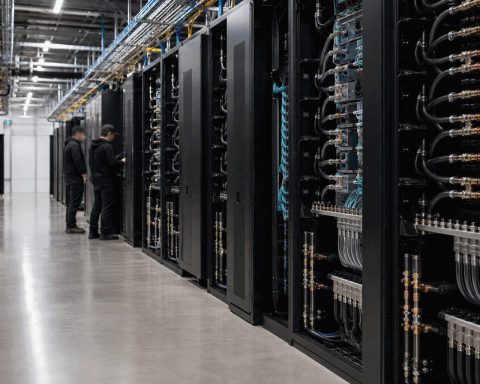
On the infrastructure side, the company described scaling progress in power capacity—active power and contracted power figures that underscore how “industrial” this business really is. CoreWeave
Analyst forecasts: what Wall Street thinks CRWV could be worth in 2026
Consensus targets for CoreWeave are… wide. That’s normal for a newly public, hyper-growth, capital-intensive company with a short trading history and a fast-changing competitive landscape.
MarketBeat’s compilation (as of the latest refresh visible on Dec. 21) shows:
- Consensus rating:Hold
- Average 12-month price target:$127.70
- High target:$200
- Low target:$32 MarketBeat
That spread tells you more than the average does: there is no stable agreement yet on whether CoreWeave becomes a durable “picks-and-shovels” AI utility—or a cautionary tale about leverage and timing.
The bear case: AI bubble fears, execution risk, and leverage anxiety
CoreWeave sits near the center of a broader market worry: the AI buildout is real, but the financing and timelines might be fantasy.
Recent market coverage has tied CoreWeave’s selloff to exactly these themes:
- AI stocks sliding on bubble concerns and unease about debt-financed infrastructure expansion across the sector AP News+1
- Company-specific concerns including data center construction delays (notably tied in reporting to Texas buildouts) and how those delays ripple into major customer deployments Wall Street Journal
A longer-form analysis in The Atlantic goes even harder on the structural risk argument—describing complex, interconnected financing arrangements across the AI supply chain, and emphasizing CoreWeave’s dependence on large customers and heavy borrowing to fund buildout.
Even some bullish-leaning commentary hits the same caution notes: the business can show strong operating metrics, but the financial story hinges on execution plus cost of capital staying manageable.
The bull case: “essential cloud for AI,” proof-of-performance, and public-sector expansion
On the optimistic side, the argument for CRWV is not subtle:
- Demand is outsized, evidenced by the backlog figure and multi-year commitments.
- The company is trying to differentiate on performance and reliability, not just “renting GPUs,” and the NVIDIA Exemplar Cloud claim is designed to be exactly that kind of proof. coreweave.com
- The DOE Genesis Mission participation adds a “serious institution” halo and fits into CoreWeave’s stated push into federal workloads. CoreWeave+1
If you want the “model” behind the bullish math, it’s basically:
- convert backlog into realized revenue faster than costs grow,
- keep utilization high,
- prevent downtime and build delays,
- and avoid funding shocks (rates/credit spreads) that make growth prohibitively expensive.
That’s not a meme-stock story. It’s an execution story—with a lot of steel, concrete, power contracts, and GPU supply chains behind it.
What to watch next: the 2026 checklist for CoreWeave investors
As of Dec. 21, 2025, the market’s “next questions” are fairly concrete:
- Data-center delivery cadence: Are new sites coming online on schedule, or do delays keep slipping revenue recognition and spooking investors? Wall Street Journal+1
- Financing and dilution: After the convertible notes deal, what’s the next funding step—and what does it do to per-share outcomes? CoreWeave+1
- Interest burden vs. operating momentum: Q3 showed strong revenue but very heavy interest expense; does that gap narrow in 2026? CoreWeave+1
- Customer concentration and diversification: DOE/public sector is one route; additional hyperscaler/enterprise wins are another.
- Performance leadership on next-gen NVIDIA platforms: If the GB200 “Exemplar Cloud” positioning holds up in real customer workloads, it could become a durable differentiator. coreweave.com
Bottom line on CoreWeave stock on 21.12.2025
CoreWeave (CRWV) is trading like a company that’s trying to industrialize the AI revolution in real time—while the market alternates between “this is the future” and “this feels like 2000 (or 2008).”
As of December 21, 2025, the latest news flow tilts toward credibility and momentum (Citi’s resumed coverage, DOE Genesis Mission participation, NVIDIA GB200 performance positioning), but the underlying debate hasn’t changed: can CoreWeave scale fast enough to justify its valuation without letting debt, dilution, delays, or customer concentration turn the story sour? The Atlantic+4MarketBeat+4
Related articles: NASDAQ:CRWV