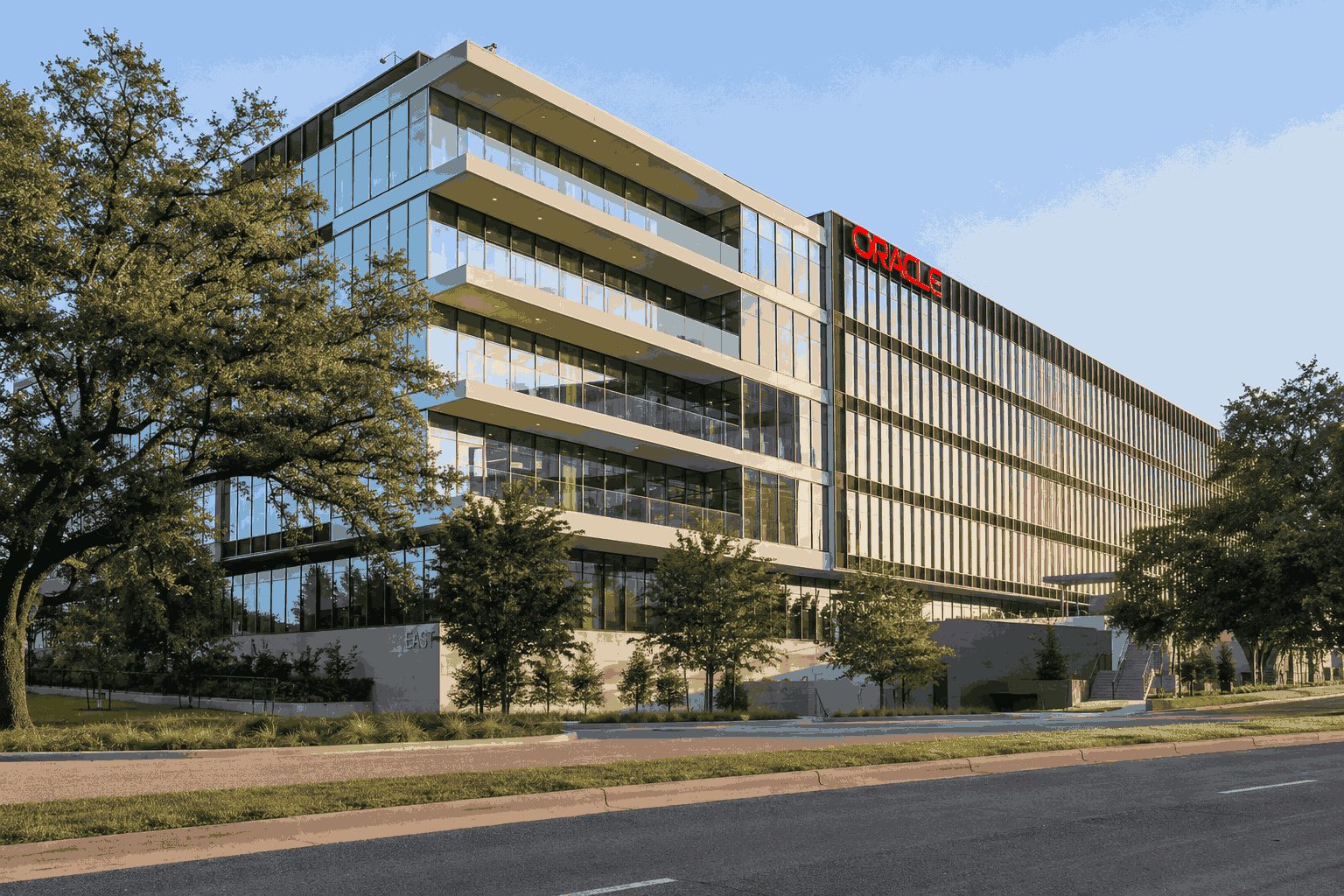

AUSTIN, August 12, 2026, 08:10 EDT — Oracle Corporation NYSE:ORCL stock gained 1.8% in premarket trade Wednesday, recouping some losses from Tuesday’s 3.7% drop. The recovery came after reports said Oracle plans new layoffs this month.
The planned reductions are expected ahead of the beginning of Oracle’s fiscal second quarter on September 1, the report said. Managers have received instructions to select employees, the report added. Certain teams may see cuts in the double-digit percentage range, but the overall number across the company was not revealed. Oracle did not respond to a request for comment.
The investor concern extends beyond payroll. Oracle increased revenue per employee by roughly 35% over the past year. However, its investment in AI resulted in $55.7 billion in capital expenditures, pushing free cash flow down to negative $23.7 billion.
| ORCL market snapshot | Price | Move |
|---|---|---|
| Tuesday closing price | $145.48 | -3.69% |
| Wednesday premarket, around 08:10 EDT | $148.15 | +1.84% |
| 52-week span | $114.50–$345.72 | — |
At the end of May, Oracle employed 141,000 people, 21,000 fewer than the prior year, or a 13% reduction. Employment in the United States dropped 16%, with international workforce numbers down 12%.
| Workforce productivity | FY2025 | FY2026 | Change |
|---|---|---|---|
| Employees | 162,000 | 141,000 | -13.0% |
| Revenue | $57.4 billion | $67.4 billion | +17.4% |
| Revenue per employee | $354,000 | $478,000 | +34.8% |
The productivity increase is significant, indicating that Oracle has the ability to boost sales even as it trims its workforce. If the reductions remain targeted, the latest report could help protect profit margins.
The funding gap remains. Operating cash flow for fiscal 2026 was $32.0 billion, while free cash flow was negative $23.7 billion. Capital expenditures accounted for roughly 83% of yearly revenue.
| AI funding measure | Amount | Investor reading |
|---|---|---|
| Operating cash flow, FY2026 | $32.0 billion | Highest inflow on record |
| Capital spending, FY2026 | $55.7 billion | Roughly 83% of total revenue |
| Free cash flow, FY2026 | -$23.7 billion | Shortfall in funding |
| Expected FY2027 debt and equity | About $40 billion | Includes $20 billion at-the-market equity program |
| Remaining performance obligations | $638 billion | Approximately 9.5-fold FY2026 revenue |
Last year, Oracle secured $43 billion in debt funding and $5 billion in equity. For this fiscal year, the company anticipates raising an additional $40 billion. This includes a $20 billion at-the-market equity initiative, which has the potential to dilute the holdings of current shareholders.
The backlog has reached $638 billion, a surge of 363%. Oracle reported that $75 billion in AI contracts are structured with hardware that is either prepaid or supplied by customers, easing the capital burden on Oracle.
Oracle reported a 77% increase in cloud infrastructure revenue for fiscal 2026. The company is projecting revenue of $90 billion for fiscal 2027. The challenge continues to be translating signed commitments into billings and cash flow.
| Analyst | Firm | Rating | Target | Date |
|---|---|---|---|---|
| Karl Keirstead | UBS | Buy | $245 | Aug. 5 |
| Tal Liani | BofA | Buy | $240 | Aug. 3 |
| John Difucci | Guggenheim | Buy | $400 | July 22 |
| Bhavtosh Vajpayee | CLSA | Hold | $145 | July 20 |
Opinions on Wall Street are divided over financing pressures. CLSA’s Bhavtosh Vajpayee initiated coverage with a Hold and a $145 price target, pointing to AI growth driven by debt. DA Davidson’s Gil Luria contends that “the market is currently assigning the OpenAI relationship a negative value.” CLSA report; DA Davidson report
Latest expense figures indicate the effects of payroll decisions. Sales and marketing expenses dropped 10% in the fourth quarter. Research expenditures declined 2%. Restructuring and related costs increased to $823 million, compared with $83 million previously.
The upcoming hard catalyst is the fiscal first-quarter earnings report. Investors are set to measure revenue growth against Oracle’s guidance of 27%–29%. Attention will also focus on both the progress of the equity program and levels of capital expenditure.
Risks: Oracle has not verified the reported layoffs, and team-specific percentages do not reflect overall company figures. Delays in execution, increased borrowing expenses, concentration of customers, and new equity issuance might eclipse the gains from payroll reductions. Accelerated cloud migration would shift the balance positively.