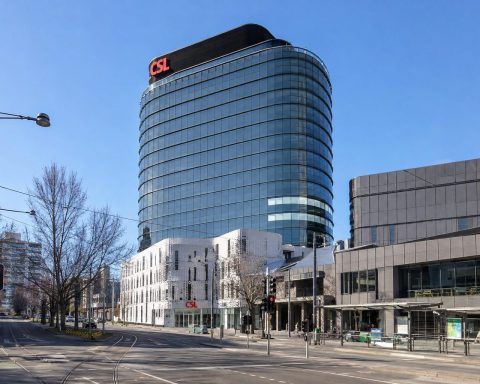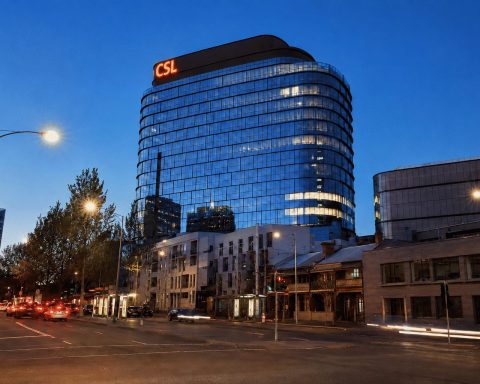

CSL Limited ASX:CSL heads into the final stretch of 2025 with its share price still under pressure—but with a growing stack of “things that matter” piling up beneath the surface: a sizeable on‑market buyback steadily absorbing stock, a major US manufacturing investment designed to reinforce its plasma-therapy moat, and a high-profile strategic reset that’s trying to simplify a complex, three‑engine biotech into something the market can price with less guesswork.
As of the most recent trading day (Friday, 19 December 2025), CSL shares closed at A$175.08, after a volatile month that saw the stock slide from the mid‑A$180s toward the low‑A$170s before stabilising. Over the past year, CSL is down about 36.7%, with a reported 52‑week range of A$168.00 to A$290.32—a dramatic re‑rating for one of Australia’s flagship healthcare names.
So what’s driving CSL stock now—and what do forecasts and analyst models suggest from here?
Why CSL stock has been volatile in 2025
CSL’s valuation debate in late 2025 can be boiled down to a tug‑of‑war between:
- A resilient core (CSL Behring plasma-derived therapies; plus growth options like gene therapy and immunology), and
- A noisy drag (CSL Seqirus vaccines uncertainty—especially US flu vaccination rates—plus portfolio complexity and “strategy discount”).
That “strategy discount” became more explicit after CSL’s October AGM update, where the company revised down its FY2026 outlook and pushed out the timing of its planned CSL Seqirus separation.
The October reset: FY26 guidance cut and Seqirus separation delayed
In its AGM materials (released 28 October 2025), CSL said it was revising FY2026 revenue growth to ~2–3% (constant currency), down from ~4–5%, and NPATA growth to ~4–7% (excluding restructuring costs), down from ~7–10%.
Management flagged several pressure points behind the change, including:
- Further decline in US influenza vaccination rates affecting Seqirus, and
- Albumin in China impacted by government cost-containment measures, which CSL expected to be largely a first‑half FY26 issue while it implements mitigations.
On the long-discussed CSL Seqirus demerger, CSL’s AGM update said the demerger is now expected to occur when market conditions support maximising shareholder value, after US vaccination rates declined faster than anticipated. CSL also indicated Seqirus would be operationally separated within CSL in the meantime.
Independent coverage of the AGM story emphasised the same core driver: US vaccine-market volatility and weaker vaccination rates undermining confidence in near‑term Seqirus earnings and the timing of any value‑unlock transaction.
The buyback: a steady, price-insensitive bid under CSL shares
While the vaccine debate has dominated sentiment, CSL’s capital return program has quietly become one of the most tangible moving parts in the CSL stock story.
CSL’s on‑market buyback is structured as a multi‑year program starting with up to A$750 million in FY26.
In a daily buy-back notification dated 18 December 2025, CSL reported:
- 2,955,365 shares bought back prior to the previous day
- 65,217 shares bought back on the previous day
- Total consideration prior to the previous day of ~A$577.0 million, and ~A$11.37 million on the prior day (as disclosed in the notice) CSL Limited
Mechanically, buybacks don’t “fix” sentiment. But they can matter in three ways:
- Signal: management is willing to allocate capital at current prices.
- Math: fewer shares can lift earnings per share over time (all else equal).
- Microstructure: a consistent buyer can reduce downside air pockets during bad headlines.
Investors should still treat buybacks as a supporting actor, not the main character. The main character remains: can CSL sustain growth and rebuild margins while vaccine volatility persists?
The US expansion bet: $1.5 billion to deepen CSL’s plasma moat
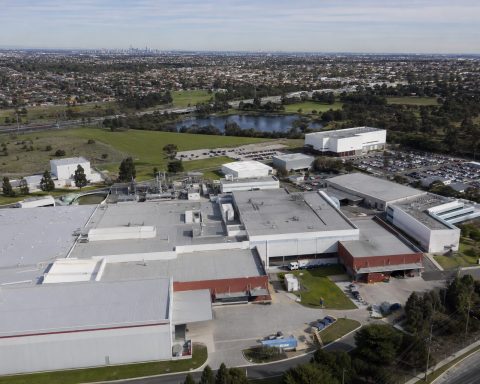
On 18 November 2025, Reuters reported CSL plans to invest $1.5 billion in the US over five years to expand manufacturing for plasma-derived therapies—strengthening domestic capability and supply-chain security in CSL’s largest and most strategically important market.
CSL’s logic is straightforward: plasma-derived therapies are at the heart of CSL Behring, and scale plus manufacturing reliability are major competitive advantages. Reuters also noted CSL had invested more than $3 billion in US operations since 2018 (per CSL’s comments).
For CSL stock, the bullish interpretation is: capital is going where CSL’s moat is deepest. The bearish interpretation is: more capex raises the bar for execution, especially during a restructuring cycle.
ANDEMBRY: a product catalyst that keeps showing up in CSL’s narrative
A second “core business strength” theme is CSL’s newer product flow—particularly in immunology.
CSL announced in June 2025 that the US FDA approved ANDEMBRY for prophylaxis to prevent hereditary angioedema (HAE) attacks, positioning it as:
- the first and only prophylactic treatment targeting factor XIIa,
- offering once-monthly dosing from the start, and
- showing very large attack reductions in the Phase 3 VANGUARD program (as described in CSL’s release).
At the October AGM update, CSL also highlighted ANDEMBRY’s launch trajectory as ahead of plan (alongside “Ig fundamentals strong” messaging). CSL Limited+1
No single product is likely to erase Seqirus uncertainty overnight. But ANDEMBRY matters because it’s a credible example of CSL’s broader “innovation engine” working—exactly the kind of thing that can eventually compress the strategy discount if execution is consistent.
CSL’s strategic transformation: cost savings, restructuring, and simplification
CSL’s August 2025 “major strategic initiatives” package framed the company’s plan as a simplification and productivity push—paired with capital returns.
Key elements disclosed by CSL included:
- Net headcount reduction up to ~15%,
- One‑off restructuring costs (pre‑tax) of roughly $700–$770 million, and
- Expected annualised cost savings of ~$500–$550 million progressively over the following years.
Reuters coverage at the time tied the strategy to a sharper message: CSL would cut up to ~3,000 jobs and pursue a Seqirus separation amid volatility, while leaning into its plasma therapies strength.
This matters for CSL stock because restructures are valuation paradoxes:
- They can create long-term margin upside,
- while simultaneously reducing near-term earnings quality and confidence if execution gets messy.
What analysts forecast for CSL stock in late 2025
Despite the drawdown, much of the sell-side still sits in “recovery” mode on CSL—arguing the share price now reflects overly pessimistic assumptions about vaccines and margin rebuild timing.
Here’s what widely followed consensus aggregators are showing:
TipRanks: Moderate Buy, wide dispersion
TipRanks reports:
- Average price target ~A$237.43
- High ~A$283.45, low ~A$188.30
- Consensus described as Moderate Buy (based on the mix of buy/hold ratings in its dataset).
Investing.com: “Buy” consensus with similar mean target
Investing.com’s consensus page shows:
- 16 analysts in its sample,
- consensus rating “Buy” (12 buy, 4 hold, 0 sell),
- average 12‑month target around A$237.43 (with high and low estimates also listed).
CMC Markets compilation (via Webull): higher average target cited
A Webull item citing CMC Markets suggests:
- Average target ~A$245.55
- High ~A$284.43, low ~A$195.55
- with the article describing a majority of ratings as positive.
Broker note example: Canaccord turns bullish post‑AGM selloff
In an October 2025 broker move captured by Investing.com, Canaccord Genuity upgraded CSL to Buy (from Hold) and set a target of A$225 (down slightly from A$230), describing the post‑AGM reaction as an exaggerated response and pointing to ANDEMBRY as a potential valuation “circuit breaker.” Investing.com
Valuation framing: “Undervalued, but prove it”
NABtrade’s research commentary (which references a Morningstar-style fair value framework) said it cut its fair value estimate for CSL to A$295, while still arguing shares look undervalued if plasma efficiency initiatives flow through and Seqirus stabilisation simply takes longer than hoped.
How to read this as an investor: the direction of consensus is supportive, but the dispersion is the story. When targets range widely, it usually means analysts disagree less about whether CSL is a quality company and more about how long vaccine headwinds and restructuring noise last.
The bull case for CSL Limited stock from here
The optimistic CSL stock thesis (the one you’ll hear from patient long-term holders) typically rests on five pillars:
- Plasma therapies remain structurally in demand. CSL Behring’s scale, collection network, and manufacturing footprint are hard to replicate quickly.
- Margin rebuild is a real lever if collection costs and operational efficiency improvements continue to flow through, supported by CSL’s transformation program.
- ANDEMBRY and newer therapies provide additional growth vectors beyond “classic” immunoglobulin dependence. CSL Limited+1
- Buybacks support compounding and can amplify EPS recovery once growth normalises.
- Seqirus doesn’t have to be great—it mainly has to stop surprising to the downside. A calmer vaccines outlook could remove a meaningful chunk of the strategy discount.
The bear case and key risks investors are watching
The bearish CSL stock thesis is less about “CSL is broken” and more about “CSL may stay cheap longer than you expect.” Key risks include:
- US flu vaccination uncertainty continuing into FY26 and beyond, keeping Seqirus volatile and complicating any separation transaction.
- China albumin pricing / policy pressure, which CSL has flagged as a near-term headwind (even if management expects it to be concentrated in 1H FY26).
- Execution risk on restructuring, where cost savings can slip, morale can get weird, and operational complexity can spike before it simplifies.
- Industrial relations noise, including reports of protected strike action at CSL Behring tied to pay and conditions disputes.
- Public-sector contract scrutiny, including reporting around audit criticism of vaccine-related procurement value-for-money processes involving CSL’s vaccine arm.
None of these risks automatically changes CSL’s long-term science or moat. But they can absolutely change the timeline on which the stock gets re‑rated.
CSL stock watchlist: what matters next
From a “what could move the stock” perspective, CSL investors are likely to keep a close eye on:
- Further updates to FY26 guidance (especially anything implying Seqirus stabilisation is happening earlier—or later—than expected).
- Evidence of margin recovery in the plasma business, and whether transformation savings show up cleanly in results.
- Buyback pace versus price, because it’s one of the few “known” variables investors can track between results. CSL Limited
- Progress on US investment execution, since CSL is explicitly reinvesting to reinforce its US manufacturing backbone.
- ANDEMBRY commercial traction, as a litmus test for CSL’s ability to convert R&D into meaningful revenue streams during a portfolio reset.
Bottom line on CSL Limited stock as of 21 December 2025
CSL stock enters late December 2025 in an unusual state for a historically “premium multiple” healthcare compounder: cheap-looking on many models, yet demanding evidence that vaccines volatility won’t keep flattening the narrative.
The market has already heard the hard parts—guidance down, Seqirus separation delayed, sentiment bruised. The next leg for CSL shares likely depends less on new promises and more on quarterly proof: steady plasma performance, measurable margin rebuild, disciplined capital returns, and a vaccine story that stops producing unpleasant surprises.
If CSL delivers those pieces, the gap between today’s share price and the cluster of analyst targets (mostly in the A$225–A$245+ zone, depending on the dataset) starts to look less like optimism and more like a plausible re‑rating path.
Related articles: ASX:CSL