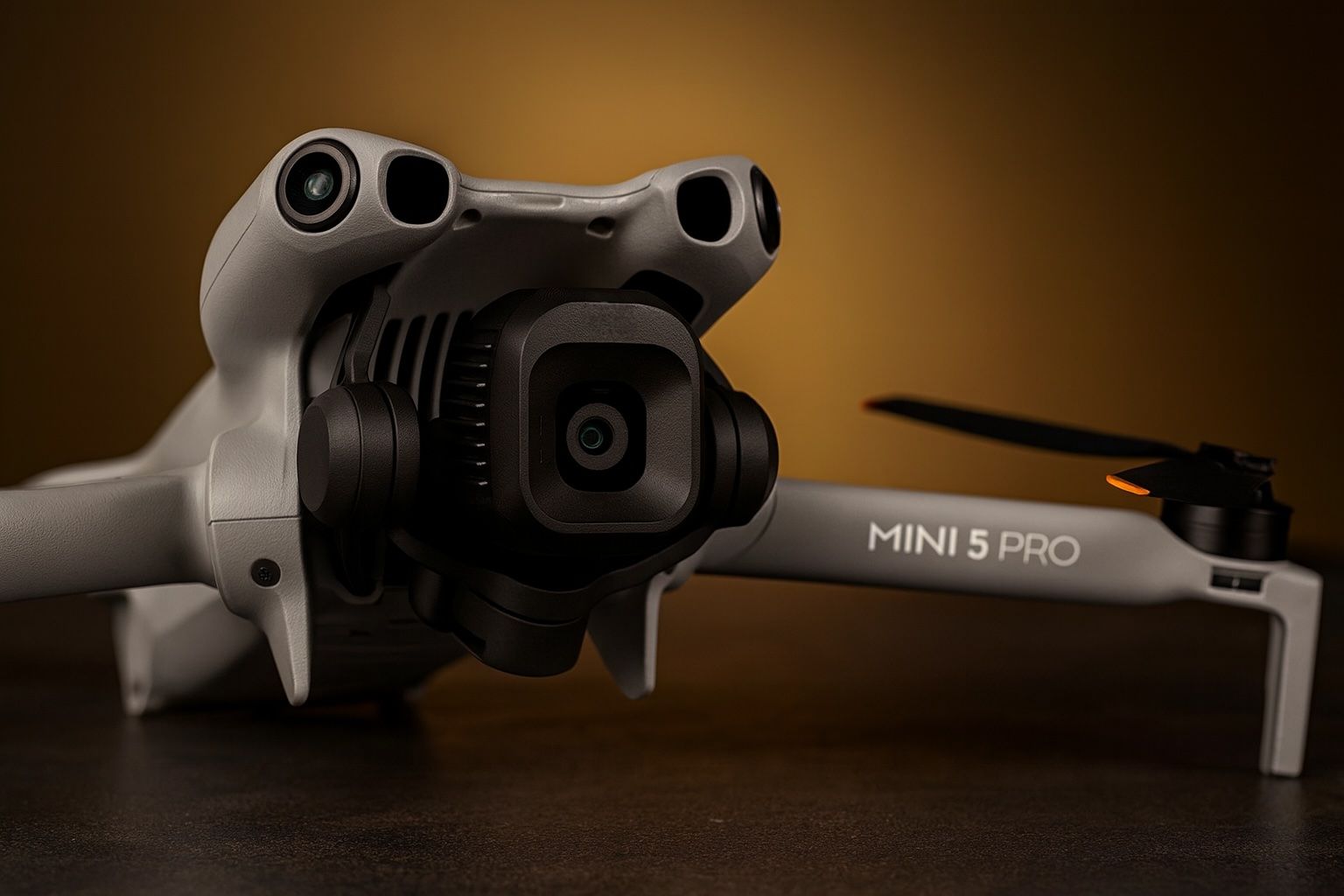

- Powerful new mini drone: DJI’s Mini 5 Pro, launched Sept 2025, packs a 50 MP 1‑inch camera, 4K/120 video, vertical (portrait) shooting and omnidirectional sensing into a sub‑palm‑size body netnewsledger.com netnewsledger.com.
- Borderline weight: It’s advertised at 249.9 g, but a ±4 g manufacturing tolerance means some units actually weigh ~252–254 g netnewsledger.com. That few‑grams variance can push it past the 250 g cutoff that separates “micro” drones from heavier, regulated classes netnewsledger.com dcrainmaker.com.
- Canada’s response: Transport Canada has clarified that the Mini 5 Pro will keep its microdrone status (no special certificate or registration) so long as pilots use the standard DJI battery dronexl.co netnewsledger.com. Inspector Mike Tomm explained that with the stock battery, “the +/- 4 g issue [is] not considered to be a big issue” and “Transport Canada WILL recognize the Mini 5 as a micro RPA” netnewsledger.com.
- EU/EASA stance: The European Aviation Safety Agency (EASA) announced the Mini 5 Pro retains its C0 class (sub-250 g) despite unit-to-unit weight variance dronexl.co. EASA engineer Natale Di Rubbo noted that the certification standard allows a ±3% tolerance on the declared take-off mass dronexl.co. In practice, DJI’s 249.9 g spec can legally range up to about 256.9 g, so typical 252–253 g Mini 5 Pro drones remain compliant dronexl.co netnewsledger.com.
- U.S. law is strict: The FAA enforces a hard 250 g cutoff. Any drone weighing ≥250 g (even by a few grams) must be registered dronexl.co. As FAA rules remind operators, they “must check the drone’s takeoff weight to ensure it remains at or below 0.55 pounds (249.48 g)” techradar.com. Unlike EASA, the FAA “does not allow small weight differences” techradar.com. This means a Mini 5 Pro that tips over 250 g is treated just like a heavier model – with all registration, Remote ID and (if flown commercially) Part 107 certification requirements.
- UK rules: The UK’s Civil Aviation Authority (CAA) has no weight tolerance either. It warned that “many operators have found their DJI Mini 5 Pro weighs more than 250 g” and confirmed that if a drone has a C0 sticker but weighs more than 250 g, then this takes away the C0 rating techradar.com. (From Jan 2026 the UK will reclassify drones, effectively treating any Mini 5 Pro as Category 1, but until then pilots must heed the strict weight limit.)
- Broader impact: Separately, DJI faces growing U.S. scrutiny. A court recently upheld the Pentagon’s listing of DJI as a “Chinese Military Company” and new law could ban DJI imports by year‑end netnewsledger.com netnewsledger.com. Notably, main rival Autel has exited the consumer drone market this year (dropping its sub‑250 g Nano/Lite lines) techradar.com, leaving DJI virtually unchallenged in the lightweight segment.
Mini 5 Pro: Advanced Features, Pocketable Form
DJI’s Mini 5 Pro is a flagship‑spec ‘mini’ drone. It’s the first in the Mini series with a full 1‑inch CMOS sensor (50 MP stills), much larger than any previous Mini netnewsledger.com. It records 4K video at up to 120 fps (10‑bit HDR), and supports a 225°-tilt gimbal so you can shoot true vertical video without cropping netnewsledger.com. DJI has also added full omnidirectional obstacle sensing and an upgraded ActiveTrack 360° system, bringing flagship-level safety and tracking to the travel‑friendly form factor netnewsledger.com. All of this comes with an advertised flight time of up to 36 minutes, keeping the Mini line both powerful and portable netnewsledger.com netnewsledger.com.
The 250 g Weight Dilemma
What makes the Mini 5 Pro unusual is its weight. DJI labels it as 249.9 g, aiming to squeak under the 250 g limit that many countries use for the easiest drone category. However, DJI also warns of a manufacturing variance of ±4 g, meaning some real units can weigh up to about 253.9 g netnewsledger.com. In practice, depending on hardware differences and chosen battery, the Mini 5 Pro often lands at 252–254 g – effectively nudging it over the “sub-250” line. Drone reviewer Ray “DC Rainmaker” Maker emphasizes the issue: unlike past Mini models, the Mini 5 Pro “weighs more than the 250 g limit applied by the EU, UK, Canada, US…” dcrainmaker.com. In other words, the Mini 5 Pro could end up technically out of compliance on paper, despite the branding.
Split Rulings: Canada vs EU vs US
Regulators have reacted differently to this quirk. In Canada, Transport Canada has been relatively lenient. Officials have confirmed that the Mini 5 Pro still counts as a micro‑drone if flown with the stock battery dronexl.co. Inspector Mike Tomm of TC told pilots that using the “standard OEM batteries” means the “±4 g issue [is] not considered to be a big issue” and the drone “WILL recognize the Mini 5 as a [micro] RPA” netnewsledger.com. In short, Canadian hobbyists can remain in the unregulated sub‑250 g class so long as they don’t swap in any heavier battery.
In Europe, EASA’s new rules explicitly incorporate a tolerance. The agency has confirmed that the Mini 5 Pro retains its C0 class (the sub‑250 g open category) even if the drone weighs 252–253 g dronexl.co. EASA engineer Natale Di Rubbo explains that the certification standards allow a ±3% margin on the declared take-off weight dronexl.co. Since DJI declared 249.9 g, that ±3% means an effective limit of about 257 g. In practice, almost all Mini 5 Pro units fall within this allowance, so they remain in the least restrictive category (A1/C0) under EU law dronexl.co netnewsledger.com.
By contrast, the U.S. FAA has no such leeway. The FAA’s rules treat 250 g as an immutable cutoff: any drone at or above 250 g must be registered, and if used commercially it falls under Part 107 requirements dronexl.co. As TechRadar reports, the FAA explicitly warned that operators “must check the drone’s takeoff weight to ensure it remains at or below 0.55 pounds (249.48 grams)” for the lower (Category 1) operations techradar.com. An FAA spokesperson emphasized there is “no small weight differences” allowed techradar.com. This means a Mini 5 Pro weighing 252 g is legally treated like a heavier drone in the U.S., with all the paperwork (registration and Remote ID) that entails. Even adding something like a propeller guard or extra lights could push an otherwise borderline unit over the limit and into the registered category techradar.com.
The UK CAA has taken a similar zero-tolerance stance (at least until 2026). The CAA admits many Mini 5 Pro users have found their drones above 250 g techradar.com. Under current UK law, there is no weight “buffer” – if a C0-class drone actually weighs more than 250 g, it loses that status techradar.com. UK pilots are told to weigh their complete drone (with any accessories) and follow the rules for the appropriate weight class techradar.com techradar.com. From January 2026, the UK will allow its C1 class drones (up to 900 g) the same “over-people” privileges as C0, so many Mini 5 Pro owners there plan to register it as C1 next year techradar.com.
What Drone Pilots Should Do
The bottom line for pilots is to know your weight. Use a precise scale and include any attachments or extra batteries. If you are in Canada and stick with the factory battery, you can fly as a microdrone (no registration) netnewsledger.com dronexl.co. If you are in the EU/UK, you may choose to self-declare the Mini 5 Pro as C1 (especially when adding the optional extra battery) to preserve the right to fly close to people – this only requires passing the online C1 exam techradar.com. In the U.S., any Mini 5 Pro at or above 250 g is treated as a registered drone. U.S. hobbyists should weigh the unit carefully; if it tips the scale, they must register it and (if flying commercially) hold a Part 107 certificate dronexl.co techradar.com. Also note that FAA Category 1 operations (flying over uninvolved people) require a weight of ≤249.48 g and no exposed props techradar.com, so even the base Mini 5 Pro (249.9 g) would fail that test unless flown with no guards.
In all regions, the wise rule is: check and double-check. Even the manufacturer’s “sub-250 g” label isn’t a guarantee. The CAA bluntly advises pilots that “whatever is attached to the drone must be weighed as well” and if it changes the category, you must follow the correct (stricter) rules techradar.com. Failing to do so could mean fines or worse. (A recent U.S. case underscored the stakes: a pilot who flew a DJI Mini 3 Pro into a firefighting plane was sent to jail and ordered to pay over $150,000 in fines petapixel.com – albeit that incident involved prohibited airspace, not weight.)
The Big Picture
This controversy comes as drones are booming in popularity. Industry analysts project double-digit annual growth (13–20% CAGR) in the consumer‑drone market in coming years netnewsledger.com. Consumers are demanding more capability in tiny packages, which is exactly the trend the Mini 5 Pro embodies. However, DJI’s near-monopoly in the sub-250 g space is now more apparent than ever: even main rival Autel has left the hobbyist market, discontinuing its popular Nano/Lite series in mid‑2025 techradar.com. That leaves DJI dominating this category worldwide – for better or worse.
Meanwhile, DJI is under extra scrutiny in the U.S. beyond just drone rules. In late Sept. 2025 a federal court upheld the U.S. government’s designation of DJI as a “Chinese Military Company,” and the National Defense Authorization Act looming in Dec. 2025 may ban new DJI imports netnewsledger.com netnewsledger.com. For now this doesn’t directly change the Mini 5 Pro’s weight status, but it could affect availability, updates and support for U.S. (and even Canadian) users down the line.
In summary, DJI’s Mini 5 Pro is a remarkable leap for “mini” drones – but its weight puts it in a tricky gray area of international law. Canada and Europe have essentially given pilots a pass if the drone stays under the standard battery weight dronexl.co dronexl.co, while the U.S. and UK insist on rigid cutoffs techradar.com techradar.com. Drone enthusiasts worldwide should be aware of these differences: the same Mini 5 Pro might be ‘license-free’ in Toronto and Berlin, yet require registration in New York or London. As always in drones, the key is compliance – so keep that scale handy and fly safely.
Sources: Regulatory statements from Transport Canada, EASA and the FAA; DJI and industry reports dronexl.co dronexl.co techradar.com netnewsledger.com techradar.com, and expert analyses dronexl.co techradar.com netnewsledger.com. Each point above is backed by the cited sources.
Related articles: Drones