
New York, March 31, 2026, 12:10 EDT.
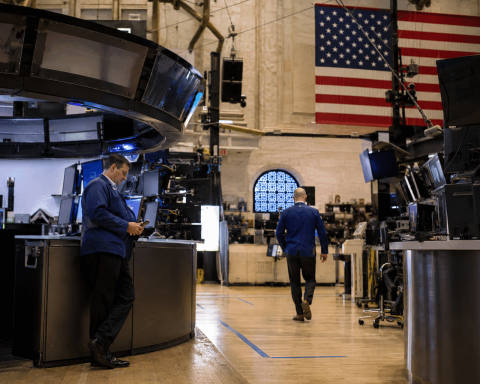
U.S. stocks bounced back Tuesday morning, after the Wall Street Journal said President Donald Trump had indicated to aides he’d end the military operation against Iran, even if the Strait of Hormuz stayed mostly shut. That report hasn’t been independently confirmed. By 10:30 a.m. ET, the Dow Jones Industrial Average was up 555 points, or 1.2%. The S&P 500 added 1.6%, while the Nasdaq jumped 2.1%, recovering from a volatile Monday session.
The rebound is notable—investors spent most of March dumping stocks, rattled by the possibility that the Iran war could choke energy supplies, drive up inflation, and push the Fed to hold rates higher. Still, after Tuesday’s move, both the S&P 500 and Dow remain set for their steepest monthly declines since 2022. The benchmark is also staring down its roughest quarter in four years, while U.S. gas prices have already shot past $4 per gallon.
The Strait of Hormuz—narrow, vital, and the main artery out of the Persian Gulf—funnels close to 20% of global oil and LNG shipments. Hints that Washington might steer clear of deeper military action are jolting markets. The Cboe Volatility Index (VIX), tracking stock market turbulence, dropped almost three points to 27.68, dipping under the 30 mark again. Sevens Report Research’s Tom Essaye said right now, investors are trained on one thing: not getting caught in a wider war.
“The move in markets is reflecting what traders want to see,” said Mark Malek, chief investment officer at Siebert Financial. Oil wasn’t sitting still either. By late morning, the most-traded Brent contract hovered close to $107 a barrel, volatile as ever after sharp swings that have kept Wall Street on edge since the war’s start. Reuters
The tech sector took the lead in the bounce. Shares of Marvell Technology climbed after Nvidia poured $2 billion into the company, while Coreweave surged following news of an $8.5 billion loan to boost its AI infrastructure. Delta Air Lines and Norwegian Cruise Line also gained ground as oil prices pulled back from recent highs, offering a break for companies sensitive to fuel costs. Despite the volatility, energy was still the lone S&P 500 sector set to finish the month in the green.
Still, the quarter finished deep in the red. Both the Dow and Nasdaq wrapped up last week sitting more than 10% off their record highs—a correction by Wall Street’s definition. The S&P 500 lost roughly 7% for the quarter, pressured by a mix of oil volatility, AI spending jitters, and turbulence in private-credit funds. Raymond James strategist Matt Orton flagged higher energy costs as a renewed inflation drag for both the U.S. and global economies.
Markets outside the U.S. sent mixed signals: Saudi Arabia’s main index added 0.7%, Qatar climbed 0.9%. Dubai edged down 0.2% after an Iranian strike on a Kuwaiti tanker loaded with oil just off Dubai’s coast. London’s FTSE 100 jumped 1.6%, while Asian shares lost ground earlier.
The relief rally looks fragile. The strait is still shut, a new tanker attack has highlighted persistent shipping dangers, and a Reuters survey of 38 economists and analysts now puts their Brent 2026 projection at $82.85 a barrel, up sharply from $63.85 back in February—the steepest hike ever recorded in the poll. Stratas Advisors President John Paisie warned Brent could push as high as $190 if the closure drags on another month.
Pain at the pump is back for U.S. drivers—gasoline just topped $4 a gallon nationwide on Monday, a threshold not seen since August 2022 and one that often weighs on household budgets. Raymond James analyst Pavel Molchanov expects “prices to start cooling in the next few weeks,” though he adds a note of caution: a spike in crude could easily push pump prices higher. Reuters
On Tuesday, Trump stirred confusion once more, telling nations dependent on Gulf oil to head to the strait and “just TAKE it.” Defense Secretary Pete Hegseth chimed in, calling for others to help reopen the route. Wall Street’s headache remains unchanged: stocks may catch a brief rally on de-escalation headlines, but it’s oil that’s still calling most of the shots. Reuters
Related articles: NASDAQ:MRVL