Published November 24, 2025
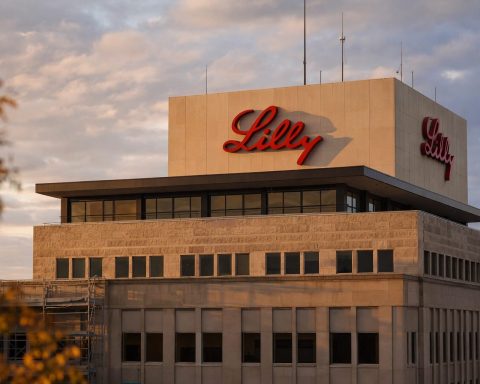
Eli Lilly has done something no other health‑care company has ever achieved: it has joined the $1 trillion market‑capitalization club, a group previously dominated almost entirely by technology giants like Apple, Microsoft and Nvidia.
After briefly crossing the 13‑figure threshold on Friday, Lilly’s stock was still trading around $1,058 per share on Monday, valuing the Indianapolis‑based drugmaker at roughly $1.0 trillion and cementing its status as the first pharmaceutical company in that elite group. Reuters+1
The catalyst is clear: a once‑in‑a‑generation boom in highly effective weight‑loss and diabetes drugs such as Mounjaro and Zepbound, built on the active ingredient tirzepatide, and a rapidly expanding global obesity market.
First health‑care company in the $1 trillion club
Lilly’s milestone on November 21 marked the first time any drugmaker or health‑care company has reached a $1 trillion valuation, putting it alongside a small group of mainly tech names and a handful of financial giants like Berkshire Hathaway. Reuters+1
According to Reuters, Lilly’s shares have surged more than 35% in 2025 and over 75% since the launch of obesity injection Zepbound in late 2023, vastly outperforming the broader U.S. equity market. Reuters BioPharma Dive notes that the stock traded under $100 as recently as 2018, meaning it has more than ten‑bagged in under a decade. BioPharma Dive
On standard valuation metrics, Lilly now sits among the most richly valued large‑cap drugmakers. The stock trades at about 50 times expected earnings over the next 12 months, according to LSEG data cited by Reuters, and roughly 69 times trailing profits, with a market capitalization hovering around $1.0 trillion as of Monday’s open. Reuters+1
By market value, Lilly is now:
- Worth more than Walmart, one of the world’s largest private employers. BioPharma Dive
- Valued at more than double its next‑closest pharma rival, including giants like Johnson & Johnson and Merck. BioPharma Dive
Not bad for a company founded nearly 150 years ago by a Civil War veteran and long considered a solid but unspectacular “Midwestern pharma.”
Mounjaro and Zepbound: Blockbusters behind the boom
The engine of Lilly’s ascent is its metabolic‑health franchise centered on tirzepatide, a drug targeting hormones involved in appetite and blood‑sugar control.
Clinical impact
As summarized by BioPharma Dive and clinical trial data:
- Zepbound (tirzepatide for obesity) has helped patients lose around one‑fifth of their body weight in pivotal trials, a level of weight reduction that far exceeds older obesity drugs. BioPharma Dive
- Mounjaro (tirzepatide for type 2 diabetes) has enabled roughly 4 out of 5 people with uncontrolled blood sugar to bring glucose into a healthy range. BioPharma Dive
These results have turned GLP‑1‑based therapies like tirzepatide into household names and triggered a global scramble for supply.
Sales and revenue mix
The financial impact has been just as dramatic:
- Across the first nine months of 2025, combined Zepbound and Mounjaro sales reached nearly $19 billion, overtaking Merck’s cancer drug Keytruda to become the world’s best‑selling medicine. BioPharma Dive+1
- In the latest reported quarter, Lilly generated about $10.1 billion from its broader obesity and diabetes portfolio, more than half of its $17.6 billion in total revenue. Reuters+1
That growth has allowed Lilly to leapfrog long‑time rivals and cement its status as the dominant player in obesity care, even surpassing early GLP‑1 leader Novo Nordisk, whose landmark drug Wegovy struggled with supply issues in its early rollout. Reuters+1
Wall Street analysts now estimate that the market for weight‑loss drugs could reach $100–150 billion in annual sales by 2030, much of it shared between Lilly and Novo Nordisk. Reuters+1
What’s new as of November 24: Wall Street reaction and fund flows
Although the trillion‑dollar moment happened Friday, Monday’s news cycle has been full of follow‑ups and fresh analysis.
Stock still trading near record highs
A Monday note from MarketBeat shows:
- Lilly stock opened around $1,058.05 today, within sight of its 12‑month high of $1,066.65.
- The company’s market cap remains about $1.0 trillion, with a P/E ratio of 69.15, a PEG ratio of 1.21 and a relatively low beta of 0.43, reflecting high growth expectations with less volatility than the broader market. MarketBeat
Crypto‑and‑stocks outlet CoinCentral likewise highlighted Lilly’s “historic $1 trillion valuation” and noted that shares ended Friday around $1,059, driven by soaring demand for GLP‑1 treatments. CoinCentral
Australian finance site ShareCafe, in a piece published today, frames Lilly as a “mega‑cap healthcare alternative” for investors rotating out of over‑extended AI names, arguing that its earnings growth profile is unusually secure for a large‑cap pharma. Sharecafe
Analysts mostly bullish — with targets up to $1,500
New data compiled by Quiver Quantitative and MarketBeat show an aggressively positive Wall Street consensus:
- At least 10 major firms have issued buy or overweight ratings in recent months. Quiver Quantitative+1
- Across 13 recent analyst targets, the median price target is around $1,080, with some stretched targets as high as $1,500 per share. Quiver Quantitative
- MarketBeat reports that the consensus rating on Lilly is still a “Moderate Buy,” even after the stock’s massive run, with the average target just below the current price. MarketBeat
In other words, most analysts see more upside, though some suggest the easy gains may now be behind it.
Big money is still moving in (and out)
Institutional investors remain heavily involved:
- MarketBeat notes that 82.5% of Lilly shares are held by institutions and hedge funds. MarketBeat
- Summit Global Investments disclosed today that it cut its stake by nearly 49% in Q2, likely taking profits, even as other firms like Jefferies Financial Group and Coldstream Capital sharply increased their positions. MarketBeat
- Quiver Quantitative tallies 1,979 institutional investors increasing their Lilly holdings and 1,767 trimming them in the most recent quarter, reflecting brisk turnover but net accumulation. Quiver Quantitative
Social media discussion is just as intense. Quiver’s sentiment tracking shows X (Twitter) buzzing with commentary about the trillion‑dollar milestone, Lilly’s GLP‑1 pipeline, and even its AI‑driven drug discovery partnerships. Quiver Quantitative
GLP‑1 price war: Novo Nordisk slashes prices, pressure builds
While Lilly enjoys the spotlight, rival Novo Nordisk is quietly opening a new front in what some analysts are calling a GLP‑1 price war.
A November 19 analysis on Finviz describes how Novo has slashed direct‑to‑consumer list prices for its flagship GLP‑1 drugs Wegovy and Ozempic to about $349 per month in the United States. Finviz
Novo’s strategy aims to:
- Capture millions of cash‑pay patients who were previously priced out of GLP‑1 therapy.
- Pre‑empt political pressure by appearing proactive on affordability.
- Use its massive manufacturing scale to challenge competitors — implicitly, Lilly — to match lower prices.
For now, Lilly’s GLP‑1 medicines remain in such high demand that volume growth may offset any pricing pressure. But if lower‑priced competitors gain traction, investors worry that the ultra‑high margins currently embedded in Lilly’s valuation could be squeezed over time.
TechStock², in a Sunday market wrap ahead of this week’s trading, flagged Novo’s price move as a key risk to watch for Lilly, calling it a development that “could reshape the economics of the obesity drug market [that] Eli Lilly currently dominates.” TechStock²
Policy, pricing and the White House: Trump‑era deal reshapes access
Lilly’s rise has also caught the attention of policymakers concerned about the cost of GLP‑1 drugs to patients and to government health programs.
Reuters reports that Lilly and Novo recently reached pricing deals with the Trump administration, agreeing to cut certain list prices and expand access in exchange for more predictable policy and reimbursement pathways. Reuters+1
Key elements highlighted in recent coverage:
- Lilly has committed billions of dollars to expand U.S. manufacturing capacity, supporting domestic drug production and easing shortages. Reuters
- Analysts estimate the pricing deal could open obesity treatment access to as many as 40 million Americans, even if it trims revenue per patient in the short term. Reuters
- Lawmakers and policy experts are still debating how widespread GLP‑1 use might affect Medicare and private insurance budgets, given the high upfront cost but potential long‑term savings from fewer heart attacks, diabetes complications and related diseases. BioPharma Dive
This political dimension adds another layer of uncertainty to Lilly’s story: its future depends not only on scientific innovation and manufacturing, but also on how governments decide to pay for these transformative — and expensive — medicines.
Beyond injections: Oral obesity drugs and the next wave of growth
Even as demand for injectable GLP‑1 drugs remains red‑hot, Lilly is already preparing for the next phase.
Reuters and MarketBeat note that investors are increasingly focused on orforglipron, Lilly’s oral GLP‑1 candidate for obesity, which could win approval as early as next year and potentially get an expedited FDA review. Reuters
If successful, an effective weight‑loss pill could:
- Expand access to patients unwilling or unable to take injections.
- Simplify manufacturing and distribution relative to injectable biologics.
- Deepen Lilly’s competitive moat at a time when rivals are racing to bring their own oral GLP‑1s to market.
Lilly is also advancing next‑generation obesity drugs that target additional pathways and may deliver even greater weight loss or cardiometabolic benefits, though those are further from market. BioPharma Dive
What the $1 trillion moment means — and the risks ahead
Lilly’s trillion‑dollar valuation is more than a stock‑market curiosity. It underscores several deeper shifts:
- Obesity and metabolic disease are now front‑and‑center in global health policy. GLP‑1 drugs are moving from niche therapies to mass‑market treatments.
- Health‑care companies can now command tech‑like valuations when they deliver breakthrough products with massive, recurring demand.
- AI‑style hype has spilled into biotech. As a MarketWatch headline put it, investors are asking, “Is GLP‑1 the new AI?” — shorthand for whether this class of drugs could reshape entire industries much like artificial intelligence is expected to do. Morningstar+1
Still, there are real risks baked into Lilly’s story:
- Valuation risk
At ~50x forward earnings and a $1 trillion market cap, expectations are sky‑high. Any slowdown in GLP‑1 growth, regulatory setback, or safety issue could trigger sharp pullbacks. - Pricing and reimbursement pressure
Government and insurer scrutiny on drug costs is intensifying, especially as millions of relatively healthy people take GLP‑1s primarily for weight loss rather than acute illness. Price caps or reimbursement limits could bite into profits. BioPharma Dive+1 - Competition and price wars
Novo Nordisk’s price cuts and an expanding field of biotech challengers threaten Lilly’s current dominance. A sustained price war could compress margins even as volume grows. Finviz+1 - Supply constraints and manufacturing execution
Both Lilly and Novo have faced shortages as demand has outpaced capacity. Lilly’s ambitious U.S. manufacturing build‑out must deliver on time and on budget to keep shelves stocked. BioPharma Dive+1 - Long‑term safety and real‑world outcomes
While trial data so far are positive, regulators and physicians are watching for long‑term side effects from chronic GLP‑1 use and for evidence that benefits on the scale seen in trials hold up in real‑world settings. BioPharma Dive
The bottom line
As of November 24, 2025, Eli Lilly stands at the intersection of medicine, markets and politics:
- It is the first health‑care company in history to reach a $1 trillion valuation. Reuters+1
- Its GLP‑1‑based drugs Mounjaro and Zepbound have become the world’s best‑selling medicines and the cornerstone of a global obesity‑care boom. BioPharma Dive+1
- Analysts, institutions and retail investors continue to pile in, even as rivals like Novo Nordisk ignite a price war that could reshape the economics of the field. Finviz+2Quiver Quantitative+2
Whether Lilly ultimately justifies — or even grows beyond — its trillion‑dollar valuation will depend on its ability to sustain innovation, scale production, navigate politics and, most importantly, deliver lasting health benefits to the hundreds of millions of people living with obesity and diabetes worldwide.
This article is for informational purposes only and does not constitute financial or investment advice. Stock prices and market capitalizations mentioned are as of November 24, 2025 and may have changed since publication.