
Eli Lilly and Company (NYSE: LLY) enters the final full holiday trading week of 2025 with momentum—and with headlines that can move the stock quickly in thin year‑end liquidity. The most important story remains Lilly’s dominance in obesity and diabetes medicines (Zepbound/Mounjaro), but investors are now pricing in what comes next: oral GLP‑1 candidates (orforglipron), next‑generation “triple agonist” retatrutide, and a shifting U.S. policy backdrop that’s pushing drugmakers toward direct-to-consumer pricing and discount channels.
LLY last closed at $1,071.44 (Friday, Dec. 19) after a strong recent stretch that’s kept the stock near its highs.
Below is a pre‑market briefing—what changed recently, what Wall Street is forecasting, and what to watch into the open on Monday, Dec. 22.
Key takeaways before the bell
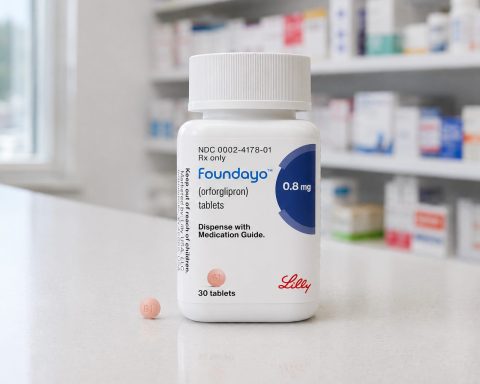
- Orforglipron is back in focus after new late‑stage “maintenance” data showed patients who switched from injectable GLP‑1s regained less weight than placebo—supporting the idea that Lilly could offer a pill “bridge” after initial injectable weight loss. Reuters+1
- Regulatory timing matters: Reuters reports Lilly’s orforglipron could be approved as early as March 2026, aided by an expedited FDA review pathway tied to recent policy deals.
- Retatrutide raised the performance bar in the first successful Phase 3 trial (TRIUMPH‑4), with Reuters reporting ~28.7% average weight loss in a late-stage osteoarthritis/obesity study—reinforcing Lilly’s “next wave” narrative beyond tirzepatide. Reuters+1
- Pricing headlines keep coming: Lilly cut U.S. self‑pay Zepbound vial prices earlier this month and is now reported to be cutting prices in Canada effective late December—good for access and volume, but a margin and policy signal investors will debate.
- Holiday week structure: U.S. exchanges plan an early close on Wednesday, Dec. 24 (1:00 p.m. ET) and are closed Dec. 25 for Christmas—conditions that can amplify reactions to headlines.
1) Where LLY stands heading into Dec. 22
LLY finished the last regular session (Friday, Dec. 19) at $1,071.44. Market commentary around that period highlights steady upside and elevated interest as investors react to a rapid sequence of obesity‑pipeline developments and pricing announcements.
The broader tape also matters: Sunday night futures were modestly higher into a holiday-shortened week, with investors watching key U.S. data releases. In low-liquidity weeks like this, high‑market‑cap “story stocks” can see outsized moves on incremental news—positive or negative. Barron’s+1
2) The headline driver: Orforglipron’s “maintenance” signal and what it implies for 2026
Why investors care
The obesity market is shifting from “who has the best injectable” to “who owns the full patient journey”—initiation, intensification, maintenance, and long‑term adherence. That’s where a daily pill can change the math.
On Dec. 18, Reuters reported Lilly said its oral GLP‑1 pill orforglipron helped patients maintain weight loss after switching from injectables like Wegovy and Zepbound in a late‑stage trial. The framing matters: even if a pill is not always the best “first‑line” option for maximum initial loss, it may become a high‑volume maintenance therapy once patients have achieved meaningful results on injections. Reuters+1
Barron’s and MarketWatch coverage of the same data emphasized that patients switching from injections to orforglipron regained less weight than those on placebo—supporting commercial logic for a “switch strategy.” Barron’s+1
The near‑term catalyst: FDA timing (and political scrutiny)
Reuters has also reported that a decision on orforglipron could come as early as March 2026, linked to expedited review tools and the policy environment around pricing deals.
But the accelerated pathway is also becoming part of the story risk: a Reuters exclusive described internal pressure and communications around speeding review timelines—an angle investors will monitor because it can influence both regulatory expectations and headline volatility.
What to watch this week: Any FDA process update, additional trial detail disclosures, or commentary from policymakers can move LLY quickly—especially in a shortened trading week.
3) The “next wave” narrative: Retatrutide’s Phase 3 readout
Even as tirzepatide (Zepbound/Mounjaro) drives today’s revenue, investors are paying for Lilly’s next-generation pipeline. That’s why retatrutide (a triple agonist) is a market-moving asset.
Reuters reported on Dec. 11 that Lilly’s next‑generation obesity drug helped patients lose an average of 28.7% of body weight in a late‑stage trial, outperforming expectations and reinforcing Lilly’s lead in obesity innovation.
The company’s PRNewswire release tied the result to the TRIUMPH‑4 Phase 3 program and highlighted osteoarthritis pain and function endpoints alongside weight loss—broadening the potential value proposition beyond the scale.
Why this matters for the stock:
- It strengthens the perception that Lilly can retain leadership even as competitors close the gap with new combinations and pills.
- It expands the “total addressable market” narrative: obesity is not only about weight; it’s also about comorbidities (pain, mobility, sleep apnea, cardiovascular risk), which can support reimbursement and adoption.
4) Pricing headlines: bullish for access, complicated for margins
U.S. self-pay price cuts for Zepbound vials
Earlier this month, Reuters reported Lilly cut prices for self‑pay Zepbound single-dose vials, lowering the entry dose to $299/month and introducing lower prices for other doses under its program structure.
Strategically, this is Lilly leaning harder into channel control (direct programs, self‑pay structures, and simplified patient access). It can expand the paying customer base—especially as some employers and plans reconsider GLP‑1 coverage.
Canada price reductions (effective late December)
Reuters also reported Lilly is reducing prices of Mounjaro and Zepbound by at least 20% in Canada, with changes said to take effect Dec. 29.
The policy context: TrumpRx and “most-favored-nation” direction
Drug pricing policy is no longer a background risk—it’s a first‑order variable. Reuters reported in November that Lilly and Novo Nordisk were tied to U.S. discussions and agreements aimed at lowering GLP‑1 prices for government programs and cash‑pay channels, in exchange for forms of relief and access expansion.
The White House fact sheet around the initiative described lower priced access through TrumpRx and highlighted how pricing could be benchmarked more explicitly against other developed markets.
Investor debate:
- Bulls say lower out-of-pocket prices can unlock massive volumes, reduce reliance on PBMs, and normalize GLP‑1 therapy as chronic care.
- Bears worry that “discounting becomes destiny,” and that policy momentum compresses long-term margins in what has been a premium‑priced category.
5) Manufacturing and supply: Lilly’s $6B Alabama API buildout
One reason Lilly has been able to press its advantage is aggressive investment in supply chain capacity.
On Dec. 9, PRNewswire reported Lilly plans to invest more than $6 billion in a new manufacturing facility in Huntsville, Alabama focused on active pharmaceutical ingredients (APIs), supporting small molecule synthetic and peptide medicines.
For equity holders, large manufacturing capex can be a double-edged sword (spending now vs. profits later), but in obesity medicines it’s often seen as a competitive moat: the company that can supply reliably can win share.
6) Beyond obesity: oncology and deal activity still matter
Even in a GLP‑1 dominated narrative, Lilly continues to generate news in other franchises—important for diversifying growth expectations.
- Jaypirca (pirtobrutinib): PRNewswire reported on Dec. 3 that the FDA approved an expanded indication for Jaypirca, highlighting Lilly’s progress in oncology/hematology.
- Adverum acquisition completion: PRNewswire reported Lilly and Adverum announced the completion process around the tender offer/acquisition timeline in early December (with the acquisition expected to be consummated in accordance with merger terms).
These items are not the primary daily stock drivers right now, but they can matter when valuation debates get louder—because investors ask whether Lilly is a “one‑theme stock” or a broader biopharma compounder.
7) Forecasts and Wall Street view: price targets, expectations, and the valuation question
Analyst price targets cluster modestly above current levels
At around $1,071, LLY is already pricing in substantial execution. Still, consensus targets remain higher:
- MarketWatch lists an average target price around $1,165.75 (based on 31 ratings in its analyst estimates section).
- MarketBeat shows an average target around $1,155.36, implying mid‑single‑digit upside from recent prices (with a wide target range).
Some outlets also track very bullish outliers (e.g., targets in the $1,200s and above), reflecting the view that oral GLP‑1s and next‑gen incretins can create another multi‑year expansion cycle.
The bear case: expectations are high
Not all commentary is uniformly bullish. Some analyst notes and investor commentary have focused on valuation and the risk that near‑term upside is “pulled forward,” especially if price cuts become the norm or if competitors narrow the efficacy/experience gap. Yahoo Finance+1
A Barron’s piece captured the tension well: the stock has surged for years and trades at a premium multiple, but proponents argue that 2026 catalysts—pills, expanded access, and next‑gen candidates—can still justify upside if execution holds.
8) The calendar: what can move LLY next
Market structure this week
- Regular sessions Monday and Tuesday
- Early close Wednesday, Dec. 24 (1:00 p.m. ET)
- Closed Thursday, Dec. 25, for Christmas nyse.com+1
- Regular session Friday, Dec. 26 (U.S. exchanges sticking with the planned calendar) Reuters
Next major company event: Q4 earnings in early February
Lilly’s investor relations calendar lists the Q4 2025 earnings call on Feb. 4, 2026 (10:00 AM EST).
Separately, Lilly’s Q3 report raised 2025 full‑year guidance (revenue and EPS ranges), which sets the baseline narrative heading into year-end positioning and into the February print.
What traders watch into the open:
- Any incremental regulatory headlines on orforglipron timing
- Follow-through on pricing stories (U.S. self-pay, Canada, TrumpRx channel mechanics)
- New competitor data points (especially from Novo Nordisk or other incretin developers) MarketWatch+1
9) Risks investors should not ignore
- Policy risk is no longer theoretical. The direction of travel points toward cross‑country benchmarking, expanded discounts, and new distribution models—any of which can compress long-term margins if volume doesn’t scale as expected.
- Regulatory/process headlines can whipsaw the stock. Faster review pathways can be bullish, but the scrutiny around them can also create negative surprise risk.
- Competition is intensifying. Novo Nordisk and others are pursuing new combinations and oral options; any evidence that efficacy, tolerability, or convenience converges can shift “winner takes most” assumptions. MarketWatch+1
- Execution risk on supply and scaling. Heavy capex is a moat only if it translates into stable supply and strong unit economics.
Bottom line for Dec. 22: the stock is priced for excellence—news flow decides the next leg
Ahead of Monday’s open (Dec. 22), Eli Lilly stock remains a high‑expectations leader: the market is rewarding Lilly for blockbuster obesity execution, but also re‑rating it on the belief that orforglipron (pills) and retatrutide (next‑gen efficacy) can extend the growth runway into 2026 and beyond.
Related articles: NYSE:LLY