
NEW YORK, Dec. 28, 2025, 12:25 a.m. ET — Market closed.
Eli Lilly and Company NYSE:LLY heads into the final trading stretch of 2025 with its stock near record territory and investors laser-focused on three forces that can move the shares quickly: (1) the accelerating battle for obesity and diabetes drug dominance, (2) the policy and pricing machinery starting to reshape access to GLP‑1 treatments, and (3) Lilly’s pipeline and business-development cadence beyond today’s blockbusters.
With U.S. stock markets closed for the weekend, Lilly shares last traded around $1,077.75, essentially flat-to-slightly higher into Friday’s close/late session, after moving within a roughly $1,068–$1,081 range during the day.
The last 24–48 hours: headline flow was light, but one deal update stood out
The most concrete company-linked item to hit wires in the past two days was a funding and equity-investment update tied to Lilly’s collaboration with South Korea-based ABL Bio.
Lilly-linked ABL Bio payment update
ABL Bio said it expects to receive a $40 million upfront payment tied to a license/research/collaboration agreement for its Grabody platform, plus a $15 million equity investment from Lilly—$55 million total in near-term R&D funding.
In the release, ABL Bio CEO Sang Hoon Lee said the funding is intended to help broaden Grabody into high unmet-need areas “including obesity and muscle diseases,” alongside continued work in other modalities and programs. PR Newswire
For LLY shareholders, this is not a “this-quarter revenue” catalyst. But it does reinforce something the market consistently rewards Lilly for: aggressive portfolio-building while it is already in a position of strength in metabolic disease.
Weekend investor commentary
Separately, investor-facing commentary over the past day included at least one widely read “growth stocks” piece that highlighted Lilly’s efforts to build “the next generation of successes,” including (but not limited to) GLP‑1-era products. The Motley Fool
Treat this as opinion content, not a company announcement—but it’s still part of the weekend narrative around LLY: the stock isn’t trading as a slow-and-steady pharma name right now; it’s trading like a pipeline-and-scale story.
The big picture: why Eli Lilly stock is so sensitive to obesity-drug headlines
Lilly’s valuation and day-to-day trading behavior are heavily tethered to the obesity/diabetes franchise (Zepbound/Mounjaro) and what comes next—especially oral therapies that can expand the market dramatically.
Novo’s first-mover moment in oral GLP‑1s raises the stakes
In a major competitive development earlier this week, the FDA approved Novo Nordisk’s oral Wegovy for chronic weight management, giving Novo a high-profile first-mover win in the pill segment. Reuters detailed trial weight-loss results and the market-expansion argument for pills, including forecasts that oral obesity drugs could become a meaningful slice of the category by the end of the decade. Reuters
Mainstream outlets also emphasized that the approval puts pressure on rivals developing pill options—Lilly included.
From an investor’s lens, this cuts both ways for Lilly:
- Risk: sentiment can swing if the market decides Novo’s pill meaningfully slows Lilly’s growth trajectory.
- Opportunity: pills can expand the total addressable market, and Lilly still has multiple “next wave” assets that many analysts believe can compete on convenience and outcomes.
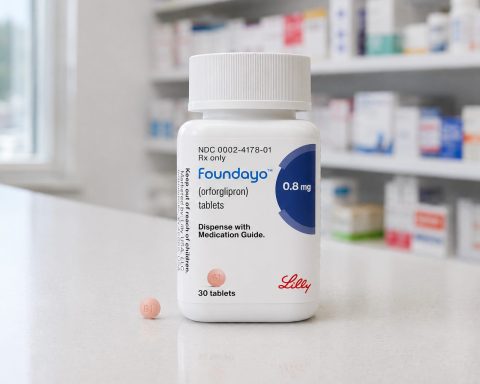
Lilly’s own oral contender: orforglipron is the next major catalyst to watch
Reuters recently reported on late-stage data suggesting Lilly’s oral candidate orforglipron helped maintain weight loss in patients who switched from injectable GLP‑1 drugs. The same report quoted Evan Seigerman (BMO Capital Markets) saying the results reinforce orforglipron’s differentiated profile, and Courtney Breen (Bernstein) calling it a potentially strong option for chronic weight maintenance and convenience.
Critically for traders: Reuters also reported that FDA leaders were pushed internally to speed up the review timeline for orforglipron, and the agency could make a decision as early as March 28 if an accelerated timeline is adopted. Reuters+1
That kind of “possible earlier-than-expected” regulatory window can pull buying or hedging activity forward—especially into a thin-liquidity, year-end tape.
Policy and pricing: access is expanding, but margins are under a microscope
Another major thread investors are tracking is how public policy may alter GLP‑1 affordability, coverage, and net pricing.
Reuters reported that the Centers for Medicare & Medicaid Services (CMS) unveiled a voluntary coverage model tied to GLP‑1s for weight loss and diabetes, building on prior pricing discussions involving Lilly and Novo. The report included a notable detail: eligible Medicare beneficiaries would pay $50 per month for GLP‑1 drugs under the model, with timelines stretching into 2026 and 2027.
For LLY stock, this is the classic “volume vs. price” chess problem:
- Expanded access can increase treated patients over time.
- But the market will constantly reprice the stock if it senses net pricing power is weakening faster than volume can compensate.
Pipeline leverage: retatrutide keeps Lilly’s “what’s next” story alive
Beyond near-term GLP‑1 execution, Lilly investors are paying close attention to next-generation obesity assets that could extend leadership and defend pricing.
Reuters reported that Lilly’s experimental obesity drug retatrutide delivered higher average weight loss than Zepbound in a late-stage osteoarthritis/obesity study, with the highest dose showing 28.7% body-weight reduction over 68 weeks. Reuters
Lilly’s own announcement highlighted both weight-loss outcomes and improvements in knee pain—important because outcomes beyond the scale can influence payer decisions and long-term adoption.
Retatrutide is also a reminder of why LLY trades the way it does: investors are not just discounting today’s GLP‑1 cash flows; they’re discounting the probability that Lilly stays ahead in a field where “good enough” rapidly becomes “table stakes.”
Manufacturing and supply: the quiet constraint that can still swing sentiment
Demand is only valuable if supply can match it—and Lilly has been leaning into a multi-year, capital-intensive manufacturing buildout.
Reuters reported that Lilly plans to build a $6+ billion active pharmaceutical ingredient facility in Huntsville, Alabama, aimed at strengthening domestic production capacity and supporting future medicines, including the oral GLP‑1 candidate orforglipron.
When investors talk about “durability” in GLP‑1 leadership, manufacturing capacity is one of the most unglamorous—but decisive—variables.
Forecasts and analyst views: what the Street is implying (and what it isn’t)
Analyst targets vary, but the broad takeaway is that Wall Street remains constructive—while acknowledging the stock is already pricing in a lot of success.
- MarketBeat’s compiled analyst snapshot shows a “Moderate Buy” consensus rating, with an average 12‑month price target around $1,155 (single-name targets spanning roughly the $950 to $1,300 range in its dataset). MarketBeat
- One widely circulated note (via TheFly on TipRanks) said Morgan Stanley raised its price target to $1,290 from $1,171 and maintained an Overweight rating, citing updated assumptions around GLP‑1 dynamics.
Meanwhile, some investor publications have highlighted very large multi-year revenue possibilities for oral GLP‑1s. For example, Investor’s Business Daily cited Leerink Partners analyst David Risinger projecting orforglipron could reach $2 billion in 2026 sales and potentially $16 billion by 2028—figures that, if realized, would materially influence how the market justifies today’s valuation.
The key nuance: most targets assume continued execution, but the volatility comes from the timing and confidence around approvals, pricing, and competitive outcomes—not from whether obesity treatment demand exists (it clearly does).
If you’re holding (or considering) LLY: what to know before Monday’s session
Because the market is closed right now, the practical question is what could matter most before the opening bell on Monday, Dec. 29:
1) Year-end liquidity can amplify moves.
The final week of December often brings thinner participation and sharper reactions to headlines—especially in large-cap “story stocks.”
2) Watch the macro calendar even for a pharma bellwether.
Major U.S. economic releases can move index futures and risk appetite. MarketWatch’s calendar flags Pending Home Sales (Nov.) at 10:00 a.m. Monday.
3) Know the holiday trading setup for the days ahead.
Investopedia reports a full trading day for stocks on New Year’s Eve (Dec. 31), with markets closed on New Year’s Day (Jan. 1, 2026).
4) Keep an eye on the GLP‑1 “access and affordability” thread.
Any fresh signals about coverage models, net pricing, or expanded channels can move LLY because it directly feeds into long-run earnings power. The CMS model details reported by Reuters are part of the backdrop heading into 2026. Reuters
5) Put the next major company date on your radar: Q4 earnings.
Lilly’s investor calendar lists its Q4 2025 earnings call for Feb. 4, 2026 at 10:00 a.m. EST. Lilly Investor Relations
As that approaches, investors often see more active positioning—especially if there are updates on supply, demand, pricing, or regulatory timing for key assets.
Bottom line
Eli Lilly stock enters Monday’s session with momentum, scale, and a pipeline that keeps raising the ceiling—but also with a valuation profile that can punish even small disappointments in pricing, policy, or competitive positioning. The weekend’s most tangible new headline was the ABL Bio payment/equity-investment update linked to Lilly’s collaboration strategy, while the broader narrative remains dominated by the race to define the oral obesity-drug era and the policy decisions that will determine how big (and how profitable) that market becomes.
Related articles: NYSE:LLY