
- Stock price: LLY closed around $813.53 on Oct. 29, 2025, slightly below early-October highs above $850investing.com. Over the past week it slipped ~2%, as investors awaited Q3 results.
- Q3 results: On Oct. 30 Lilly reported stellar Q3 (Q3 2025) earnings – revenue of $17.60 billion (+54% YoY) and non‐GAAP EPS $7.02, well above last year’s levelsprnewswire.comreuters.com. CEO Dave Ricks hailed “continued demand for our incretin portfolio” driving the jumpprnewswire.com.
- Guidance raised: Lilly lifted full-year 2025 guidance. Adjusted EPS is now $23.00–23.70 (up from $21.75–23.00)reuters.com, as sales of Mounjaro (diabetes) and Zepbound (obesity) remain robust. Analysts had expected ~$22.18/share, so the upgrade surprised positively.
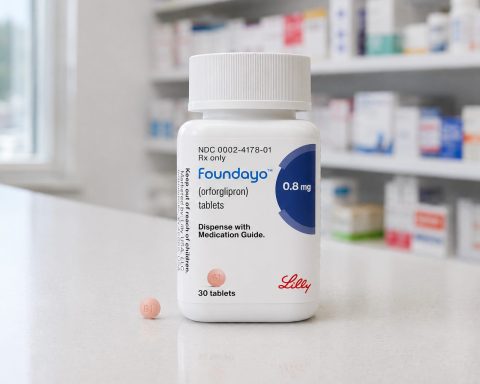
- Drug pipeline wins: The company recently won key approvals: the FDA cleared Inluriyo (imlunestrant) for certain metastatic breast cancerprnewswire.com, and the EU approved Kisunla (donanemab) for early Alzheimer’sprnewswire.com. Investors also await data and future filings for Lilly’s oral GLP-1 candidate (orforglipron) and other indications.
- Partnerships & expansion: Lilly announced a Walmart partnership to expand access to discounted Zepbound through its LillyDirect programbiopharmadive.com. It also unveiled an Nvidia AI supercomputer alliance to accelerate drug R&Dreuters.com. On manufacturing, Lilly will invest >$1B in India to boost capacityreuters.com, and has $5B+ earmarked for new U.S. plants.
- Industry context: Lilly’s GLP-1 drugs dominate a booming obesity/diabetes market projected at ~$150 billion by the early 2030sreuters.com. Investors are closely watching policy headlines (e.g. drug-price proposals), but experts note Lilly’s diverse pipeline and global expansion could absorb shockspharmexec.comreuters.com.
- Analyst outlook: Wall Street is largely bullish. The consensus “Moderate Buy” rating and average 12‐month price target (~$939) imply ~15–16% upsidemarketbeat.com. Guggenheim and others maintain Buy ratings, and technical indicators show a mix of neutral/bullish signals (with some near-term resistance around $842)marketbeat.comintellectia.ai.
LLY Stock Snapshot and Recent Moves
Eli Lilly’s stock (NYSE: LLY) has been on a tear this year, driven by blockbuster drug sales and upbeat guidance. As of Oct. 29, 2025, LLY traded near $813.53investing.com. After hitting highs in the mid-$850s in early October, the shares have pulled back modestly (closing about 2% lower in the past week). Trading volume and technical indicators suggest a consolidation phase after the recent rallyintellectia.aiintellectia.ai.
Over the past 12 months LLY has significantly outperformed the broader market, in large part thanks to its GLP-1 diabetes/obesity franchise. Wall Street now assigns it a Moderate Buy consensus; 25 analysts have issued price targets totaling an average ~$938.61 (about 15.8% above the current price)marketbeat.com. A Nasdaq/Fintel report noted an average one-year target near $904 (September 2025)nasdaq.com. In short, most experts see further upside, though Lilly’s high valuation (trading around 54× forward earnings, well above the ~18× industry normsimplywall.st) leaves little margin for error.
“Lilly delivered another strong quarter, with 54% revenue growth year-over-year driven by continued demand for our incretin portfolio,” said CEO Dave Ricksprnewswire.com. Management also said it is “making significant investments to increase manufacturing and medicine supply capacity around the world,” citing new plants and global initiativesprnewswire.comreuters.com.
Q3 Earnings Triumph and Guidance Lift
Lilly’s Q3 2025 financials (announced Oct. 30) exceeded expectations. Revenue jumped to $17.60 billion, up 54% from a year agoprnewswire.com. Non-GAAP earnings per share soared to $7.02, reflecting strong operating leverage. Key products Mounjaro and Zepbound accounted for most of the gain, with U.S. GLP-1 sales up dramatically. (Lilly’s press release notes a 62% volume increase on its incretin drugs, partly offset by slight price declinesprnewswire.com.)
Importantly, Lilly raised its full-year forecast. Adjusted EPS guidance now spans $23.00–23.70 for 2025, up from $21.75–23.00reuters.com. This boost – well above analysts’ previous ~$22.18 estimate – signals confidence in sustained demand. On the earnings call, management spotlighted progress on pipeline projects and manufacturing. In particular, Lilly announced new plant investments: two new U.S. sites (Virginia, Texas) and expanded Puerto Rico capacity to meet surging drug demandprnewswire.com. These moves aim to avoid past bottlenecks in GLP-1 production.
Analysts reacted positively. Bloomberg News quoted Bahl & Gaynor’s Kevin Gade saying management set “as confident a tone as you can expect” about future growthreuters.com. Yuri Khodjamirian of Tema ETF likewise noted Lilly is “back on track” after earlier hiccupsreuters.com. Indeed, Lilly’s shares popped in early 2025 when management calmed fears of a sales slowdownreuters.com. The question now is whether current guidance fully prices in any near-term demand shifts or policy changes.
GLP-1 Drugs Fuel Growth
The star drivers at Lilly are its GLP-1 drugs – Mounjaro (for type 2 diabetes) and Zepbound (for obesity). These drugs have ignited a weight-loss renaissance in pharma. After early supply constraints, demand has remained robust. In Q3, Lilly reported continued volume growth in these franchisesprnewswire.com. Overall, the diabetes/obesity portfolio now exceeds 15% of Lilly’s revenues and is growing fast.
Lilly is also expanding the market. Notably, the company won FDA approval in September for Inluriyo (imlunestrant), a first-of-its-kind oral breast cancer pill for certain metastatic breast cancersprnewswire.com. And its Alzheimer’s antibody Kisunla (donanemab) gained EU approval in late Septemberprnewswire.com. These approvals bolster the story that Lilly is diversifying beyond diabetes, potentially adding billions in new sales. Analysts at Morningstar estimate donanemab alone could reach >$5 billion in peak annual salesreuters.com, while Lilly’s Alzheimer portfolio grows.
Some analysts caution that competition and pricing deserve watch. Novo Nordisk (LLY’s GLP-1 rival) recently warned of a maturing Ozempic market. Reports of possible government drug-price programs (for example, news that weight-loss shots might be discounted) have briefly rattled marketspharmexec.compharmexec.com. In late October, for instance, shares of Lilly and Novo fell slightly after a presidential tweet on $150 GLP-1 pricing, before officials clarified there was no deal. Still, experts note Lilly’s broader pipeline helps it absorb such pressurespharmexec.comreuters.com. If anything, Lilly’s CEO emphasizes that only ~4% of eligible patients currently use GLP-1 drugsts2.tech, suggesting many more patients remain unserved and supporting forecasts of long-term growth.
Partnerships and Pipeline: Beyond GLP-1
Lilly is not resting on its laurels. In addition to drug launches, the company is pursuing collaborations and R&D:
- Walmart/Zepbound: Lilly in late Oct. announced that U.S. patients can pick up cash-priced Zepbound through Walmart pharmacies via its LillyDirect online programbiopharmadive.com. This consumer-friendly move offers Zepbound at roughly half the list price for cash-payers (using vials), aiming to undercut unregulated copycat compounding operations. Senior VP Jennifer Mazur explained the tie-up “builds on” LillyDirect’s growth and gives patients “convenience and choice”biopharmadive.com.
- Nvidia AI Supercomputer: Lilly unveiled an unprecedented AI partnership on Oct. 28. The drugmaker and Nvidia will build a DGX SuperPOD supercomputer to speed discovery by training machine-learning models on years of Lilly research datareuters.com. Lilly’s Chief AI Officer Thomas Fuchs said this moves the company to “embracing [AI] as a scientific collaborator”reuters.com. The supercomputer will help test millions of molecules virtually, and even shorten clinical development cycles.
- Manufacturing & expansion: To keep up with demand, Lilly continues to bulk up production. It is investing >$1 billion in India – partnering with contract manufacturers there to produce injectables for obesity, diabetes, Alzheimer’s and cancer drugsreuters.com. Domestically, Lilly has committed $27 billion over five years for U.S. plant expansions, including a new $5 billion Virginia facility announced in Sept. 2025reuters.com. These capacity builds aim to ensure Lilly can supply surging global demand.
Industry Context & Risks
Lilly’s fortunes are closely tied to broader pharma trends. The obesity/diabetes market is the big story: analysts peg it as a $150 billion opportunity by 2030reuters.com, rivaling blockbuster categories like cancer drugs. With both Wegovy (Novo) and Zepbound/Mounjaro (Lilly) on the market, investors debate how fast this market can grow and at what price. Any changes in insurance coverage or government negotiation could impact near-term earnings. For example, just the prospect of GLP-1 price cuts caused a temporary stock pullback in late Octpharmexec.com.
However, Lilly’s diversified pipeline and global reach provide buffers. Its Alzheimer’s and oncology programs open new large markets. And its strategy to sell GLP-1s direct to patients (via cash-pay channels) sidesteps some insurance hurdles. Analysts also highlight that even as Lilly’s growth has been spectacular, it still trades at a lofty valuation. Simply Wall St. notes LLY’s P/E of ~53.7×, versus ~15–18× for peerssimplywall.st. In other words, investors are pricing in major future success. If any key product disappoints or generic competition for semaglutide emerges (as patents expire), the stock could face headwinds.
On the positive side, experts underscore Lilly’s track record. As Reuters noted in early 2025, Lilly’s management has successfully navigated demand fluctuations and kept the company on coursereuters.com. After a brief sales hiccup in late 2024, Lilly’s strong guidance and confident management commentary helped restore investor faith. Bahl & Gaynor’s Gade commented that Lilly’s tone was as upbeat as one could hopereuters.com, while Tema ETF’s Khodjamirian said the results had “put things back on track”reuters.com.
Outlook: Analyst Views and Market Sentiment
Overall, Wall Street remains bullish on Eli Lilly. On average, analysts rate LLY a “Moderate Buy”marketbeat.com. Among 25 tracked analysts, 16 rate it a buy and 9 a holdmarketbeat.com. The consensus 12-month price target is about $939, roughly 16% above current levelsmarketbeat.com. In early October, Guggenheim reaffirmed its Buy rating, noting an average target around $904 (~+7%)nasdaq.com. The range of targets is wide (as high as ~$1,250), reflecting diverse expectations of Lilly’s pipeline payoffsnasdaq.com.
Looking ahead, investor focus will turn to the Q4 earnings (due in Jan 2026) and full-year numbers. Key questions include whether GLP-1 sales can stay on a high-growth trajectory, how new drugs (like omvoh in ulcerative colitis or other late-stage assets) perform, and whether Lilly can maintain its lofty multiple. For now, the newsflow is mostly positive: between strong quarterly results, industry-leading drug approvals, and cutting-edge partnerships, Eli Lilly’s stock sits on a fundamentally bullish narrative.
Sources: Current stock data and earnings summaryinvesting.comprnewswire.com; Company releases and reputable news on approvals and partnershipsprnewswire.comprnewswire.comreuters.com; Industry analysis and analyst commentaryreuters.compharmexec.commarketbeat.comsimplywall.st. (Article incorporates reporting by Reuters, BioPharma Dive, PR Newswire, ts2.tech and others.)
Related articles: NYSE:LLY