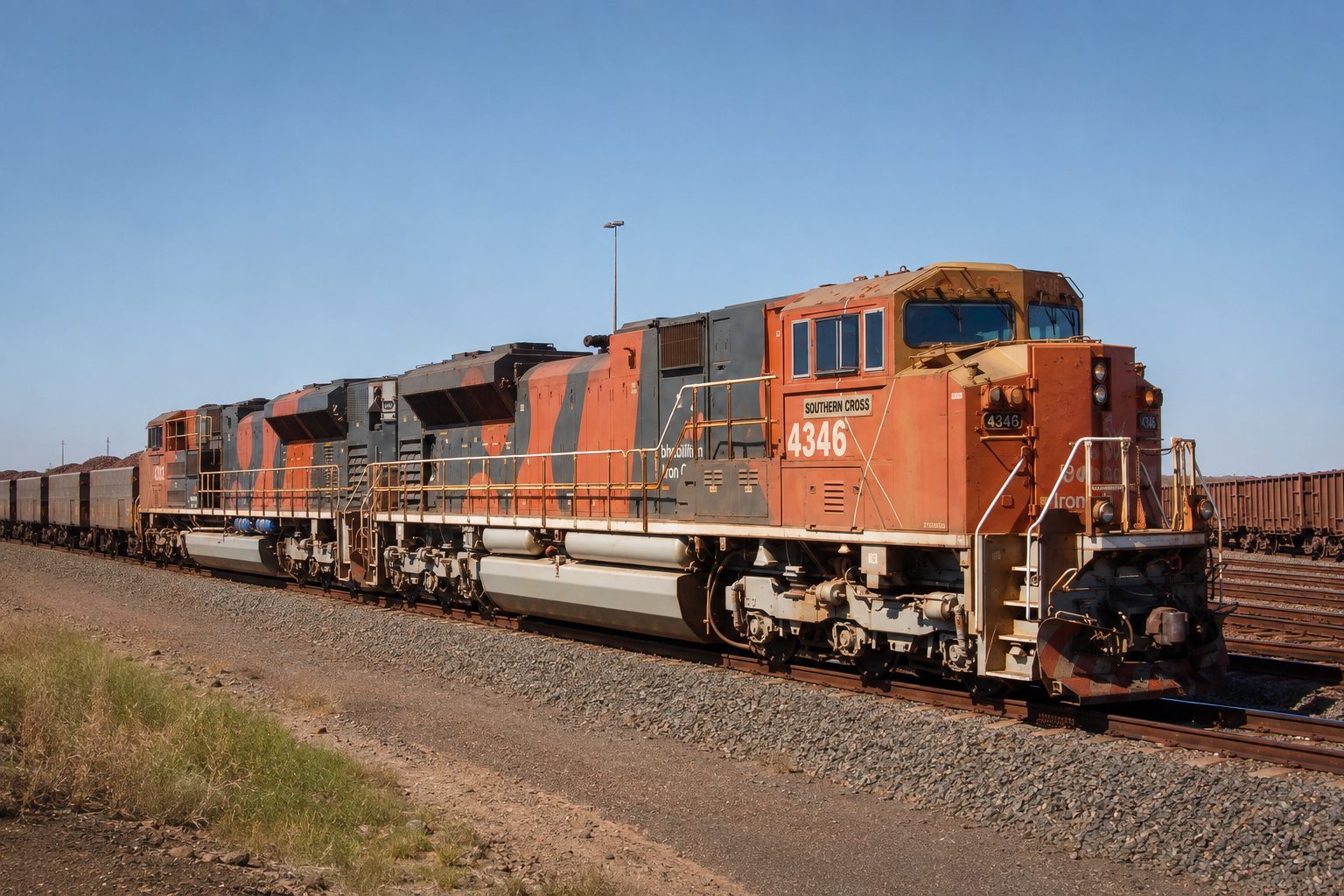

Energy Transfer stock NYSE:ET ended Friday’s session (November 21, 2025) at $16.51, down about 0.8% on the day and trading roughly 23% below its 52‑week high of $21.45.StockAnalysis+1 Despite the pullback, the midstream giant is still offering an income-heavy profile, fresh insider and institutional buying, and a growing slate of natural-gas projects aimed squarely at surging power and data-center demand.
Energy Transfer stock today: price, yield and valuation
At Friday’s close, Energy Transfer LP carried a market capitalization of about $56.7 billion, with a trailing price-to-earnings ratio near 13.2x based on $1.25 in trailing 12‑month EPS.StockAnalysis Units changed hands between $16.33 and $16.66 during the session, within a 52‑week range of $14.60 to $21.45.
Income remains the main draw:
- The partnership recently raised its quarterly cash distribution to $0.3325 per common unit, or $1.33 annualized, for Q3 2025.
- At Friday’s closing price, that works out to an implied yield of just over 8%.
- The ex‑distribution date was November 7, 2025, with the higher payout paid on November 19 to unitholders of record.
With benchmark interest rates still elevated and many income investors hunting for high nominal yields, Energy Transfer’s 8%+ cash return keeps the name firmly in the “income plus growth projects” bucket of the energy sector.
Q3 2025 earnings: headline miss, underlying volume strength
Energy Transfer’s latest results, released on November 5, 2025, help explain why the unit price has drifted lower even as the yield has marched higher.
According to the Q3 2025 earnings call and transcript:
- Earnings per unit (EPS) came in at $0.28, missing consensus estimates around $0.33.
- Revenue was $19.95 billion, below expectations of about $21.9 billion, and down roughly 3.9% year over year.
- Adjusted EBITDA for the quarter was $3.84 billion, modestly lower than $3.96 billion in Q3 2024, while year‑to‑date adjusted EBITDA rose to $11.8 billion from $11.6 billion a year earlier.
- Management reported record or near‑record volumes across several areas, including midstream gathering, NGL transportation, NGL and refined-products terminal volumes, and NGL exports.
Critically, distributable cash flow (DCF) — the metric that tends to matter most for MLP investors — was about $1.9 billion for the quarter.
On the call, executives signaled that full‑year 2025 adjusted EBITDA will likely end up slightly below the low end of their prior $16.1–$16.5 billion guidance range, citing project timing and sector headwinds rather than structural demand weakness.
The takeaway: headline numbers disappointed versus Wall Street expectations, but underlying throughput and cash generation remain robust, underpinning the rich distribution.
Distribution growth and coverage: how safe is the 8%+ yield?
Energy Transfer has made its distribution a central part of the investment story:
- The Q3 2025 payout of $0.3325 per unit represents an increase of more than 3% year on year versus Q3 2024.
- On an annualized basis, the $1.33 per-unit distribution translates to an income stream around 8–8.1% at recent prices.
From a GAAP earnings perspective, MarketBeat pegs the payout ratio at roughly 106%, meaning the partnership is paying out slightly more than it earns in reported net income.MarketBeat That might raise eyebrows in a typical C‑corp, but for a pipeline MLP it’s less alarming because:
- Cash distributions are funded from distributable cash flow (DCF), which adjusts for large non‑cash depreciation charges on long‑lived infrastructure.
- With DCF of about $1.9 billion in Q3 and about 3.43 billion units outstanding, the quarterly distribution bill is roughly $1.14 billion, implying a coverage ratio just under 1.7x by simple back‑of‑the‑envelope math.
That coverage cushion suggests the current distribution level is supported by cash generation, even if the headline earnings payout ratio looks high.
Still, investors will be watching future quarters closely to ensure:
- Coverage stays comfortably above ~1.2–1.3x, even as growth projects ramp.
- Debt metrics remain manageable as new capital spending comes through.
Big growth bets: Permian-to-Arizona pipeline, Flexport expansion and Lake Charles LNG
Energy Transfer’s long‑term story is increasingly tied to natural gas and NGL infrastructure feeding data centers, power demand, and Gulf Coast exports.
1. $5.3 billion Desert Southwest pipeline project
In August, the partnership moved ahead with a $5.3 billion expansion of its Transwestern system, often referred to as the Desert Southwest pipeline project.Rextag Corporation Store+1 Key details:
- Roughly 516 miles of new 42‑inch pipeline plus nine compressor stations across Texas, New Mexico and Arizona.
- Design capacity of about 1.5 Bcf/d of natural gas, with an in‑service target around late 2029.
- Arizona Public Service (APS) is the anchor shipper, joined by Salt River Project (SRP) and other local utilities, largely to fuel gas‑fired power plants serving fast‑growing data‑center loads in the region.
The expansion provides an additional outlet for Permian gas and aims to relieve persistent takeaway constraints that have pressured Waha pricing in recent years.
2. Flexport NGL export capacity and processing plants
Energy Transfer is also leaning into export and processing growth:
- The Flexport expansion at the Nederland terminal is ramping, designed to add up to about 250,000 barrels per day of additional NGL export capacity, with ethane and propane service already online and ethylene exports expected to follow.
- The company has recently placed new gas processing plants — including the Lenorah II (Midland Basin) and Badger (Delaware Basin) facilities — into service, supporting higher inlet volumes tied to Permian production growth.
These expansions are intended to capture higher volumes and fee‑based revenue rather than speculate on commodity prices, which is central to Energy Transfer’s positioning as a midstream operator.
3. Lake Charles LNG: disciplined approach to a mega‑project
One of the biggest potential swing factors for Energy Transfer stock is the proposed 16.5‑million‑ton‑per‑year Lake Charles LNG export facility in Louisiana.
On the Q3 call and in comments to Reuters, management stressed that:
- Energy Transfer will not give a final go‑ahead (FID) for the project until 80% of the project has been sold to equity partners, allowing the partnership to share rising project costs and risks.
- A non‑binding agreement already envisions MidOcean Energy taking a 30% equity stake and corresponding share of LNG offtake.
Co‑CEO Tom Long reiterated that projects must meet strict risk‑return criteria, implying Lake Charles LNG will only proceed if equity commitments and economics align with Energy Transfer’s thresholds.
For investors, Lake Charles represents optionality rather than a fully priced‑in driver: successful FID and execution could materially boost long‑term cash flows, but delays or cancellations would limit downside given the cautious capital approach.
Insider and institutional buying: confidence signal for ET stock
One of the most notable developments in November has come not from Wall Street, but from Energy Transfer’s own leadership and institutional holders.
According to recent SEC filings summarized by MarketBeat:
- Director Kelcy L. Warren purchased 1,000,000 Energy Transfer units on November 19 at an average price of $16.95, a roughly $16.95 million transaction.
- The move boosted his direct stake to 104,577,803 units, a 0.97% increase, and helped push insider ownership to about 3.28% of the partnership.
On the institutional side:
- MAI Capital Management recently raised its holdings by 2.2%, to 772,198 units valued at about $14 million.
- Several smaller firms also increased or initiated positions, contributing to institutional ownership of roughly 38% of outstanding units.
Insider buying of this size, especially by a key figure like Warren, is often interpreted as a vote of confidence in the long‑term value of the units at current prices, though it does not guarantee any particular price trajectory.
Analyst views and options market: cautious optimism with higher volatility
Street targets suggest upside…
Sell‑side sentiment toward Energy Transfer is generally constructive:
- StockAnalysis reports that 13 analysts rate ET a “Buy” on average, with a 12‑month price target of $22.08 — about 34% above Friday’s close.StockAnalysis
- MarketScreener shows a similar picture, citing a “Buy” consensus from 19 analysts and an average target price near $21.77, implying roughly 32% upside from the last close around $16.51.MarketScreener
Those targets appear to assume:
- Modest EBITDA growth driven by new projects and higher volumes.
- A steady or gradually rising distribution profile.
- No major negative surprises on regulatory, legal, or project‑execution fronts.
…but options traders are bracing for a bigger move
Recent options activity suggests traders are positioning for larger‑than‑usual swings in Energy Transfer stock:
- A recent Zacks note, published via Nasdaq, flagged elevated implied volatility in certain ET options expiring in December 2025, indicating that options markets are pricing in the potential for a sizable move in either direction.
- Zacks currently rates ET as a Rank #3 (Hold) within the Oil & Gas – Production Pipeline industry, which sits in the lower half of its industry ranking.
High implied volatility doesn’t tell investors whether the next big move will be up or down, only that markets expect larger price swings than usual — not surprising for a high‑yield stock in a capital‑intensive sector facing macro uncertainty.
Key risks for Energy Transfer stock
Even with an 8%+ yield and long‑dated projects, Energy Transfer is not without risk. Key themes to watch include:
- Project execution and cost inflation
- Mega‑projects like the Desert Southwest pipeline and a potential Lake Charles LNG build‑out require billions of dollars in capital and multi‑year construction timelines.
- Cost overruns, permitting delays, or weaker‑than‑expected demand could compress returns.
- Regulatory and environmental scrutiny
- Oil and gas pipelines and LNG facilities remain politically sensitive. Changes in environmental policy, court rulings or federal/state permitting regimes could alter timelines or economics for incremental projects.
- Balance sheet and interest rates
- MarketBeat data show debt‑to‑equity around 1.4x and solid liquidity metrics (current ratio ~1.15, quick ratio ~0.92), but higher-for-longer interest rates still represent a headwind for heavily capital‑intensive businesses.
- Commodity and macro exposure
- While Energy Transfer’s cash flows are largely fee‑based, volumes and contract renewals are indirectly influenced by commodity prices, drilling activity, and economic growth.
- Distribution sustainability and capital allocation
- The GAAP payout ratio above 100% underscores the importance of DCF coverage. If cash flows undershoot expectations or capital needs spike, management could eventually face a trade‑off between distribution growth, buybacks and growth capex.
What today’s setup means for investors
As of November 22, 2025, Energy Transfer stock presents a familiar but sharpened trade‑off:
- Pros
- High current income with an ~8%+ forward yield, supported by strong DCF coverage.
- A massive, diversified footprint of more than 130,000 miles of pipeline and related assets across 44 U.S. states, positioning the partnership at the center of natural gas, NGL and crude flows.
- A visible growth pipeline across Permian gas takeaway, NGL exports, storage, and potential LNG exports.
- Meaningful insider and institutional buying near current price levels.
- Cons
- A recent earnings miss and softer 2025 EBITDA outlook, which have weighed on sentiment.
- Execution and regulatory risks around mega‑projects.
- Elevated options‑implied volatility signaling the potential for choppy trading ahead.
For readers tracking Energy Transfer stock today, the next major catalysts to watch include:
- Any update on Lake Charles LNG FID timing and equity partnerships.
- Progress milestones and regulatory developments on the Desert Southwest pipeline and related Permian infrastructure.
- Q4 2025 results and 2026 guidance, particularly around capex, EBITDA expectations, and distribution policy.
This article is for informational purposes only and does not constitute financial advice or a recommendation to buy or sell any security. Investors should do their own research and consider their risk tolerance before making investment decisions.