
BRUSSELS, May 19, 2026, 22:45 CEST
- Europe is set to get roughly two-thirds of its liquefied natural gas from the U.S. this year.
- Poland ranked as one of the top U.S.-linked LNG importers in the first quarter. Its floating terminal at Gdańsk reached another milestone.
- The change lowers Russian pipeline risk but brings up a new issue: is relying on a single supplier still dependence?
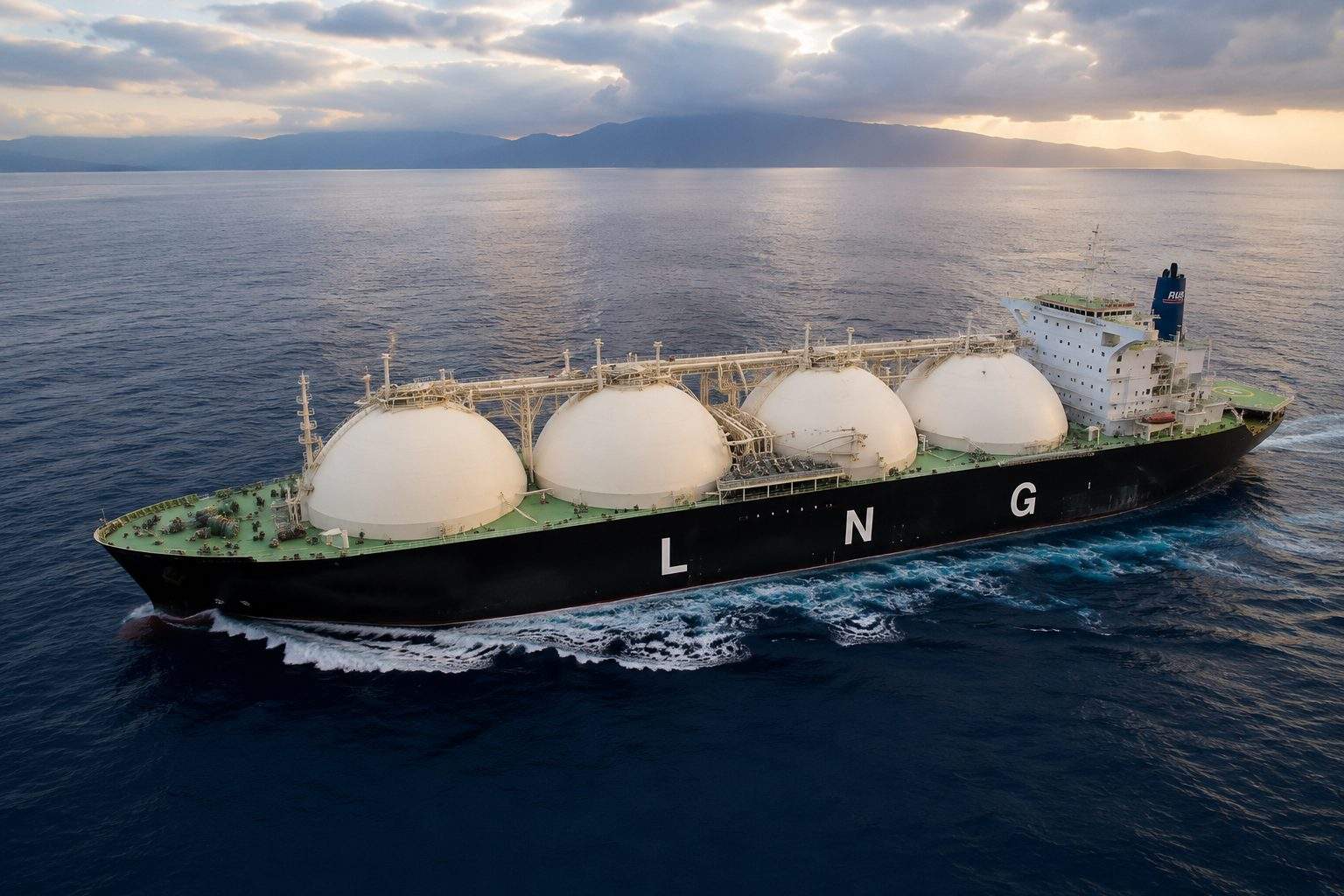
Europe is relying more on U.S. liquefied natural gas as it cuts use of Russian pipeline gas, with Poland among the countries most dependent on American LNG, data from Rzeczpospolita and IEEFA show. The Institute for Energy Economics and Financial Analysis thinks the U.S. will provide about two-thirds of Europe’s LNG in 2026, and could supply up to 80% of EU LNG by 2028.
Europe is pushing to end its reliance on Russian gas just as Qatari export disruptions and tighter global LNG supplies force U.S. cargoes to fill the gap. On Tuesday, U.S. gas exporters asked the EU to put off applying a new methane emissions law to 2028, saying uncertainty around the rule is stalling long-term supply contracts.
LNG is natural gas cooled into a liquid for shipping, then regasified on arrival. The EU built up LNG imports quickly after Russia invaded Ukraine and pipeline gas from Russia plunged. Russian pipeline gas now makes up about 6% of EU imports in 2025, down from 40% in 2021. The EU has set rules to ban Russian pipeline gas and LNG by the end of 2027, allowing for some transition.
IEEFA’s tracker put European imports of U.S. LNG at 99.5 billion cubic metres in 2025, up from 29.8 bcm in 2021. The U.S. made up 63% of Europe’s LNG imports in the first quarter, compared with 58% in 2025. Germany, Croatia, the UK, the Netherlands, Poland and Greece each got over 70% of their LNG from the U.S. during the quarter. Poland’s share came in at 75%.
Poland is making moves on the infrastructure side, too. Gaz-System said Tuesday its floating storage and regasification unit for the Gdańsk project was launched at HD Hyundai Heavy Industries in South Korea. The unit is scheduled to reach the Bay of Gdańsk late 2027, with regasification to begin in the first quarter of 2028. The facility will convert LNG back to pipeline gas and is meant to process over 6 bcm a year.
Poland’s Świnoujście terminal was among the EU’s busiest, with a utilisation rate of 91% last year and 94% in the first quarter of 2026, Rzeczpospolita said. The Gdańsk facility under development is set to give Poland another Baltic route for shipments while it aims to become a regional gas hub.
US could pass Norway as Europe and the EU’s top gas supplier this year, according to IEEFA. Russia is still the EU’s number two LNG supplier, even with the phase-out strategy in place. Qatar’s share has dropped after export disruptions tied to fighting in the Middle East.
EU nations racked up about 281 billion euros in LNG costs from 2022 to 2025, according to IEEFA. Of that, 131.5 billion euros went to U.S. shipments, 37.8 billion euros to Russian LNG, and 36.2 billion euros to Qatari cargoes. IEEFA said U.S. LNG has been pricier than other options for EU buyers. Buyers in Greece paid 38.7 euros per megawatt-hour for U.S. LNG in 2025, which is 12% over the EU average.
Europe’s move from pipeline gas to LNG hasn’t delivered on security or diversification, Ana Maria Jaller-Makarewicz, lead Europe energy analyst at IEEFA, said. Jaller-Makarewicz called LNG the region’s “Achilles’ heel” as it leaves Europe open to higher prices and more disruptions. IEEFA
EU energy officials aren’t calling U.S. gas as risky as Russian supply, but they are flagging worries about reliance. ACER, the EU’s regulator, said growing dependence on U.S. LNG could prompt concern over sticking with just one main supplier. Romania’s energy state secretary Cristian-Silviu Busoi said to Reuters the U.S. is more dependable than Russia but that work still remains in the partnership.
Europe may be adding too much LNG capacity for a fuel it plans to cut back on. IEEFA sees European gas use dropping 14% from 2025 to 2030, with LNG demand set to fall about 23% in the same years. In the first quarter, nine of the EU’s 30 LNG terminals posted utilisation rates under 30%, raising questions about the need for more terminals.
Brussels is moving to counter that. The European Commission laid out its AccelerateEU plan on April 22 to try to limit exposure to swings in fossil-fuel markets. The plan looks to boost clean energy, electrification and upgrades across the energy system. The EU still imports 57% of its energy as fossil fuel, the Commission said.
Warsaw’s next move looks simple: add more LNG terminals and get extra gas routes, which brings more clout in Central Europe. The bigger issue is if Europe’s rush on gas infrastructure ends up locking in long-term U.S. reliance, even as EU policy tries to cut back on gas.