As trading rolls through Monday, December 8, 2025, electric‑vehicle (EV) stocks are back in the spotlight — and not in a good way. A sweeping call from Morgan Stanley’s new auto analyst is rippling across the sector, sending Tesla, Rivian and Lucid lower and raising fresh questions about how fast the EV transition will really play out. Investing.com
Below is a detailed, SEO‑friendly look at what’s moving EV stocks today, how Wall Street is recalibrating its forecasts, and what it might mean for investors from here.
1. The Big Story: Morgan Stanley Calls an ‘EV Winter’
Morgan Stanley has effectively set the tone for EV stocks today with a stark 2026 outlook for the U.S. auto market. In a new sector note, the bank warns that an “EV winter” will pressure demand and earnings for at least the next year. Investing.com+1
Key points from the bank’s updated view:
- U.S. EV volumes in 2026 are expected to fall about 20%, even as total light‑vehicle sales slip to around 15.9 million units.
- Battery‑electric penetration is projected to drop to about 6.5% of U.S. light‑vehicle sales next year, versus the double‑digit share seen in recent quarters. Investing.com
- Internal combustion engine (ICE) and hybrid models are expected to gain share, helped by better affordability and a friendlier policy backdrop. Investing.com+1
On the back of that, Morgan Stanley reshuffled its ratings across the U.S. auto space:
- General Motors (GM): Upgraded to Overweight with a price target lifted to $90 from $54, reflecting stronger execution and a profitable ICE/truck mix. Investing.com
- Tesla (TSLA): Cut from Overweight to Equal Weight — still a leader in EVs and AI, but now seen as fairly valued after a powerful rally. Investing.com+1
- Rivian (RIVN) and Lucid (LCID): Both downgraded to Underweight, with the bank highlighting slower EV adoption, the loss of U.S. tax credits, and persistent profitability concerns. Investing.com+2Investing.com+2
The message is clear: the long‑term EV story is intact, but the next couple of years could be bumpy, especially for capital‑intensive, unprofitable players.
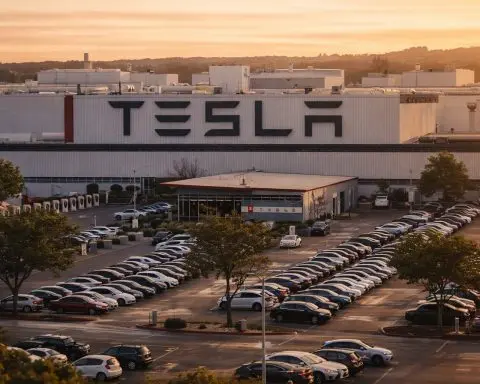
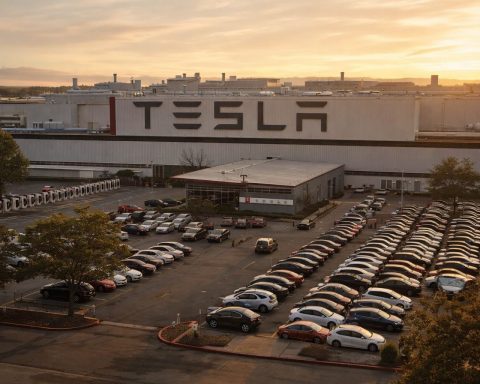
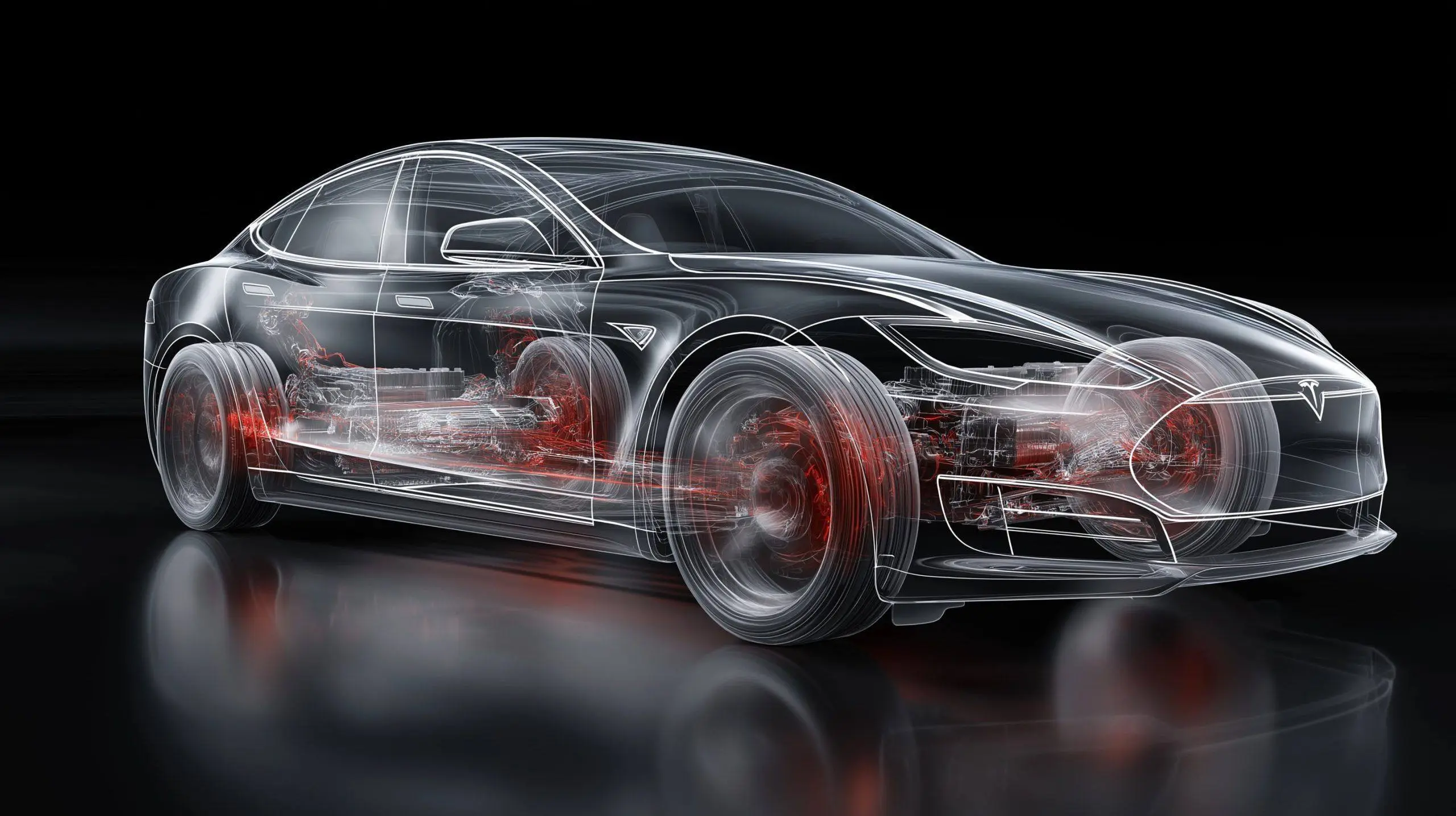
2. Tesla (TSLA) Today: Downgraded, but Still the Benchmark
How the stock is trading
By mid‑afternoon New York time, Tesla shares are trading around $442, down roughly 3% on the day and off recent highs near $455. Finbold
Even after today’s drop, Tesla is up about 20% year‑to‑date, having staged a strong recovery from an AI‑driven tech sell‑off earlier in the autumn. 24/7 Wall St.
Morgan Stanley’s new stance
Several pieces of coverage today unpack Morgan Stanley’s revised view:
- The bank cut its rating to Equal Weight but raised its price target from $410 to $425, arguing that Tesla’s rally has already priced in a lot of excitement around AI, robotaxis and the Optimus humanoid robot. Finbold+1
- Analysts explicitly assign pieces of that target to software and robotics initiatives — including Full Self‑Driving (FSD) and Optimus — while warning that near‑term catalysts could be “choppy” through 2026. Primary Ignition
Fundamentally, Tesla’s latest earnings underscore the mixed picture:
- Q3 2025 revenue: about $28.1 billion, up 12% year‑over‑year.
- Earnings per share: $0.50, missing consensus of $0.54.
- Net income: down 37% year‑over‑year to roughly $1.37 billion, as pricing pressure and investment in AI and robotics weighed on margins. 24/7 Wall St.
Several outlets note that, while Tesla remains the de facto bellwether for EV stocks, investors are increasingly treating it like a hybrid of an automaker, an energy company and an AI/software platform, which justifies a premium — but only up to a point. Finbold+1
3. Rivian (RIVN): R2 Launch Risks and ‘EV Winter’ Exposure
Price action
Rivian shares are trading near $17.1, down about 5% today and just off a new 52‑week high around $18.60. Investing.com
Why Morgan Stanley is worried
Rivian is getting hit on multiple fronts:
- Morgan Stanley downgraded the stock to Underweight from Equal Weight and set a $12 price target, implying roughly 30–35% downside from recent levels. Investing.com+1
- The core concern is Rivian’s 2026 launch of its lower‑priced R2 platform, which will arrive just as U.S. EV tax credits lapse and financing costs remain elevated, potentially squeezing demand at the very moment Rivian needs scale. Investing.com+1
- The bank also forecasts a $2.9 billion adjusted EBIT loss in 2026 and $4.2 billion in negative free cash flow, highlighting the company’s heavy capital needs. Investing.com
A separate Stocktwits‑syndicated article summarizing the downgrade leans into the idea of a prolonged “EV winter” through 2026, noting that Morgan Stanley is simultaneously becoming “moderately more positive” on ICE and hybrids. Stocktwits+1
Offsetting positives
Rivian isn’t standing still:
- U.S. sales in November rose about 14% month‑over‑month and 24% year‑over‑year, according to Motor Intelligence data cited in today’s coverage. Stocktwits
- The company has narrowed its 2025 production guidance but is still targeting over 41,000 vehicles for the year, and a recent Volkswagen partnership plus a planned “AI Day” on December 11 aim to showcase Rivian’s autonomy roadmap. Investing.com+1
Analyst consensus, as tracked by MarketBeat, still sits at “Hold” with an average target around $14–15, reflecting a split market: some see Rivian as a long‑duration growth play; others see an over‑valued cash burner facing a harsher macro backdrop. MarketBeat
4. Lucid (LCID): Deep Cuts to Price Target and a Long Profitability Timeline
Where the stock trades
Lucid is having an even tougher session. The stock is around $12.45, down more than 7% today and over 55% lower year‑to‑date, according to figures cited in today’s analyst notes. Investing.com
Morgan Stanley’s downgrade in detail
Morgan Stanley’s new Lucid call is among the harshest of the day:
- Rating: Cut from Equal Weight to Underweight.
- Price target: Slashed from $30 to $10, putting the target well below the current market price. Investing.com+1
The bank’s model reflects a very long road to profitability:
- It does not expect gross profit to turn positive until 2028, even as Gravity SUV production ramps.
- On a per‑vehicle basis, Morgan Stanley projects EBIT losses of about $216,000 per car in 2025, improving to $126,000 in 2026 — but remaining negative until 2031. Investing.com
- Analysts also flag “significant dilution risk,” estimating Lucid will likely need to raise around $2 billion in fresh equity by the second half of 2026, a large number relative to its roughly $4.6 billion market cap. Investing.com
Despite the grim math, the note does concede a few positives:
- Lucid’s premium positioning and high average selling prices help cushion revenue as U.S. tax credits fade.
- Its battery‑efficiency leadership has already led to technology‑licensing deals, including one with Aston Martin, underlining that the company has valuable IP even if the core auto business is struggling. Investing.com
Other coverage from TipRanks and The Fly echoes the same theme: Lucid’s technology is admired, but its financial profile and capital structure are increasingly a concern in an environment where Wall Street is less willing to fund sustained losses. TipRanks
5. The Global EV Backdrop: China Surges, U.S. Reprices
Today’s EV‑stock moves are happening against a global backdrop that is far from uniformly gloomy.
China: NEVs near half of passenger sales
A new report on China’s EV market released today via Research and Markets highlights just how far ahead China is in the EV race:
- By early 2025, new energy vehicles (NEVs) — battery‑electric plus plug‑in hybrids — are expected to account for nearly half of all Chinese passenger vehicle sales. GlobeNewswire
- The country is doubling down with heavy subsidies, aggressive charging‑infrastructure build‑out, and tougher emissions rules, making it the world’s largest and most competitive EV market. GlobeNewswire
- Domestic giants like BYD, NIO and XPeng, alongside global players such as Tesla and Volkswagen, are all investing heavily, while new technologies such as sodium‑ion and solid‑state batteries gain momentum. GlobeNewswire+1
United States: Record share, but policy whiplash
In the U.S., EV adoption has hit new milestones — but with caveats:
- Data compiled by CarEdge show U.S. EVs captured about 10.5% of new‑car sales in Q3 2025, with roughly 437,000 fully electric vehicles sold, a record volume. caredge.com
- Tesla’s share of the U.S. EV market has slipped to about 41% as more models from GM, Hyundai, Kia and others hit showrooms, while GM roughly doubled its EV sales versus mid‑2024. caredge.com
- Importantly, that Q3 strength was pulled forward by the September 30 expiry of key federal EV tax credits — exactly the kind of policy cliff Morgan Stanley now sees weighing on 2026 volumes. caredge.com+1
Global agencies remain bullish on the long‑term trajectory: the IEA’s Global EV Outlook 2025 and related forecasts cited in recent weekly recaps suggest EV car sales are likely to exceed 20 million units in 2025, with well over 100 million EVs on the road by 2026. TechStock²+1
The tension investors are dealing with today is this:
Structural growth is strong, but the next 18–24 months look cyclically weak in key markets like the U.S.
6. EV Ecosystem Spotlight: AI, Software and QNX
EV stocks aren’t just about the companies bolting batteries into cars. A growing share of the value is shifting toward software, AI and in‑vehicle electronics.
Gartner: Only a few automakers will sustain AI spending
A new Gartner study reported by Reuters today warns that by 2029 only about 5% of automakers will maintain strong AI‑investment growth, down from more than 95% today. Reuters
The implication:
- Carmakers that lack deep software skills and tech‑savvy leadership are likely to fall behind.
- Names highlighted in the article include Tesla and BYD, positioned as tech‑driven rivals to slower‑moving legacy OEMs such as Volkswagen. Reuters
In other words, EV investors may increasingly need to evaluate car companies like software firms: looking at their AI talent, data advantages, and ability to update vehicles over the air, not just at unit volumes and factory capacity.
QNX (BlackBerry) pushes deeper into software‑defined vehicles
On the supplier side, BlackBerry’s QNX division announced today that it will showcase a new Foundational Vehicle Software Platform at CES 2026, built in collaboration with Vector. Stock Titan
Highlights from the announcement:
- The platform combines QNX’s real‑time OS and virtualization with Vector middleware to streamline in‑car software integration for automakers.
- QNX will demo QNX Cabin and QNX Sound running in a Hyundai IONIQ 6 with a Bose concept system and Dolby Atmos, underscoring how audio, infotainment and digital cockpits are now core parts of EV value. Stock Titan
- QNX software already powers more than 255 million vehicles on the road, showing that some of the most durable EV exposure may sit in software stacks and embedded systems rather than in flashy consumer brands alone. Stock Titan
For investors, today’s software‑centric headlines reinforce a trend: even as automaker stocks wobble, the “picks and shovels” of the EV transition — operating systems, chips, charging networks, and battery tech — are becoming central to the story.
7. India in Focus: Ola Electric’s 80% Collapse
While U.S. names dominate today’s tape, one of the steepest EV moves is happening in India.
A fresh report from IANS shows that Ola Electric Mobility’s shares have plunged nearly 80% from their post‑listing peak and more than 50% below their IPO price of ₹76, after seven straight losing sessions. IANS News
Key details:
- The stock closed around ₹34.4 today, with intraday losses extending a deep drawdown from a market‑cap peak above ₹65,000 crore to under ₹15,000 crore. IANS News
- Trading volumes remain unusually high, suggesting heavy institutional and retail repositioning.
- Ola cut its full‑year revenue guidance sharply, now projecting ₹3,000–3,200 crore versus a prior forecast of ₹4,200–4,700 crore, even as it starts mass deliveries of scooters powered by its new 4680 “Bharat Cell”. IANS News
Ola’s slump acts as a cautionary tale: even in fast‑growing EV markets, richly valued listings can unwind quickly when guidance is cut and technical support breaks down.
8. Where Are Analysts Still Bullish?
Despite today’s downgrades, not all EV commentary is negative:
- A widely circulated technical‑plus‑fundamental piece from DailyForex last week laid out a “best 9 EV stocks for December 2025” list, spotlighting BYD, Li Auto, NIO, XPeng, Polestar, VinFast, Tesla, Rivian and Lucid as names with attractive setups, particularly in China‑focused stocks like BYD and Li Auto after recent corrections. DailyForex+1
- MarketBeat’s EV screen, updated through December 8, continues to flag Tesla, Rivian and NIO as EV stocks with the highest recent dollar trading volume, indicating that, love them or hate them, these are still the sector’s liquidity hubs. MarketBeat+1
Longer‑term thematic pieces from brokers and platforms like NAGA and NerdWallet also reiterate that:
- Global EV sales are expected to grow at a compound annual rate near 25–27% through 2030, potentially reaching 34–35 million units annually by the decade’s end. NAGA+1
- For investors who don’t want to pick single names, EV‑themed ETFs such as the Global X Autonomous & Electric Vehicles ETF (DRIV) provide diversified exposure to automakers, battery makers and charging‑network operators. NerdWallet+1
In short, the stock‑picking mood has turned more selective, not outright bearish. Analysts increasingly distinguish between:
- Profitable incumbents (GM, some Chinese makers, and certain suppliers), and
- Capital‑hungry upstarts (many pure‑play EV startups) that must prove they can survive a funding and demand slowdown.
9. Macro Backdrop: Fed Week and Risk Appetite
Today’s EV stock volatility isn’t happening in isolation. U.S. markets are bracing for a key Federal Reserve meeting on Wednesday, December 10, where a widely expected 25‑basis‑point rate cut could reset risk sentiment into year‑end. INDmoney
A U.S. market preview published this morning notes:
- Index futures for the S&P 500, Nasdaq 100 and Dow show “cautious optimism,” but traders are acutely aware that rate guidance and labor‑market data could trigger sharp rotations between growth and value. INDmoney
- High‑beta, long‑duration names like EV stocks often benefit from lower rates, but they can also be hit hardest if the Fed sounds more hawkish than expected or if economic data disappoints. INDmoney
This macro uncertainty is part of why today’s Morgan Stanley call is hitting EV stocks so hard: when the cost of capital is falling, but investors are suddenly more skeptical of a sector’s near‑term cash flows, valuations can swing quickly.
10. How Investors Might Think About EV Stocks Now
(Educational, not financial advice)
Given today’s headlines, investors following EV stocks may want to focus on frameworks, not hot takes:
- Separate long‑term EV demand from near‑term U.S. “EV winter” risks
- Global adoption — especially in China and Europe — still looks strong. GlobeNewswire+1
- But in the U.S., the combination of expired tax credits, high monthly payments and tighter credit checksis creating a real slowdown in 2026 forecasts. Investing.com+1
- Distinguish leaders from laggards
- Companies like Tesla and BYD benefit from scale, software depth and strong brand recognition. Reuters+1
- Start‑ups like Rivian and Lucid may offer higher potential upside, but also face more acute funding risk and long profitability timelines, as today’s Morgan Stanley models make painfully clear. Investing.com+1
- Consider the broader EV ecosystem
- Suppliers like QNX (BlackBerry), battery‑material royalty companies and charging networks are all part of the same structural story, but with very different risk/return profiles. Stock Titan+1
- Use diversification tools wisely
- EV‑focused ETFs and broader clean‑tech funds can reduce single‑name risk while still riding the long‑term electrification theme. NerdWallet+1
- Match time horizon to thesis
- The “EV winter” thesis is largely a 2025–2026 story. Many of the most bullish projections for EV penetration and autonomy stretch into the early 2030s. Investors need to decide whether they’re trading headlines over a few quarters or investing in a decade‑long structural shift.
Important: Nothing here is investment advice. EV stocks are volatile and speculative. Always do your own research and consider speaking with a licensed financial adviser before making investment decisions.
11. Key Takeaways for December 8, 2025
- EV stocks are under pressure today primarily because Morgan Stanley’s new auto analyst has turned structurally cautious on U.S. EV demand for 2026, calling for an “EV winter” and cutting ratings on Tesla, Rivian and Lucid while upgrading GM. Investing.com+1
- Tesla remains the sector benchmark, but its premium valuation is now being questioned as investors weigh modest earnings growth against big, but still uncertain, AI and robotics payoffs. Finbold+1
- Rivian and Lucid face the harshest scrutiny, with forecasts showing years of losses, large capital needs and heightened sensitivity to any further EV‑demand slowdown. Investing.com+1
- Globally, the EV transition is still accelerating, led by China’s NEV boom and strong long‑term projections from agencies like the IEA, even as U.S. policy cliffs and affordability issues create a patchy near‑term picture. GlobeNewswire+2TechStock²+2
- The investable EV universe is broadening, with software platforms, AI, charging networks and battery‑metal plays increasingly central to the story.
For now, the message from markets and today’s news flow is nuanced:
The EV future looks bright — but the road through 2026 may be icy.