
NEW YORK, July 19, 2026, 16:10 EDT
- Last week, the S&P 500 fell 1.6% and the semiconductor index slid 10.0%.
- Early data from LSEG LON:LSEG indicates that 90% of 49 S&P companies reporting have surpassed forecasts.
- Brent rose approximately 16%. The 10-year Treasury yield finished at 4.55%.
Wall Street’s chip sector decline has not yet led to a broader market downturn. U.S. cash markets remained closed on Sunday. On Friday, the S&P 500 closed at 7,457.69, roughly 2% under its record high from early June. The Nasdaq ended the session at 25,520.24, while the Dow finished at 52,146.42.
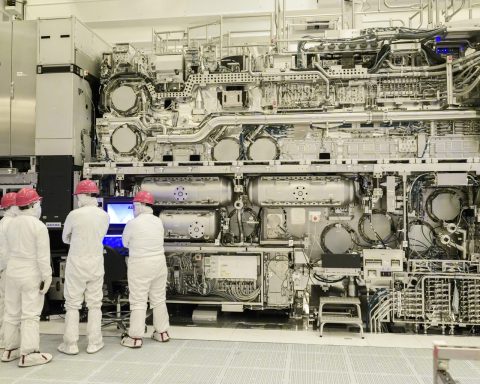
That strength is significant as chipmakers now play a bigger role in index performance. Paul Nolte, senior wealth adviser at Murphy & Sylvest, says their weighting in the S&P exceeds 20%, up from 8% three or four years prior. The SOX index fell 10.0% last week.
Based on Nolte’s calculation, the concentration figures are clear. If a 20% chip weighting fell in line with the SOX drop, it would cut around two percentage points. The S&P slipped 1.6%. That difference suggests gains elsewhere lessened the chip impact. This example serves to illustrate and is not a formal attribution.
The five readings listed below reflect the market’s present balance.
| Chart | Latest reading | Investor read |
|---|---|---|
| 1. Broad tape | S&P 500 fell 1.6%, Nasdaq lost 2.9%, and the Dow dropped 0.9% last week. Reuters | Growth stocks led the market decline. |
| 2. Chip concentration | SOX declined 10.0%, chipmakers now more than 20% of S&P weighting. Investing.com | Chip volatility amplified due to high concentration. |
| 3. AI split | SOX up about 65% this year; meanwhile, software and services are down around 17%. Reuters | Hardware suppliers still attract most capital. |
| 4. Earnings floor | Initial data: 90% of 49 reported beats; profit growth estimate at 26.0%. Reuters | Earnings give broader index underlying support. |
| 5. Oil and rates | Brent rose 16% for the week; 10-year yield sits at 4.55%; core CPI unchanged. Reuters | Relief on inflation remains uncertain. |
The initial chart depicts a retreat driven by growth stocks, with the Nasdaq dropping 2.9%, over three times the Dow’s 0.9% slide. Market breadth deteriorated on Friday as decliners outpaced advancers by almost two-to-one on the NYSE.
The cushion may diminish. “It’s like the market has chip fatigue,” said Carson Group chief strategist Ryan Detrick. The SOX ended 20.2% under its June 22 peak, marking a confirmed bear market. Reuters
AI-related investment has also divided the technology sector. The SOX has climbed roughly 65% so far this year, while the S&P software-and-services index has dropped around 17%. The difference of about 82 points benefits suppliers more than software consumers.
Earnings are offering the primary counterbalance. Early LSEG figures indicate that 90% of 49 companies reporting have surpassed expectations. Projected S&P profit growth has risen to 26.0%, up from 19.2% as of April 1, marking an increase of 6.8 percentage points.
The valuation outlook reinforces this view. On July 10, the S&P was trading close to 20 times forward earnings, a decrease from 21 times in late May. Recent advances have been driven more by earnings forecasts than by an increase in multiples.
Oil prices moved in the opposite direction. Brent finished at $88.10 on Friday, rising roughly 16% over the past week. The yield on the 10-year Treasury closed at 4.55%, slipping 1.2 basis points across five sessions.
Core consumer prices did not change in June, which offered some support to bonds. However, energy prices dropped 5.7% during the period. A rise in crude could offset that benefit ahead of the Federal Reserve’s July 28-29 meeting.
Alphabet NASDAQ:GOOGL will be in focus on Wednesday when it reports earnings. Investors are expected to scrutinise AI investments and data centre spending. Kevin Mahn, chief investment officer at Hennion & Walsh, cautioned about “ripple effects across the entire AI ecosystem” if there is any slowdown. Reuters
Intel NASDAQ:INTC, Texas Instruments NASDAQ:TXN and Tesla NASDAQ:TSLA are also scheduled to report. Over 80 S&P 500 companies are set to release results next week. Intel shares have climbed more than 160% this year. Texas Instruments has gained around 60%. Expectations remain elevated.
Investor focus has shifted toward guidance over earnings beats. Robust outlooks are needed to counteract weakness in chipmakers and inflationary headwinds from oil.
Risks: The chip-weight calculation is for illustration only, and the earnings sample is still at an early stage. Gulf attacks escalated over the weekend, and Hormuz tanker movements declined sharply. A rise in oil prices or disappointing AI outlooks could trigger a broader selloff.
Related articles: Technology Trends