NEW YORK, April 6, 2026, 13:25 (EDT)
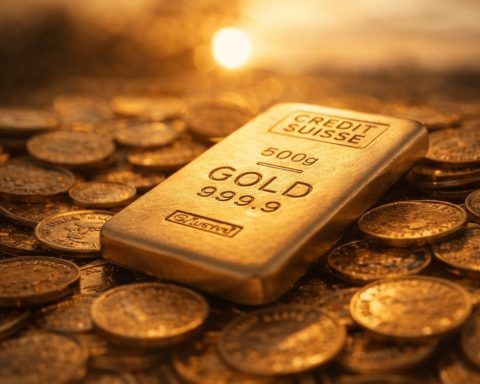
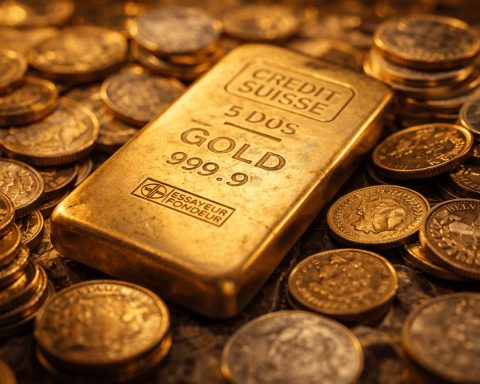
Gold hovered just under $4,670 an ounce on Monday, clawing back after slipping earlier. Traders are eyeing President Donald Trump’s final Tuesday deadline for Iran to strike a deal over the Strait of Hormuz, even as they scale back expectations for U.S. rate cuts. By 11:22 a.m. ET, spot gold was flat at $4,669.27, following a 1% drop earlier in the session. U.S. gold futures tacked on 0.3% to $4,694.50. Reuters
This is a tricky spot for bullion. War risk keeps some support under the metal, but with no yield to offer, higher-for-longer U.S. rates eat away at its shine. All this comes after gold slumped over 11% in March—the sharpest monthly decline since October 2008. Reuters
Rates stiffened to kick off the week. Wells Fargo Investment Institute scrapped its previous forecast for two Fed cuts in 2026—now, it’s not expecting any that year. Citigroup, on the other hand, delayed its call for the Fed’s next moves, now seeing rate reductions coming in September, October, and December. The labor market stayed hot: Friday’s payrolls indicated 178,000 new jobs for March, with unemployment ticking down to 4.3%. Fresh numbers from Monday’s ISM services survey highlighted inflation worries, with the prices-paid index shooting up to 70.7, a level last seen in October 2022. Reuters
Talks between Washington and Tehran dragged on as both sides poked at a possible framework to halt the five-week war. Iran shot down the idea of a stopgap truce, while Trump insisted the Tuesday deadline was set in stone—no extensions coming. With about 20% of global energy flowing through the Strait, every diplomatic twitch sparks movement in oil, inflation, and gold. Reuters
“Focus is likely to remain on the war and interest rates,” TD Securities’ global head of commodity strategy Bart Melek told Reuters. He pointed out that a drawn-out conflict pushes oil prices higher, fuels inflation, and limits the Fed’s flexibility to cut rates—bad news for bullion. Reuters
Cross-asset action didn’t break the tug-of-war pattern. U.S. crude edged down 0.56% to $110.92 a barrel; Brent came off 0.27% at $108.74. The dollar index slipped 0.37%. That kind of dollar move tends to make gold less expensive for buyers outside the U.S., yet support was muted as investors stayed focused on rates. Reuters
“The market was on edge over this ultimatum,” said Robert Pavlik, senior portfolio manager at Dakota Wealth. That tension probably helped prevent bullion from tumbling, even as hopes for Fed easing continued to fade. Volume was lighter, too, with several markets closed for Easter Monday and Tomb Sweeping Day. Reuters
Gold bulls are stuck with risk on both sides. A ceasefire and Hormuz reopening might take the wind out of haven demand, but falling oil prices could bring inflation lower, making the argument for rate cuts stronger. On the flip side, if the conflict drags out and energy prices spike again, bullion could still face headwinds—higher rates tend to weigh on non-yielding assets like gold. That’s the cloud hanging over the market. Reuters
Precious metals slipped into the red. Spot silver slid 0.9% to $72.32 an ounce, while platinum gave up 0.9% at $1,971.04. Palladium shed 1.1% to $1,486.03. The tone stayed cautious. Reuters
Up next: a packed week. Minutes from the Fed’s March meeting drop Wednesday. Thursday, the U.S. Personal Consumption Expenditures numbers hit, followed by Friday’s Consumer Price Index. Traders want to see if inflation data, rather than war headlines, will set gold’s path. Reuters