
SAN FRANCISCO, August 25, 2026, 16:42 EDT — Hims stock gained 2.2% after recent losses tied to a Visa dispute, though the market capitalisation is still down by $474 million over two sessions.
- Hims ended the session at $31.75, rising 2.16%, before slipping 0.22% in after-hours trade.
- The stock was still down 6.01% from Friday’s closing level, following a 7.99% drop on Monday.
- Visa oversight mandates that the dispute rate remains under 1.5% over a three-month period.
- The September fee of $75,000 represents roughly 0.01% of revenue for the quarter.
Shares of Hims & Hers regained some ground on Tuesday after declining Monday, but the stock remained down by about $474 million over two sessions following a report of increased payment disputes.
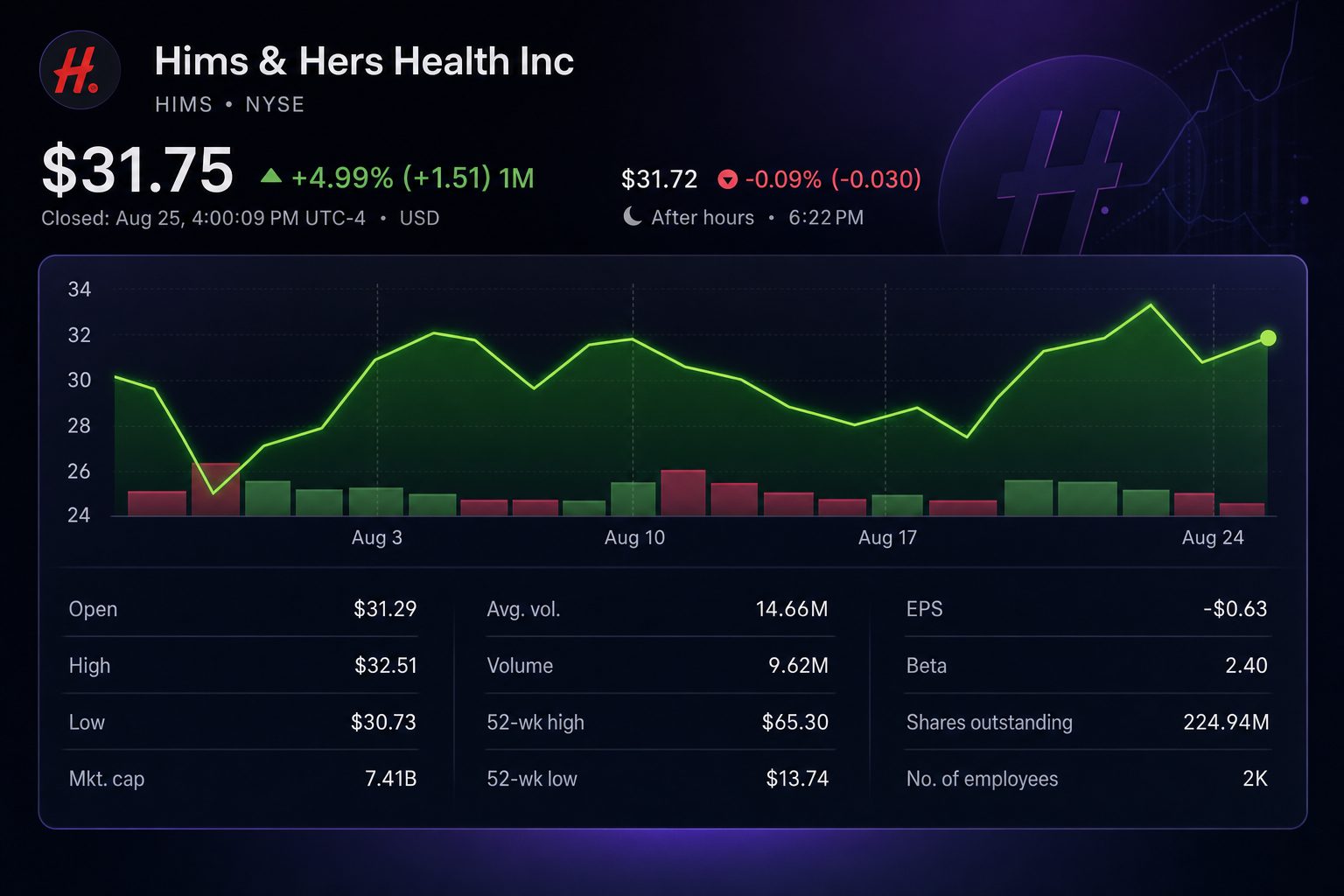
Hims & Hers Health, Inc. (NYSE:HIMS) ended the session at $31.75, gaining 2.16%. The stock slipped to $31.68 as of 16:42 EDT market and analyst data.
The stock ended the session 6.01% lower than Friday’s $33.78 close. With 233.31 million shares in circulation, the drop erased roughly $473.6 million in quoted equity value.
| Session | Close | Daily move | Change from Friday |
|---|---|---|---|
| Friday, Aug. 21 | $33.78 | up 6.03% | — |
| Monday, Aug. 24 | $31.08 | down 7.99% | off 7.99% |
| Tuesday, Aug. 25 | $31.75 | rises 2.16% | down 6.01% |
| Tuesday after hours | $31.68 | slips 0.22% | declines 6.22% |
Visa has added Hims to its Acquirer Monitoring Program, Bloomberg said on Friday. Disputes from customers in the weight-loss subscription segment had surpassed the program’s threshold for July report details.
The paperwork showed an $8 fee applied to every dispute. That pushed Hims’ bill for September close to $75,000. The company must maintain a dispute rate under 1.5% for three straight months to leave.
The upfront fee is minimal, amounting to about 0.01% of Hims’ $753.2 million revenue for the second quarter. A more significant issue involves customer retention, refund rates, and payment-related challenges among close to 2.9 million subscribers.
Hims stated that only a small number of charges were contested and that it has implemented corrective measures. The company added that its checkout process makes membership and medication pricing transparent.
Increased regulatory attention has heightened the significance of the payment matter. The Federal Trade Commission filed a lawsuit against Hims in July, citing concerns regarding billing, cancellation, and privacy processes. Hims has stated that it will challenge the allegations FTC complaint.
| Operating measure | Q2 2026 | Year-earlier comparison |
|---|---|---|
| Revenue | $753.2 million | up 38% |
| Subscribers | 2.891 million | increased 19% |
| Gross margin | 64% | 76% |
| Net income / loss | -$86.3 million | $42.5 million profit |
| Free cash flow | -$68.2 million | -$69.4 million |
Revenue continues to rise, though underlying economics have declined. Gross margin dropped by 12 percentage points, impacted by the shift in mix from branded weight-loss medications and growth in international sales company results.
Hims projects third-quarter revenue between $880 million and $900 million, with the midpoint suggesting a sequential growth of roughly 18%. Adjusted EBITDA is anticipated to range from $75 million to $95 million.
| Analyst snapshot | Rating | Price target |
|---|---|---|
| Consensus from 15 analysts | Hold | $31.23, average |
| Range | $23 at the lowest / $42 at the highest | -27.6% to +32.3% |
| Barclays, Aug. 21 | Equal Weight | $35, previously $39 |
| Truist, Aug. 24 | Hold | $32, up from $27 |
Risks: The information on Visa’s program is based on internal records, not an official company disclosure. Hims may be able to address the dispute rate promptly. Ongoing growth in subscriptions might offset the immediate issue regarding billing.
Hims ended Tuesday with a valuation near $7.41 billion, or approximately 2.9 times its trailing revenue. The average analyst estimate is just under the latest closing price.
The market has factored in more than just a minor charge. Investors are examining if disputes over payments reveal a larger vulnerability in the subscription model, as margins and cash flow continue to face strain.
Related articles: NYSE:HIMS

![Asia Stock Market Today 26/08/2026 [UPDATE: 07:03 SGT] [Korea Opens Block Trading After Asia’s Broad Rebound]](https://ts2.tech/wp-content/uploads/2026/08/Asia-market-dashboard-2026-08-26-0703-480x384.jpg "Asia Stock Market Today 26/08/2026 [UPDATE: 07:03 SGT] [Korea Opens Block Trading After Asia’s Broad Rebound]")