
LONDON, March 21, 2026, 11:41 (GMT)
Washington’s move to temporarily release around 140 million barrels of stranded Iranian crude didn’t stop oil’s climb. Brent settled at $112.19 a barrel on Friday—levels last seen in July 2022. “The White House is running out of options,” Brett Erickson at Obsidian Risk Advisors said, pointing to the continued squeeze at the Strait of Hormuz. Reuters
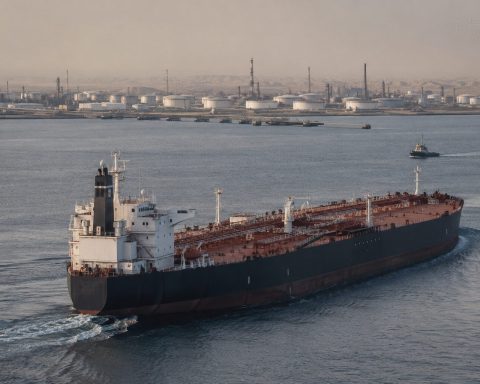
That’s directly in play now, with Indian refiners and others across Asia actively probing whether they can snap up these cargoes. The U.S. waiver applies to Iranian oil loaded by March 20, with discharge allowed through April 19. According to traders and consultancies, anywhere from 130 million to 170 million barrels are currently afloat—less than 14 days’ worth of the Middle East’s recent output losses. Worth noting: about 60% of Asia’s crude comes from that region.
Hormuz is the real choke point here. About 20% of the world’s oil and liquefied natural gas—gas cooled to liquid for shipping—typically passes through the strait. Attacks have knocked out refineries and export terminals throughout the Gulf. Iraq responded by invoking force majeure on foreign-run oilfields after export flows froze up, slashing Basra production to 900,000 barrels per day from 3.3 million.
Physical cargo markets are feeling the squeeze even more than futures right now. On Thursday, Middle East benchmark Dubai crude soared to a record $166.80 a barrel. According to David Jorbenaze at ICIS, spot differentials reveal “a much tighter system beneath the headline price,” with refiners snapping up medium and heavy sour crude—grades with higher sulfur content favored by many Asian refineries. With that demand, Russia’s Urals and Norway’s Johan Sverdrup have both jumped as alternative supplies. Reuters
Saudi Arabia is trying to divert some help. Unipec, the trading unit of Sinopec, will pick up around 24 million barrels from Yanbu on the Red Sea in March. Most of that is Arab Light, the country’s lighter crude—heavier grades are still in short supply for certain refiners. Sinochem, meanwhile, has scaled back crude throughput at its Quanzhou plant to roughly 60% and is now searching for immediate shipments.
That’s why for traders, the Iranian waiver looks more like a temporary patch than anything lasting. John Kilduff at Again Capital called 140 million barrels “not a whole lot,” while Price Futures Group’s Phil Flynn pointed out that, despite the pullback from Thursday’s intraday spike, the market was only “gaining more confidence in supply.” Still, Brent finished near a four-year high. Reuters
The next step isn’t clear-cut. Iran signaled to Kyodo it could allow Japan-linked ships safe passage through Hormuz—if Tokyo reopens talks—suggesting there’s a slim chance for reduced shipping risk. But after a string of strikes on Gulf energy targets—tankers, refineries, export terminals—the market’s still grappling with the fallout.
China is still snapping up the bulk of Iran’s oil, accounting for over 80% of Tehran’s seaborne crude exports in 2025—roughly 1.38 million barrels a day, according to Kpler, with most of it ending up at small “teapot” refineries in Shandong. Since December, Iranian Light has been changing hands at a discount of $8 to $10 a barrel compared to Oman crude delivered to China. That gap could narrow if the waiver attracts more buyers. Reuters
Related articles: Energy Markets