
SEOUL, March 1, 2026, 16:21 KST — The market has closed.
- Exports out of South Korea topped expectations, thanks largely to a sharp rise in chip shipments, the country’s latest trade report showed.
- After late-February losses and a wave of foreign selling, the KOSPI heads into a shortened week.
- Attention shifts to Korean factory and inflation figures, while the U.S. jobs report is on deck as well.
South Korean shares open a holiday-shortened week bolstered by a single clear theme: exports. According to the trade ministry, February exports jumped 29% year-on-year, fueled by a striking 160.9% leap in semiconductor sales. Chip shipments crossed $20 billion for the third month running.
This is key: KOSPI’s fortunes on the Korea Exchange hinge mostly on chip stocks, not broader macro trends. Freshly robust trade data can help restore composure after profit-taking knocked the benchmark back from recent peaks.
There’s less room to maneuver. With Monday marking a substitute public holiday for Independence Movement Day, the week loses a session and the data calendar gets tighter.
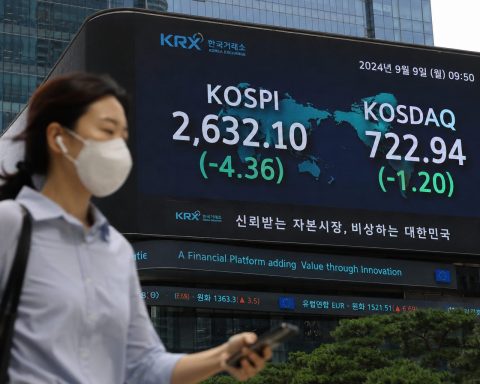
KOSPI finished Friday at 6,244.13, slipping 1%. Foreign investors unloaded shares worth a record 7.14 trillion won in just one session, according to Korea Exchange data. Individual buyers stepped in, picking up 6.31 trillion won. Turnover surged to a record 53.88 trillion won.
Strategists aren’t just watching earnings—they’re eyeing the currency, too. “If the won shifts to strength, foreign net buying could emerge,” said Kim Hak-kyun, who leads Shinyoung Securities Research Center. He pointed to previous times when overseas flows responded to exchange rate reversals.
Foreign investors have been unloading shares where prices previously surged. From Feb. 2 through Thursday, overseas funds sold a net 13.4 trillion won worth of KOSPI stocks, focusing on semiconductors and automakers, according to Korea JoongAng Daily. “It appears to reflect profit-taking after sharp gains earlier this year,” said Han Ji-young at Kiwoom Securities. Lee Kyung-min at Daishin Securities saw it more as sector rotation than a wholesale exit. Korea Joongang Daily
Pressure from global markets weighed. Nvidia dropped 3.5% Friday, dragging the semiconductor sector lower as traders worried about lofty valuations and AI’s shakeup, according to Reuters. Oil surged, driven by mounting U.S.-Iran tension. “It’s time for a breather,” said Talley Leger, chief market strategist at The Wealth Consulting Group, referring to semiconductors. Reuters
Autos took the spotlight in Seoul after Hyundai Motor Group inked a deal with the government to pour about 9 trillion won ($6.26 billion) into an AI data centre and a robot factory, according to Reuters. The west coast infrastructure push features plans for an AI centre packing 50,000 GPUs — the go-to chips for AI training — plus a new robotics manufacturing site.
Still, the risk is clear enough. Should the U.S. tech selloff accelerate, chip-focused markets are often the first to take the hit. Another sharp move higher in oil prices would muddy the inflation outlook, likely putting a lid on rate-cut speculation—and that typically drags on high-multiple names.
Fresh data will start landing fast after markets reopen. South Korea’s S&P Global manufacturing PMI drops on March 3, with January’s industrial output and February inflation still to come that same week, according to Trading Economics’ calendar. The U.S. isn’t far behind—February’s jobs report from the Labor Department hits on March 6.
The KOSPI faces a straightforward hurdle: Will foreign outflows ease once month-end rotations settle? Also in focus—can chipmakers keep buyers interested after Seoul’s inflation numbers on Friday and the U.S. payrolls report due March 6.
Related articles: Stock Market