

London, July 10, 2026, 13:31 (BST)
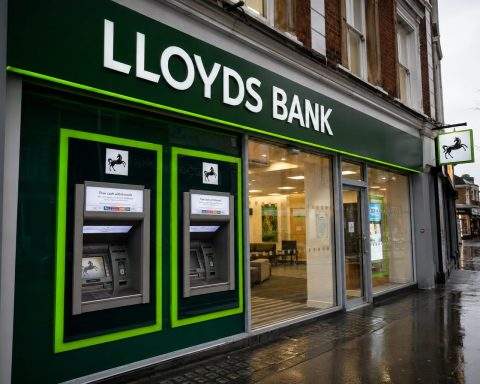
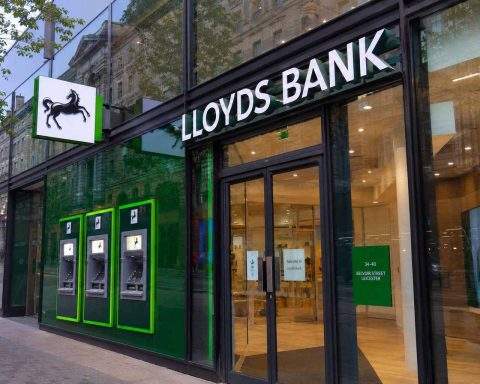
Lloyds Banking Group LON:LLOY rose 0.76% to 112.55 pence by 13:20 BST on Friday, with the stock trading almost exactly at the average price paid during the bank’s latest three-day repurchase burst. The gain outpaced two large UK banking peers.
| Bank | Share price | Friday move |
|---|---|---|
| Lloyds Banking Group LON:LLOY | 112.55p | +0.76% |
| Barclays LON:BARC | 509.40p | +0.47% |
| NatWest Group LON:NWG | 665.00p | +0.30% |
Regulatory filings show Lloyds bought 24 million shares from Tuesday through Thursday at a combined volume-weighted average price, or VWAP, of 112.8221p. VWAP is an average that gives greater weight to larger trades. The bank spent about £27.1 million, while its purchases equalled 8.1% of reported market volume over the three sessions; the shares will be cancelled under instructions issued to its broker in January.
That scale made Lloyds the buyer of roughly one in every 12 shares reported as traded during the stretch. It did not stop the price falling — the stock remains about 2.2% below last Friday’s close — but it gives investors a live reference point around 112p to 113p. It is not a management call on the bottom, since the trades followed standing instructions rather than a fresh decision taken during this week’s decline.
| Purchase date | Share-price move | Shares repurchased | Buyback VWAP | Buyback as share of market volume |
|---|---|---|---|---|
| July 7 | -1.30% | 7.0 million | 114.8604p | 8.3% |
| July 8 | -2.94% | 10.0 million | 111.8952p | 8.5% |
| July 9 | +1.09% | 7.0 million | 112.1080p | 7.6% |
| Three-day total | — | 24.0 million | 112.8221p | 8.1% |
Rates offered the other support. Bank of England Chief Economist Huw Pill, one of two of nine policymakers who voted last month to lift Bank Rate from 3.75%, said rates would need to rise within the coming year: “The short answer is yes”; the next decision is due on July 30. Higher rates can widen Lloyds’ net interest margin — the gap between what it earns on loans and pays on deposits — and Monex Europe strategist Barry van der Laan said Pill’s message showed the BoE had “less room to look through inflation” than the Federal Reserve or European Central Bank. Reuters
Capital rules offer a slower-burn tailwind. The BoE has proposed cutting leverage requirements for large British banks by 0.2 percentage point; the leverage ratio is the minimum capital held against total assets, without adjusting for their risk. The change would affect domestically focused lenders including Lloyds and NatWest but still faces consultation, while AFME capital director Jeanie Watson said the framework contained “significant gold-plating” — rules tougher than the international baseline — and had become “increasingly binding.” Reuters
Lloyds’ latest earnings provide some room for that debate. First-quarter pretax profit rose 33% to £2 billion, beating an analyst consensus of £1.84 billion, and the bank booked no new motor-finance provision. It is targeting return on tangible equity above 16% in 2026 — a measure of profit generated from shareholder capital after excluding goodwill — with half-year results and a strategy update scheduled for July 30.
But the support case has clear limits. Higher rates can cut mortgage demand and pressure borrowers: Lloyds’ house-price measure rose just 0.2% in June and 0.6% from a year earlier, while May mortgage approvals were the weakest since December 2023; Amanda Bryden, its head of mortgages, expects the market to continue at a “measured pace.” Reuters Motor finance remains the harder tail risk: the Financial Conduct Authority’s proposed £9.1 billion industry redress scheme is partly suspended during legal challenges, with payments potentially starting in 2027 if upheld or slipping to 2028 or later if rewritten. Daniel Gore, a partner at Withers, called the case “a ferocious fight for every compensation percentage point.” Reuters
On Friday’s numbers, Lloyds trades 0.24% below the bank’s three-day repurchase average. The buyback has supplied visible demand, but July 30 will test whether the gains from rates and looser capital rules can outrun soft housing activity and a motor-finance bill that still lacks a final number.
Related articles: LON:LLOY





![Australia Stock Market Today 08.22.2026 [UPDATE: 08.22.2026 08:37 AEST] [Weekly Recap and Week Ahead: Healthcare Leads, CPI Looms]](https://ts2.tech/wp-content/uploads/2026/08/AU-market-dashboard-2026-08-22-0837-480x384.jpg "Australia Stock Market Today 08.22.2026 [UPDATE: 08.22.2026 08:37 AEST] [Weekly Recap and Week Ahead: Healthcare Leads, CPI Looms]")