
Today: 16 May 2026
Nifty’s worst week in over a year: what slammed India’s NSE stocks and the rupee
7 March 2026
2 mins read

Nifty’s worst week in over a year: what slammed India’s NSE stocks and the rupee

Mumbai, March 7, 2026, 11:38 IST

  • Nifty 50 and Sensex each tumbled roughly 2.9% for the week ending March 6, marking the sharpest weekly slide either index has posted in over a year.
  • Financials dropped, with state-run banks under particular pressure, after oil surged and risk appetite faded.
  • After the rupee breached the 92-per-dollar mark, hitting a record low, the RBI ramped up its efforts to shore up the currency.

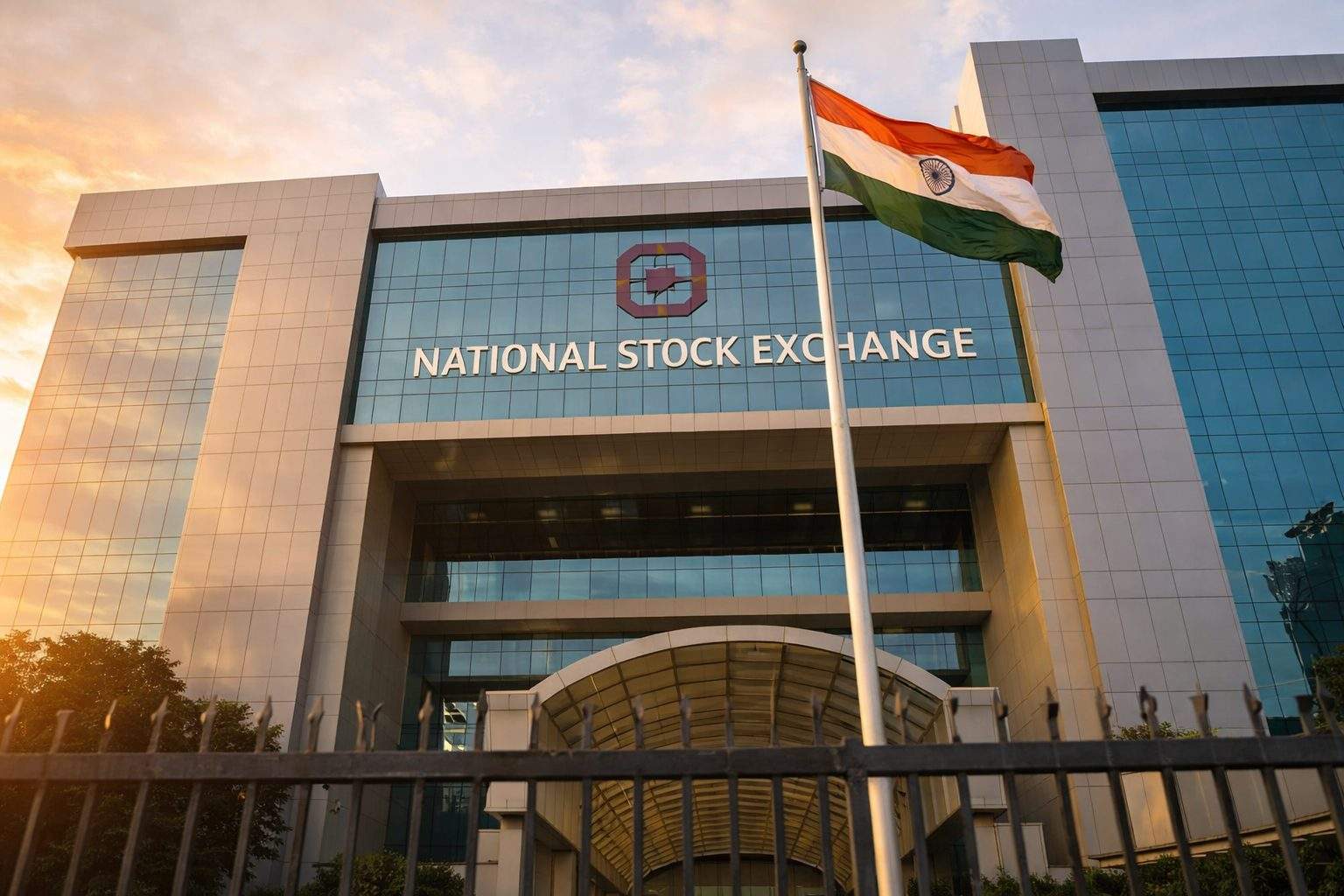
Friday wrapped up a tough stretch for India’s National Stock Exchange, with the Nifty 50 sinking 2.9% for the week to 24,450.45, matching the Sensex, which also fell 2.9% and settled at 78,918.9. With the U.S.-Israeli conflict with Iran driving oil prices up and unsettling investors, the market took a hit. Still, Samrat Dasgupta of Esquire Capital called the selloff “a compelling window” to snap up stocks with “reasonable valuations.” Reuters

Why it’s hitting now: oil’s the lever. Any spike in crude drops right into India’s import costs, stirring up fresh inflation fears well before quarterly results reflect the squeeze—and that’s what traders were reacting to. The mood soured everywhere: U.S. and European equities finished the week in the red as oil charged higher and investors absorbed a surprise miss in U.S. jobs numbers.

The rupee took a sharp hit this week, briefly slipping below 92 to the dollar before steadying. Bankers estimated the Reserve Bank of India burned through around $12 billion to halt the drop. One banker pointed to RBI action across both spot and derivatives, flagging the NDF—non-deliverable forwards settle in dollars, not rupees—as part of the push.

The selloff hit almost every corner of the equity tape. Fifteen out of 16 major sectors closed lower for the week. Small-caps slumped 2.5%, with mid-caps off by 2.9%. State-owned banks took a harder hit, tumbling around 6.5%. Banks and financials gave up roughly 4.5%, while oil and gas names declined 3.9%. Larsen & Toubro, pressured by concerns over its Middle East exposure, lost 7.7% for the week. InterGlobe Aviation dropped 8.8% as higher fuel costs crept back into focus. According to ICICI Securities’ Pankaj Pandey, the market is wrestling with near-term oil risks but, so far, “we don’t yet see a macroeconomic impact.” Moneycontrol

Even after the week’s finish, the market’s imprint was unmistakable. According to NSE data, market capitalisation stood at 448.07 lakh crore rupees ($4.89 trillion) as of March 6. GIFT Nifty futures slipped in early Saturday action, a sign that traders are on edge ahead of the next session.

Financials dragged the market lower—no surprise, given their outsized influence on index movement and domestic risk sentiment. Once they start to slip, other sectors usually get pulled along, oil-linked or not.

Selling had its reasons in spots. Airlines and engineering stocks with international footprints took a beating—cost pressures and execution worries hung over them. Oil marketing firms slid too, investors mulling the fallout from pricier crude.

The road ahead isn’t straightforward. A prolonged conflict with persistently high oil prices could push up volatility, pressure margins for fuel-heavy sectors, and keep the rupee on edge. But if oil prices drop quickly, those trades could unravel just as fast.

The exchange is closed over the weekend, so on Monday, traders’ attention will turn first to crude, then the rupee, and after that, foreign inflows. This week’s signal came through loud and clear: geopolitics has returned to the Indian stock market’s pricing.

Stock Market Today

  • AECOM Shares Drop 9.6% on Weak Q1 Cash Flow, Revenue Miss
    May 16, 2026, 3:12 AM EDT. Shares of infrastructure consulting firm AECOM (NYSE:ACM) fell 9.6% after its Q1 2026 report showed flat revenue of $3.80 billion, below expectations of $4.01 billion, despite an adjusted earnings beat of $1.59 per share. The main investor concern was a negative free cash flow of $27.4 million, reversing last year's positive $178.4 million. The decline reflects worries over cash generation and revenue growth. AECOM is down 26.3% year-to-date and trading 47.1% below its 52-week high. UBS lowered its price target amid slower revenue growth and a strategic review of its Construction Management business. The stock's recent volatility indicates market sensitivity to these operational challenges despite steady longer-term performance.

Latest articles

Dow Drops 537 Points With After-Hours Selling Threatening Wall Street AI Rally

Dow Drops 537 Points With After-Hours Selling Threatening Wall Street AI Rally

16 May 2026
U.S. stock ETFs fell in after-hours trading Friday following a more than 1% drop in the S&P 500, Dow, and Nasdaq. Oil surged 4.2% to $105.42 a barrel and the 10-year Treasury yield hit 4.597%, fueling concerns over inflation and Fed rate hikes. Nvidia, AMD, and Intel led chip declines, while Berkshire Hathaway disclosed a $2.65 billion Delta stake and exited Amazon, Visa, and Mastercard.
Accuray inks 10-year cancer tech agreement, shares in focus

Accuray inks 10-year cancer tech agreement, shares in focus

16 May 2026
Accuray and the University of Wisconsin School of Medicine and Public Health signed a 10-year research agreement focused on Accuray’s Stellar adaptive radiotherapy platform. The announcement came after market close, with Accuray shares ending down 5.2% at $0.27. The deal follows Accuray’s recent withdrawal of fiscal 2026 guidance and ongoing financial pressures.
Origin Materials Gains as Filing Signals $3.54 Liquidation Payout Possible

Origin Materials Gains as Filing Signals $3.54 Liquidation Payout Possible

16 May 2026
Origin Materials asked shareholders to approve a plan to liquidate and dissolve the company, estimating an initial payout of $0.61 to $3.54 per share depending on asset sales and claims. Shares rose 15% to $1.43 after the filing. The company reported a 91% drop in first-quarter revenue and warned it may not survive without the wind-down. Origin cut 59% of its workforce and CEO John Bissell stepped down May 1.
NextNRG Q1 Revenue Gains, but Company Holds Cash Warning

NextNRG Q1 Revenue Gains, but Company Holds Cash Warning

16 May 2026
NextNRG reported first-quarter revenue of $21.1 million, up 29% from a year earlier, but its net loss widened to $10.8 million. Cash fell to $208,048 at quarter-end, and management warned it needs immediate capital to continue operations. Shares closed at $0.2804 on Nasdaq, down nearly 6%. Total liabilities reached $34.3 million, with a stockholders’ deficit of $22 million.
Netskope Inc rolls out AI Guardrails ahead of March 11 earnings as enterprise AI security race heats up
Previous Story

Netskope Inc rolls out AI Guardrails ahead of March 11 earnings as enterprise AI security race heats up

Microsoft Stock Price Week Ahead: Can MSFT Hold Near $409 as AI Demand Faces a CPI Test?
Next Story

Microsoft Stock Price Week Ahead: Can MSFT Hold Near $409 as AI Demand Faces a CPI Test?

Go toTop