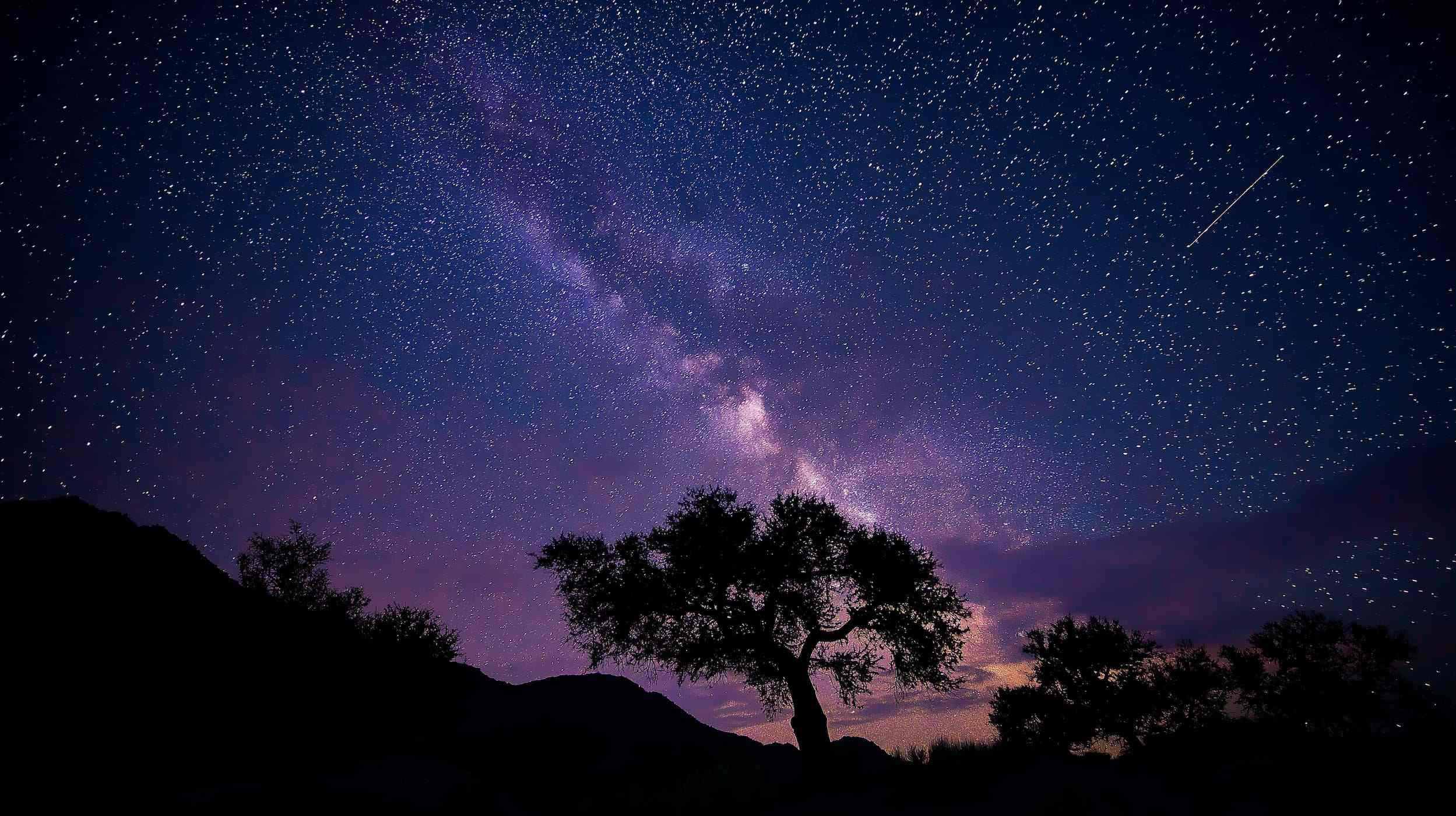

December 15, 2025 brings a near-perfect recipe for skywatchers: long winter nights, a slim waning Moon, and a sky full of headline-worthy targets—plus a rare interstellar visitor that’s suddenly glowing green in new images.
With the winter solstice now just days away, the Northern Hemisphere is sliding toward the longest night of the year, while the Southern Hemisphere moves toward summer’s shorter nights. Either way, tonight’s sky has something for everyone, from casual stargazers stepping outside for five minutes to telescope owners planning a pre-dawn session.
Below is a news-style roundup of what’s trending today (15.12.2025)—followed by a practical “what to see tonight” guide you can use anywhere on Earth.
Night sky news today: the key headlines on Dec. 15, 2025
1) The Geminids are fading—but not finished
A wave of post-peak stories today highlights that the Geminid meteor shower is still delivering an “encore” for many regions, especially where skies stay clear and moonlight remains minimal for much of the night. Reports from California described vivid, colorful streaks and recommended reclining away from city lights for the widest view. San Francisco Chronicle+1
Meanwhile, an Australia-focused guide published today says tonight (Dec. 15) can still produce a strong display, particularly from midnight through dawn, depending on location. RUSSH
2) A rare interstellar comet is making fresh headlines—because it’s turning green
A major story circulating today centers on Comet 3I/ATLAS, the third known interstellar object detected passing through our solar neighborhood. A new report says recent observations show it brightening and taking on a distinct green hue, a common cometary signature linked to glowing carbon-bearing molecules—but striking to see in a confirmed interstellar visitor.
3) Aurora outlook: mostly quiet to unsettled—best chances still far north
Space-weather updates today point to a quiet-to-unsettled geomagnetic picture overall, meaning auroras are most likely confined to the usual high-latitude oval (think northern Canada, Greenland, Iceland, and northern Scandinavia) unless conditions shift.
4) Solstice season is powering a “long-night” stargazing surge
As one major skywatching column put it today, astronomical winter begins this week in the Northern Hemisphere, culminating in the winter solstice on Dec. 21—the shortest day and longest night—an annual marker that has inspired cultural celebrations for centuries.
5) Deep-space research headline: Omega Centauri’s “missing” radio signal
In astronomy research news dated today, a deep radio study reported no detection where some expected signs of an intermediate-mass black hole at the heart of Omega Centauri—a reminder that even familiar sky objects still hold mysteries.
What to see in the night sky tonight (Dec. 15, 2025)
Best “wow” moment for most people: Geminid meteors after midnight
Yes, the Geminids’ main peak has passed—but meteor showers don’t switch off like a light. The best strategy tonight:
- Start late evening if you can, but plan your most serious watch after midnight through pre-dawn (when the radiant region is higher).
- Pick a dark location with a wide horizon and minimal direct lighting.
- Skip binoculars and telescopes—meteors are a naked-eye event.
What you might see tonight: Spaceweather coverage says that as the shower subsides, 20–30 meteors per hour can still be possible for some observers, especially under truly dark skies. Space Weather
And meteor shower listings emphasize the Geminids typically stay active into mid-December, even after peak nights.
Why the Geminids look different: Unlike many meteor showers tied to comets, the Geminids come from debris associated with asteroid 3200 Phaethon, and they’re famous for bright, often colorful streaks. NASA notes that under the darkest conditions around peak, rates can reach up to ~120 per hour—a clue to why the shower remains so popular even as it fades.
Where to look: NASA advises looking generally toward the eastern sky on peak nights, with meteors appearing near bright Jupiter (though meteors can streak anywhere overhead). NASA Science
If you’re in Australia, one widely shared guide published today recommends focusing on midnight to dawn and watching a darker patch of sky rather than staring at the radiant itself.
Best telescope/binoculars target tonight: the Orion Nebula is at its prime
If you want a “deep sky” object that’s easy to find and genuinely impressive, tonight is a standout night for the Orion Nebula (M42).
A December skywatching roundup notes the view is best on December 15, when the Orion Nebula reaches its highest point around midnight local time—meaning less atmospheric haze and a cleaner, sharper look.
How to find it (fast):
- Spot Orion’s Belt—three bright stars in a short, straight line.
- Look below the belt for Orion’s “Sword”.
- The Orion Nebula is the fuzzy-looking patch in the sword region—often visible as a dim blur even without optics under darker skies.
What you’ll see:
- With naked eyes: a faint misty glow (best from dark sites).
- With binoculars: a brighter cloud with structure.
- With a telescope: more defined nebulosity and the star cluster embedded within.
Rarest headline object: Interstellar Comet 3I/ATLAS (pre-dawn, telescope required)
If you’ve been waiting for something truly unusual—tonight’s big “space news” object is Comet 3I/ATLAS, an interstellar visitor passing through our solar system. NASA Science+1
What’s new today: A report published Dec. 15 says the comet is brightening and showing a green glow, consistent with comet chemistry (often tied to diatomic carbon emissions) as sunlight energizes gases in the coma.
When it matters most: NASA’s December skywatching guide highlights that 3I/ATLAS makes its closest approach to Earth on Dec. 19, calling it your best bet to spot this “interstellar interloper.” NASA Science
NASA and ESA both emphasize it poses no danger; it remains about 270 million km away at closest approach. NASA Science+1
How to try to see it:
- Look east to northeast before dawn.
- NASA says it appears near Regulus (in Leo) around the pre-dawn hours.
- Important: NASA warns you’ll likely need a telescope with at least a 30 cm aperture—this is not a casual naked-eye comet.
If you don’t have that equipment, consider checking whether a local observatory or astronomy club is hosting a public session (many do during high-interest comet weeks).
Planets tonight: Jupiter dominates, Saturn lingers, Mercury hugs dawn
Even if meteors are slow where you live, planets are dependable—and mid-December is giving stargazers a strong lineup:
- Jupiter: Bright and hard to miss; visible from evening into dawn for many Northern Hemisphere locations.
- Saturn: Best after sunset in the evening sky, setting earlier as the month progresses.
- Mercury: A short pre-sunrise target, low in brightening twilight; December is described as Mercury’s most favorable morning apparition of 2025 for Northern Hemisphere observers—so it’s a “look now” situation. EarthSky+1
A location-based “night sky tonight” listing also notes that in at least some mid-latitude city skies, Mars and Venus are very close to the Sun right now—making them difficult to spot compared with Jupiter and Saturn. Time and Date
Aurora forecast tonight: where the northern lights are most likely
If your “night sky” plan involves auroras, tonight’s outlook is more selective than explosive.
A solar-activity update says geomagnetic activity is expected to trend quiet to unsettled, with aurora mostly confined to typical high-latitude regions (northern Canada, Greenland, Iceland, northern Scandinavia), with only a small chance of short-lived upticks. EarthSky
For quick, map-style guidance, NOAA’s Aurora Dashboard publishes a “tonight” viewline forecast and timestamped updates. NOAA Space Weather Prediction Center
Moon phase and sky darkness: why tonight is good for meteors
Tonight’s stargazing gets a boost from lunar timing:
- December’s New Moon occurs at 01:43 UTC on Dec. 20 (which is Dec. 19 in the Americas), meaning the Moon is now in the waning crescent part of the cycle and trending darker night by night.
- That’s why so many Geminid reports mention long stretches of dark sky before moonlight returns later at night.
Quick stargazing checklist for Dec. 15 (works anywhere)
- Give your eyes 20–30 minutes to dark-adapt (avoid phone screens or use a dim red filter).
- Dress for “standing still” cold, not “walking” cold.
- Face away from direct lights—even a single streetlamp can wipe out faint detail.
- For meteors: lie back and watch a wide patch of sky.
- For Orion Nebula: binoculars can be enough; telescopes reveal structure.
What’s next after tonight: solstice week skywatching
If you miss tonight, the week ahead is still stacked:
- Winter solstice: Dec. 21, bringing the longest night in the Northern Hemisphere.
- Ursid meteor shower: a smaller but worthwhile shower that peaks around Dec. 21–22, often under very dark skies near the new Moon window this year.
- Comet 3I/ATLAS: closest approach on Dec. 19, a key date for telescope observers.
Tonight’s bottom line
If you step outside on December 15, 2025, you’re catching the sky at one of its most “December” moments: long nights nearing solstice, a fading-but-still-firing meteor shower, Orion at peak showtime, and a rare interstellar comet that’s suddenly stealing headlines with a green glow.
Clear skies. Warm layers. And if you can only do one thing tonight: find Orion, then look just below the belt—because the Orion Nebula is right on cue for its best viewing of the year.