Dec. 18, 2025 — If you’re planning to look up tonight, the sky has a rare mix of “big news” and easy wins. The headline event is an interstellar visitor—Comet 3I/ATLAS—making its closest pass by Earth (and getting a free livestream). Meanwhile, the Moon is down to a razor-thin crescent, setting up a pre-dawn scene with Mercury that’s short, low, and beautiful if you catch it on time. Add a bright Jupiter, a golden Saturn, and a minor geomagnetic storm forecast that could help aurora watchers at higher latitudes, and Dec. 18 becomes one of those winter nights worth bundling up for.
Below is a practical, location-flexible guide to the night sky tonight, built from the main skywatching updates circulating on 18.12.2025.
Tonight’s quick sky highlights (in plain English)
- Late night (online or telescope): Interstellar Comet 3I/ATLAS reaches its closest approach window; a free livestream starts 11 p.m. EST (0400 GMT). Space+2Scientific American+2
- Evening: Jupiter rises soon after sunset and dominates the eastern sky; Saturn glows in the west early in the night. EarthSky+1
- Before sunrise: An extremely thin waning crescent Moon hangs low near Antares, with Mercury nearby—best from tropical and lower-latitude locations. Space+2Time and Date+2
- Aurora watch: NOAA forecasts G1 (minor) geomagnetic storming at times today—good for high-latitude photographers, less likely for mid-latitudes. SWPC Services
- Dark-sky window ahead: New Moon arrives late Dec. 19 in the Americas / early Dec. 20 UTC, and the Ursid meteor shower peaks Dec. 21–22 with minimal moonlight. Space+2American Meteor Society+2
The big story tonight: Interstellar Comet 3I/ATLAS is at peak “catch it now” timing
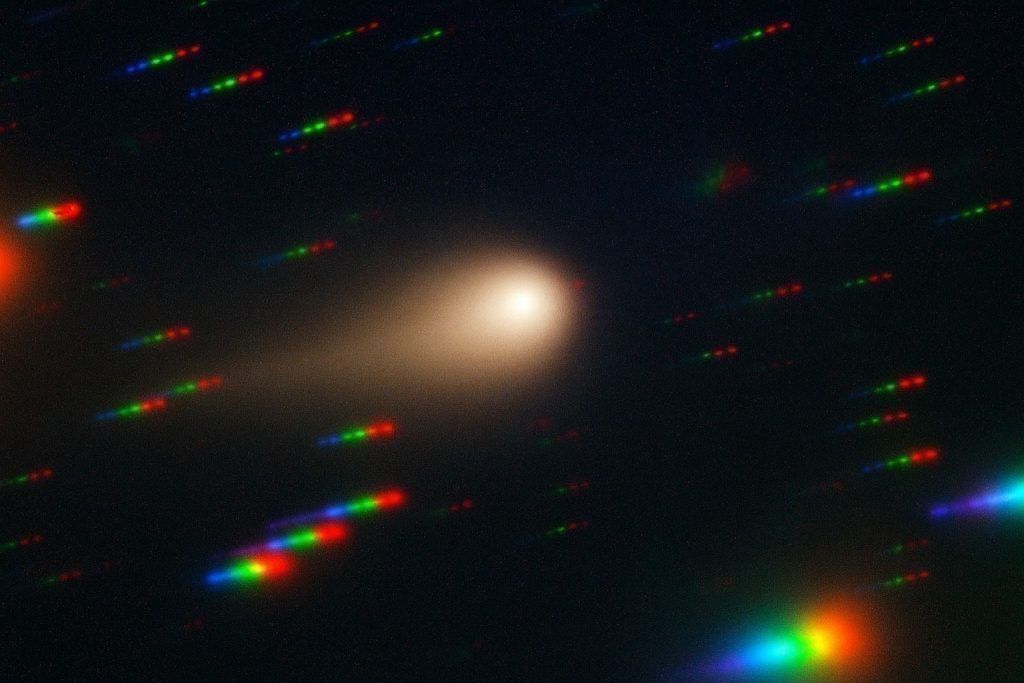
The most-covered night-sky news today is Comet 3I/ATLAS, a comet that came from outside our solar system and is now making its closest approach to Earth before fading as it heads back outward. It’s the third confirmed interstellar object observed passing through our solar system—after ’Oumuamua (2017) and 2I/Borisov (2019)—which is why astronomers (and space newsrooms) have been watching it so closely. Space+1
How close is “close”? Still very far in human terms. Reporting today puts the closest pass at roughly 167–168 million miles (about 269–270 million km) away—around 1.8 astronomical units—so there’s no danger to Earth. Space+1
How to watch 3I/ATLAS tonight (the easy way: livestream)
If clouds, city lights, or equipment make you hesitant, the simplest option is to stream it:
- Livestream start: 11 p.m. EST on Dec. 18 (0400 GMT Dec. 19)
- Closest approach time: 1 a.m. EST on Dec. 19 (0600 GMT)
- Host: Virtual Telescope Project, using robotic observatories in Manciano, Italy (weather permitting) Space+1
In other words: you can treat tonight like a live sports broadcast—tune in, watch the target move against the star background, and know you’re seeing something that likely won’t ever return.
Can you see Comet 3I/ATLAS with your own eyes?
Most people will need help.
- Space.com notes the comet is too faint for naked-eye viewing, and suggests an 8-inch telescope or larger under dark skies to have a realistic shot (it may look like a faint, fuzzy patch rather than a dramatic “tail”). Space
- Scientific American says observers with good binoculars or a backyard telescope should be able to spot it, framing tonight and Friday as the “last chance” window for many backyard astronomers. Scientific American
Both points can be true: binocular detection may be possible for experienced observers under very dark skies, while many casual skywatchers will find a telescope far more reliable—especially if haze or light pollution is involved.
Why astronomers care so much about this one
AP reports NASA has continued aiming space telescopes at 3I/ATLAS, and estimates put it somewhere between ~440 meters and ~5.6 kilometers in size (a wide range, but not unusual for a distant, active comet). AP News
The value is scientific: interstellar comets are time capsules from other star systems. Even a small set of measurements—brightness changes, gas and dust output, composition clues—adds to what we know about how planetary systems form and evolve beyond our own.
Before sunrise: the sliver Moon, Antares, and Mercury put on a “blink-and-you-miss-it” show
If you’re the type who’s willing to trade a warm bed for a sky moment, the pre-dawn scene is tonight’s most “photographable with a phone + tripod” lineup—if you have an open horizon.
Space.com’s December sky guide highlights that before sunrise on Thursday morning, Dec. 18, the extremely thin waning crescent Moon sits low above the southeastern horizon, close to Antares (the reddish heart of Scorpius), with Mercury about a palm’s width away in the same general area of sky. It also notes this pairing is higher and easier from tropical latitudes—a key detail if Scorpius barely clears your horizon where you live. Space
This dovetails with the broader December calendar: timeanddate lists Dec. 17–18 as a Moon–Mercury conjunctionwindow. Time and Date
How to actually spot Mercury tonight (without frustration)
Mercury is famously tricky because it never strays far from the Sun. Tonight’s advantage is timing: Mercury is in a favorable morning apparition, especially for Northern Hemisphere viewers.
EarthSky notes that for the Northern Hemisphere, Mercury has been shining low in the bright morning twilight from Dec. 1 until around Dec. 25, and calls it the best morning appearance of Mercury for the Northern Hemisphere in 2025. EarthSky
Practical tips:
- Start looking 30–60 minutes before sunrise (earlier if your horizon is very flat and clear).
- Find the thin Moon first, then scan nearby for the steady, bright “star” that doesn’t twinkle much: that’s Mercury.
- Safety rule: never sweep binoculars near the Sun. If the sky is brightening fast, stop and wait for another day.
The easy evening win: Jupiter blazes in the east, Saturn glows in the west
Not every sky highlight requires a special date. Tonight’s “reliable” show is the classic winter pairing of a bright gas giant and a ringed planet—one rising, one setting.
Jupiter: the bright beacon that shows up early and stays late
EarthSky says bright Jupiter rises in the east soon after sunset this month and sits near the twin stars Castor and Pollux in Gemini, remaining visible through dawn. EarthSky
The Planetary Society adds a fun brightness benchmark: Jupiter is more than twice as bright as Sirius, the brightest star in the night sky. planetary.org
If you have binoculars, try this: hold Jupiter steady in view and look for tiny points lined up near it—these can be the Galilean moons (visibility varies night to night).
Saturn: golden, steady, and best early
EarthSky places Saturn in the western evening sky in December, and notes it’s shifting toward earlier setting times as the month progresses. EarthSky+1
Saturn is often the planet that turns casual observers into lifelong skywatchers—because even a modest telescope can reveal the rings (and it still feels impossible the first time you see them with your own eyes).
Aurora chances tonight: NOAA forecasts minor geomagnetic storming
For northern lights fans, tonight comes with a cautious “maybe.”
A NOAA Space Weather Prediction Center 3-day forecast issued at 0030 UTC on Dec. 18 reports:
- The greatest expected Kp for Dec. 18–20 is 4.67, which corresponds to G1 (minor) conditions.
- G1 geomagnetic storms are expected on 18 Dec, attributed to persistent coronal hole high-speed stream influence. SWPC Services
What that means in practice:
- High latitudes (think Alaska, northern Canada, Scandinavia, Iceland, far-northern U.K. and similar geomagnetic zones) have the best odds.
- Mid-latitudes may only see a glow low on the northern horizon if conditions overperform—and even then, darkness, clear skies, and low light pollution matter as much as the forecast.
If you’re already going out for Jupiter or the Moon–Mercury pairing, it’s worth taking a few extra minutes to scan the northern horizon—just keep expectations realistic.
Coming up fast: New Moon darkness, then the Ursid meteor shower near its peak
Tonight is also the runway into one of the best setups for faint-sky observing: a Moon-free window.
Space.com notes the Moon reaches new phase on Dec. 20 at 01:43 GMT, which converts to Dec. 19 at 8:43 p.m. EST (5:43 p.m. PST)—so depending on where you live, the “new moon night” falls on Friday evening or early Saturday UTC. Space
And right after that, the next meteor target arrives:
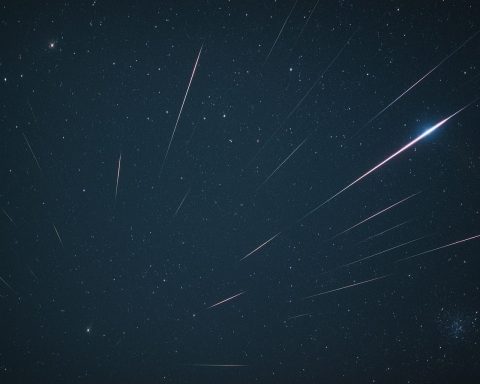
- The American Meteor Society lists the Ursids as active Dec. 17–26, peaking Dec. 21–22, with the Moon only ~3% full—excellent conditions for a modest shower. Typical rates are 5–10 meteors per hour in the late morning hours (near dawn). American Meteor Society
- timeanddate also flags Dec. 22–23 for the Ursids as the “next chance” if you missed the Geminids. Time and Date
Translation: if you like meteor watching but missed the Geminids peak, late Dec. 21 into early Dec. 22 is your next clean, dark-sky opportunity—especially from the Northern Hemisphere, where the Ursids are strongest.
A simple stargazing plan for the night sky today
If you want a low-stress approach, try this sequence:
- Right after sunset: Find Saturn in the west (steady, yellowish). EarthSky+1
- Mid-evening: Watch Jupiter climb in the east (bright, unmistakable). EarthSky+1
- Late night: If you have a telescope—or prefer to stay warm—watch Comet 3I/ATLAS via livestream around 11 p.m. EST. Space+1
- Pre-dawn: Hunt the thin crescent Moon, then use it to find Mercury low in the southeast/east. Space+1
- Anytime it’s dark (especially at higher latitudes): Glance north for aurora potential under G1-leaning conditions. SWPC Services
Night sky tonight FAQ
Is Comet 3I/ATLAS visible without a telescope?
Most likely not. Current coverage says it’s too faint for naked-eye viewing and may be challenging even for small telescopes; an 8-inch scope is suggested for a better chance under dark skies, while some reports say good binoculars may work for experienced observers. Space+1
What time should I look for Mercury on Dec. 18, 2025?
Aim for 30–60 minutes before sunrise, looking low toward the eastern or southeastern horizon. Mercury is visible in the morning twilight for Northern Hemisphere viewers through roughly late December, and tonight the thin Moon helps guide the search. EarthSky+2Space+2
Will there be northern lights tonight?
NOAA’s forecast includes G1 (minor) conditions at times today, which can support aurora viewing at high latitudes—but it’s not a guarantee, and mid-latitude sightings are less likely. SWPC Services
When is the next truly dark night for deep-sky stargazing?
Around the new moon on Dec. 19 (Americas) / Dec. 20 UTC, when the Moon is essentially absent from the evening sky—perfect timing for galaxies, nebulae, and comet-hunting attempts. Space
If you’d like, tell me your city (or latitude range), and I can turn this into a tighter “minute-by-minute” plan for your exact sunset and sunrise window—still text-only, no charts or images.