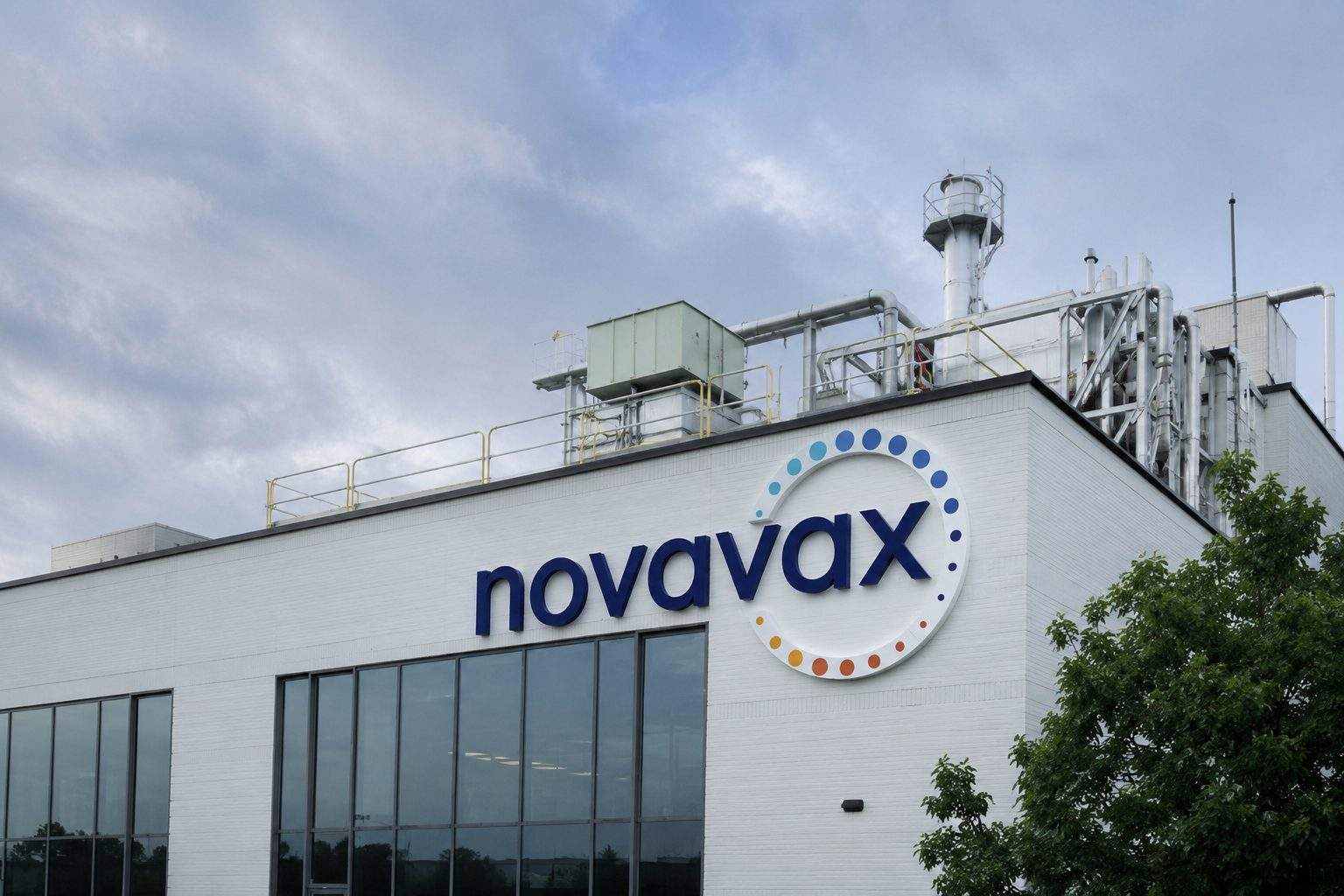

GAITHERSBURG, Maryland, May 7, 2026, 12:04 (EDT)
- First-quarter revenue at Novavax came in ahead of estimates, with partner payments making up for a slowdown in demand for its COVID-19 shot.
- Thursday brought another gain for the stock, following its 15.6% surge Wednesday. Investors zeroed in on licensing revenue, sidestepping the 79% plunge in year-on-year sales.
- Now comes the question: can agreements with Pfizer, Sanofi, and others move those up-front payments over to more reliable streams of royalty income?
Novavax Inc. shares climbed as the vaccine maker’s first-quarter revenue topped Wall Street forecasts, lifted not by COVID-19 shot demand but by licensing and supply payments linked to its vaccine technology. Revenue came in at $139.5 million, Reuters said, beating analysts’ $78.3 million estimate from LSEG data.
Timing is critical here. Novavax wants to show investors it can shift gears from its pandemic-heavy play—selling Nuvaxovid—to a thinner, more focused licensing operation built on Matrix-M, the company’s adjuvant that ramps up immune response. Chief Executive John Jacobs told Reuters this pivot means the company is “partially insulated” from political and regulatory swings, since partners now handle more of the heavy lifting in late-stage trials and commercial rollout. Reuters
The company’s latest filing spells out the breakdown. Revenue for the first quarter dropped to $139.5 million, down from $666.7 million the previous year. That decline owes a lot to advance purchase agreements—those government-style vaccine contracts—which had inflated non-cash revenue figures in 2025. Product sales landed at $42.2 million. Licensing, royalties, and other revenue climbed to $97.3 million.
Novavax shares climbed 1.7% to $9.52 in recent U.S. trading, building on Wednesday’s 15.6% surge that took the stock to $9.36 at the close. MarketWatch data showed volume on Wednesday spiked to 16.5 million shares, blowing past the 50-day average of 4.2 million.
Pfizer served as the immediate catalyst. Novavax booked $30 million in the first quarter from a January license deal, granting Pfizer non-exclusive access to Matrix-M for vaccine work targeting up to two infectious diseases. The agreement could bring an extra $500 million tied to development and sales milestones, not to mention tiered royalties in the high mid-single digits, according to Novavax.
Jacobs told analysts there’s “very strong interest” in Matrix-M, even with the tough macro environment. The company’s statement noted Novavax had secured a Pfizer license, plus four other material transfer agreements—early research access deals—set for 2026. Reuters
Sanofi still holds the key strategic position here. Under a 2024 deal, Sanofi picked up rights to co-commercialize Novavax’s stand-alone COVID-19 shot in most geographies and to tap Novavax’s technology for flu-COVID combo products. That agreement brought $500 million up front, with as much as $700 million more tied to development, regulatory, and launch milestones.
That puts Novavax up against Moderna in the race for seasonal COVID shots. Last month, Sanofi reported that its Nuvaxovid candidate led to fewer typical post-vaccination side effects—things like fever, fatigue, and headache—compared to Moderna’s mNEXSPIKE in a Phase 4 study with 1,000 adults. Dr. Marcel E. Curlin, principal investigator from Oregon Health & Science University, noted the protein-based shot caused “less disruption to patient activities.” Sanofi
Novavax is looking to build out its pipeline, too. The company said its C. difficile vaccine candidate—which targets the bacterial infection behind a serious gut illness—might reach clinical trials as soon as 2027. According to Reuters, the company is eyeing a commercial opportunity between $1.5 billion and $2.5 billion.
The company left its 2026 adjusted revenue outlook unchanged at $230 million to $270 million, not counting Sanofi supply sales, royalties, or milestones. Guidance for combined research and development plus selling, general and administrative expenses also stayed the same. Non-GAAP R&D and SG&A costs are still seen coming in between $310 million and $340 million.
Still, risks remain front and center. Chief Financial Officer James Kelly flagged that Novavax is bracing for higher combined R&D and SG&A costs in the first half, as funds go toward Sanofi’s clinical efforts and prepping manufacturing for the 2026-27 season. He linked the timeline for hitting non-GAAP profitability—possibly as soon as 2028—to progress on Sanofi’s flu-COVID combo, regulatory green lights, and how well commercial rollout lands.
Right now, investors are betting that Novavax can turn its technology into cash without the heavy lift of reassembling a worldwide sales team. More research deals turning into full-blown licenses would strengthen that case. But if those partner milestones don’t land, or if COVID vaccine demand slides again, Wednesday’s upside could simply read as a lucky payment blip, not a real shift.