
NEW YORK, May 7, 2026, 11:07 EDT
IREN Ltd. picked up 1.6% to $61.94 on the Nasdaq by late morning Thursday. Traders betting ahead of earnings are watching to see if the bitcoin miner’s push into AI cloud infrastructure translates to revenue from its power, chips and software. Shares have climbed this week following IREN’s all-stock agreement to acquire Mirantis for about $625 million.
IREN’s fiscal third-quarter numbers are coming after the bell, with the earnings call set for 5 p.m. Eastern. Investors are about to get new figures fast—just two days since the Mirantis transaction and not even a week since a major Texas power milestone.
This quarter is in sharp focus for just that reason. Investors are weighing more than IREN’s bitcoin mining profits. They’re looking at the company’s assertion that its limited grid-linked power can pivot to AI computing—think servers and GPUs needed to develop and operate AI models.
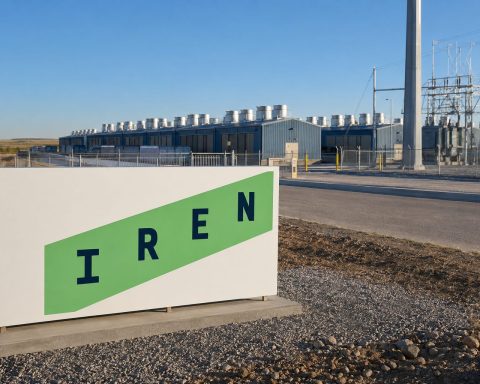
IREN announced on May 1 that it’s switched on Sweetwater 1, connecting the 1.4-gigawatt Texas data center to the ERCOT grid via its high-voltage substation. “On schedule,” said co-founder and co-CEO Daniel Roberts, calling out the timing. The company expects power delivery to scale up as data centers across the larger 2-gigawatt Sweetwater campus continue phased construction and commissioning. IREN
Mirantis aims to address a specific but crucial need. According to IREN, the company adds cloud infrastructure, Kubernetes-based orchestration—software for running applications across multiple servers—and enterprise support, with plans to operate it as a standalone subsidiary. Roberts pointed out that Mirantis improves how IREN’s compute is “deployed, managed and operated for customers.” For Mirantis CEO Alex Freedland, AI clients are looking for platforms that are “open, flexible and built for scale.” IREN
IREN’s hardware ambitions are hefty. Back in March, the company announced a deal for over 50,000 Nvidia B300 GPUs, bringing its total planned GPU count to 150,000. Management claimed the fleet could translate into more than $3.7 billion in annualized run-rate revenue from AI cloud by the end of 2026. That number—ARR—is based on pipeline and existing contracts, not all of which are locked in, IREN noted. Actual revenue could differ.
The numbers from the latest quarter paint a muddled picture. IREN reported fiscal second-quarter revenue dropping to $184.7 million, down from $240.3 million the previous quarter. Net loss came in at $155.4 million, and adjusted EBITDA slid to $75.3 million. That adjusted EBITDA figure, which excludes interest, taxes, depreciation, and some one-off or non-cash costs, isn’t calculated according to GAAP.
Forecasts differ slightly, yet expectations are well defined. TipRanks points to analysts looking for March-quarter revenue of $219.69 million, with a loss per share of 22 cents. Zacks, in a pre-earnings note, cited a consensus revenue estimate of $213 million—showing a 43.8% increase from last year.
Microsoft is still the headline deal here. IREN landed a $9.7 billion GPU cloud services agreement with Microsoft last November—a five-year pact with a 20% prepay baked in. On top of that, IREN separately committed to purchasing around $5.8 billion worth of GPUs and gear from Dell Technologies. “Strategic partner,” is how Microsoft’s Jonathan Tinter put it, citing IREN’s integrated AI cloud and locked-in power. IREN
Cantor Fitzgerald’s Brett Knoblauch called the Microsoft agreement “game-changing” for IREN, thanks to the anchor tenant, Barron’s reported. Now, that optimism gets tested sooner than expected. The company has to prove AI cloud revenue is ramping up—fast enough that expenses and funding requirements don’t swamp the narrative. Barron’s
Rivals are moving quickly. CoreWeave has landed fresh AI cloud agreements with both Anthropic and Meta, and Reuters Breakingviews puts CoreWeave and Nebius among a so-called neocloud group catering to hyperscalers unable to ramp up AI infrastructure on their own. IREN is pitching much the same angle—rapid chip, power, and data center access—but it’s still wrestling with the added challenge of shifting from bitcoin to AI.
The bear case isn’t complicated. IREN itself flags that its AI and high-performance computing unit is still early-stage, with thin operating history, heavy reliance on a few customers, and exposure if those clients pull back, miss payments, or push for shorter deals. Missed targets in AI cloud revenue, delays in getting GPUs online, or a jump in financing costs—any of that, and suddenly the company looks less like an AI backbone, more like a high-beta miner loaded with capital expenses.
Come Thursday, investors are expected to zero in on revenue breakdowns, contracted AI capacity, cash burn, and the fine print on financing — not just the headline loss. They’ll also be watching for any signs that management is closing the distance between bold targets and actual booked revenue. Thanks to the rally, IREN has a window. The figures need to deliver now.
Related articles: NASDAQ:IREN