
SAN FRANCISCO, April 3, 2026, 04:05 PDT
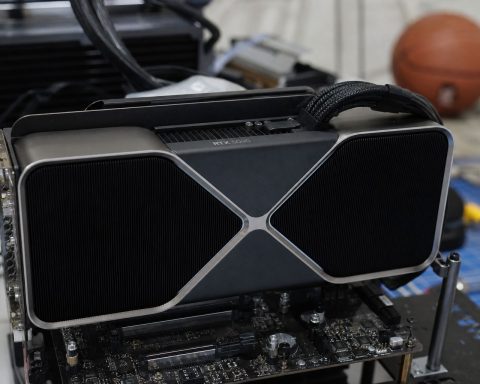
Nvidia announced Thursday it has fine-tuned Google’s just-unveiled Gemma 4 artificial intelligence models for use on a range of its hardware, including RTX PCs, workstations, DGX Spark systems, and Jetson edge modules. The move is part of Nvidia’s push to hold onto developers as AI workloads diversify away from massive cloud setups. The company shared details in a blog post, as Google rolled out Gemma 4—its latest open model family.
Timing is key here. Nvidia is scrambling to maintain its growth as the AI landscape pivots — training large models is taking a back seat to “inference,” where those models spit out answers, and to agentic systems that handle tasks and use tools for users. Last month at the GTC developer conference, CEO Jensen Huang declared, “The inference inflection has arrived.” eMarketer’s Jacob Bourne pointed to Nvidia’s $1 trillion revenue-opportunity projection, saying it “underscores the durable demand” for the company’s AI backbone, even as some investors question whether the big spending will deliver returns. Reuters
Google DeepMind’s Clement Farabet and Olivier Lacombe called Gemma 4 the company’s most advanced open model family yet, according to a launch post. Google reports developers have pulled Gemma more than 400 million times and spun up 100,000-plus variants since launch. The latest models ship under Apache 2.0, which permits commercial use and modification.
Google rolled out four different model sizes in the family. The bigger 26B and 31B models? Each fits inside a single 80GB Nvidia H100 data-center GPU, or, when compressed, can run on a consumer GPU. The E2B and E4B models are smaller, designed for full offline use on phones, Raspberry Pi boards, and Nvidia Jetson Orin Nano hardware. All four were trained across more than 140 languages and handle audio, image, and video inputs.
Nvidia said its models were optimized for a range of hardware, from Blackwell data-center systems down to Jetson edge devices. In a technical post, the company pointed out that local deployment appeals to customers needing on-premises setups, more control over their data, and quicker response times—a priority for sectors like healthcare and finance.
Despite plenty of chatter around PCs and edge hardware, Nvidia’s numbers underscore its core: data centers. The company hauled in $62.3 billion from its data-center segment, dwarfing total revenue of $68.1 billion. Gaming and AI PC brought in just $3.7 billion. CEO Jensen Huang pointed to surging demand for computing power in the last report, crediting a faster pace of enterprise AI agent rollouts.
But risk comes with that. Last month, Reuters noted that inference faces rising competition—not just from central processors, but also from custom chips developed for targeted tasks by firms like Google and Meta. “Nvidia is definitely going to see more competition compared to a year ago,” KinNgai Chan, managing director at Summit Insights Group, told Reuters. Reuters
Google emphasized Gemma 4 isn’t tied just to Nvidia. The company said it’s optimized for AMD GPUs and Google’s TPUs, in addition to Nvidia hardware. So, Gemma 4 users get a choice: Nvidia is one option, not the exclusive one.
Related articles: NASDAQ:NVDA