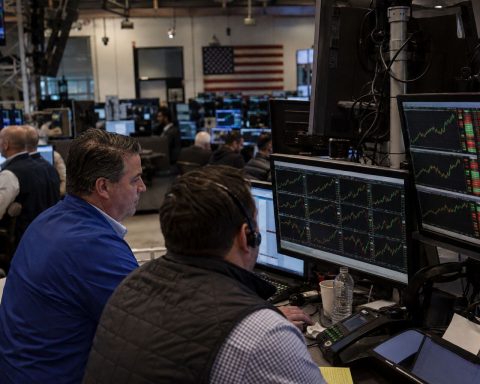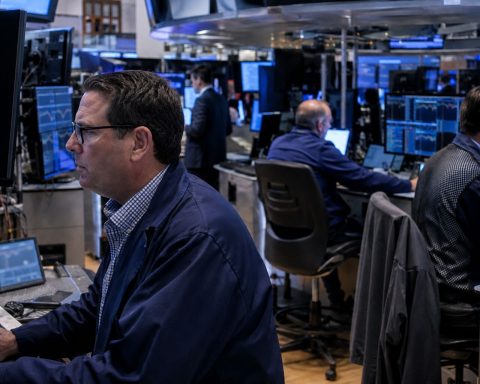

New York — Friday, December 26, 2025 (11:50 a.m. ET). U.S. stocks are trading in a typically quiet, post‑Christmas session as investors try to extend the traditional year‑end “Santa Claus rally,” with major indexes hovering near record territory in thin volume. Reuters
Against that backdrop, NVIDIA Corporation NASDAQ:NVDA is outperforming many large-cap tech peers late this morning. As of the latest trade (11:39 a.m. ET), NVDA was at about $191.26, up roughly 1.4% on the day, after opening near $189.89 and trading in a tight range between roughly $189.50 and $192.28.
Why NVIDIA stock is moving: a headline “deal,” but not a traditional acquisition
The catalyst dominating today’s NVIDIA stock news cycle is NVIDIA’s newly announced arrangement with Groq, an AI chip startup known for low‑latency inference hardware.
Groq says it has entered a “non‑exclusive” inference technology licensing agreement with NVIDIA, and that Groq founder Jonathan Ross, President Sunny Madra, and other team members will join NVIDIA to help scale the licensed technology. Groq
Reuters reports the same core structure—a license plus senior hires, not a full acquisition—noting that CNBC had reported a $20 billion figure while Groq said it would continue operating independently with Simon Edwards as CEO and its cloud business continuing.
Why it matters for NVDA investors: this is the kind of “acqui‑hire” structure regulators increasingly scrutinize, because it can move talent and IP without the formal triggers of a merger review. Reuters notes similar recent examples across Big Tech and emphasizes that the model has drawn regulatory attention even if deals haven’t been unwound. Reuters
The strategic angle: inference is the next battlefield for AI chips
For most of the generative AI boom, NVIDIA’s market narrative has centered on training—the compute‑heavy process of building frontier models in hyperscale data centers. Increasingly, however, the next bottleneck is inference, where trained models are deployed to respond to users and run real workloads efficiently.
Reuters frames Groq as an inference specialist, and highlights that while NVIDIA dominates training, inference is more contested, with competitors ranging from AMD to startups (including Groq and Cerebras).
That “training plus inference” demand stack is also a theme NVIDIA itself is pushing. In its latest quarterly results, CEO Jensen Huang said, “Blackwell sales are off the charts, and cloud GPUs are sold out,” and argued demand is accelerating across both training and inference. NVIDIA Newsroom
Investor takeaway: Markets tend to reward NVIDIA when it looks like the company can defend its platform (CUDA + systems + networking) as AI shifts from “build models” to “run models at scale.” A non‑exclusive license doesn’t guarantee that outcome—but today’s price action suggests investors view the move as at least directionally positive.
Analyst reaction and forecasts: bullish consensus, with debate over the structure
On the skepticism side, Reuters cited Bernstein analyst Stacy Rasgon warning that antitrust is a key risk, adding that structuring the deal as non‑exclusive may keep the “fiction of competition” alive even as leadership and talent move to NVIDIA. Reuters
On the bullish side, multiple outlets report that Wall Street remains constructive on NVIDIA’s longer‑term outlook heading into 2026—especially if inference becomes a larger profit pool.
- Consensus targets remain well above the current price. Investopedia (citing Visible Alpha) reports a mean NVIDIA price target around $254, versus trading around the low $190s today.
- Street firms continue to reiterate high targets. MarketBeat reports Robert W. Baird reiterated an “outperform” rating with a $275 price target on December 26. MarketBeat
- Investor’s Business Daily says analysts at firms including Rosenblatt, Bernstein, and BofA reiterated buy‑leaning views, with targets reaching $275.
How to read these forecasts: The “mid‑$250s” consensus implies the Street expects NVIDIA’s earnings power to continue compounding even after a massive multi‑year run. That’s plausible—but it also means the bar for execution stays high: any sign of decelerating data‑center growth, margin pressure, or supply constraints can move the stock sharply.
China and export headlines: H200 shipments are a major swing factor
Another thread that matters for NVIDIA stock right now is U.S.-China policy and AI chip exports.
Reuters reported on December 22 that NVIDIA told Chinese clients it aims to begin shipping H200 chips to China before the Lunar New Year holiday in mid‑February, with initial shipments potentially totaling 5,000 to 10,000 chip modules (roughly 40,000 to 80,000 H200 chips)—but emphasized shipments remain contingent on approvals and timelines could change.
The same Reuters report describes a policy shift in which President Donald Trump said the U.S. would allow H200 sales to China with a 25% fee, reversing the prior ban, while NVIDIA said licensed sales to authorized customers in China would not affect its ability to supply U.S. customers.
Why this matters for NVDA investors: China‑linked headlines can affect NVIDIA in two opposing ways—opening incremental revenue opportunities while also increasing regulatory and geopolitical risk premiums. Even rumors can move the stock intraday.
Another policy-driven catalyst: NVIDIA’s chip location verification initiative
In a separate December development, Reuters reported NVIDIA has built location verification technology that could indicate the country where its chips are operating—aimed at addressing concerns about chips being smuggled into restricted markets.
NVIDIA told Reuters the feature would be customer-installed software using GPU telemetry and “confidential computing” capabilities, and emphasized there is “no kill switch” and no remote-control capability built into GPUs. Reuters
What investors should watch: Any concrete regulatory requirement around verification, or customer resistance to telemetry/security features, could become a narrative risk. On the other hand, if verification helps keep export channels open, it could be a long‑term positive.
Fundamentals check: what NVIDIA last reported—and what it’s guiding next
For investors trying to separate “headline flow” from the underlying earnings engine, NVIDIA’s most recent quarterly report remains the anchor.
In its fiscal 2026 third quarter results (quarter ended October 26, 2025), NVIDIA reported:
- Revenue: $57.0B (up 22% quarter‑over‑quarter and 62% year‑over‑year)
- Data Center revenue: $51.2B (up 25% Q/Q and 66% Y/Y)
- GAAP EPS: $1.30 and gross margin: 73.4% NVIDIA Newsroom
NVIDIA also guided fiscal Q4 revenue of $65.0B ±2%, and said it returned $37.0B to shareholders over the first nine months of fiscal 2026 via repurchases and dividends, with $62.2B remaining under its buyback authorization.
One timely detail for today: NVIDIA said it would pay its next quarterly cash dividend of $0.01 per share on December 26, 2025 (today) to shareholders of record on December 4.
Valuation snapshot: after a huge run, multiples are a key part of the debate
NVIDIA remains one of the most discussed valuation stories in global equities: an AI infrastructure leader priced for sustained dominance.
Yahoo Finance’s key statistics list NVIDIA at roughly 46.7x trailing earnings and about 24.7x forward earnings (figures can fluctuate with price and estimates).
How investors are framing it now: Bulls argue the forward multiple looks more reasonable if earnings keep scaling at anything close to consensus. Bears argue a forward multiple is only “cheap” if growth stays exceptionally high—and the AI capex cycle is still young enough that surprises can go both directions.
Current market context: post-holiday trading is thin—volatility can be deceptive
Today’s broader tape matters because NVIDIA is a mega‑cap and often trades with (or drives) index sentiment.
Reuters describes a muted post‑Christmas session with indexes near highs and traders watching whether the Santa Claus rally can continue into early January. Reuters
Charles Schwab’s market update similarly cautions that low volume can exaggerate moves and that traders may want “extra caution” in thin holiday conditions. Schwab Brokerage
Translation for NVDA: A 1%–2% move today can reflect real news or simply thin liquidity—so investors often look for confirmation when volume normalizes in early January.
Is the U.S. stock market open right now—and what to know before the next session
Yes. With it currently 11:50 a.m. ET in New York, the NYSE and Nasdaq are open for regular trading today.
For scheduling context:
- The NYSE holiday calendar shows Christmas Day (Dec. 25) as a full-day closure, with the next major closure being New Year’s Day (Jan. 1, 2026).
- Nasdaq’s published schedule lists the regular U.S. equity session as 9:30 a.m.–4:00 p.m. ET, with extended-hours sessions available around that window.
What an NVIDIA investor should watch into the close (and into Monday)
If you’re making decisions before the next full session (Monday, Dec. 29), here are the practical items that often move NVDA around headline-driven periods:
- Any clarification on Groq deal economics. Terms are not fully disclosed, and the market may reprice if details emerge.
- Antitrust/regulatory tone. Watch for commentary around “acqui‑hire” structures—especially given analysts flag antitrust as a primary risk. Reuters
- China/export developments. The H200 shipment timeline is both potentially meaningful and explicitly uncertain, per Reuters.
- Holiday liquidity. Thin trading can produce false technical signals; many investors wait for early‑January volume to validate breakouts or reversals.
- Positioning signals (optional). Options and flow narratives can influence short‑term trading—but they can also be noisy during holiday weeks, so treat them as supplemental rather than decisive.
Related articles: NASDAQ:NVDA