
New York, July 13, 2026, 08:21 EDT
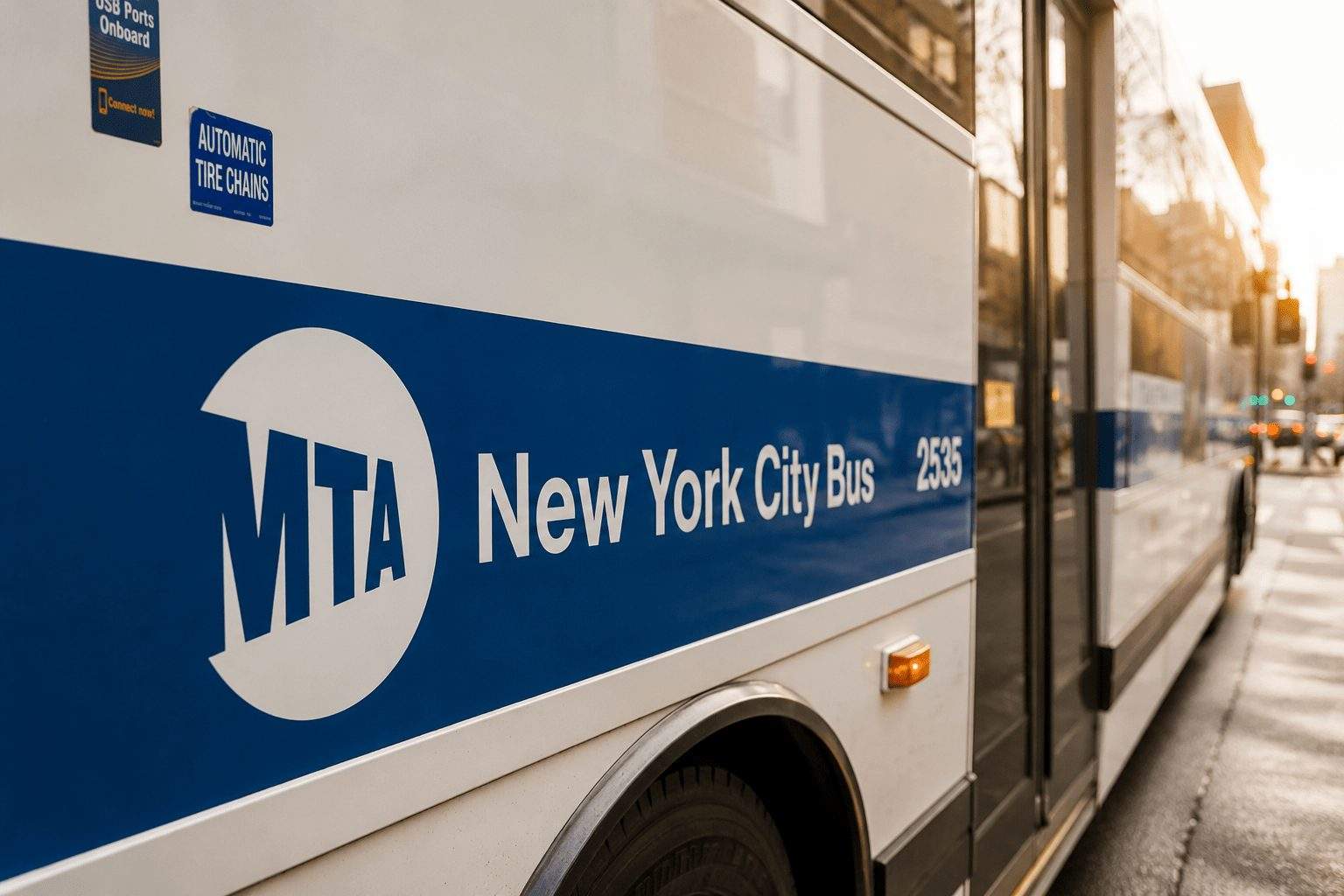
The Metropolitan Transportation Authority in New York started a 60-day warning period on Monday for four more bus lines, pushing its bus camera enforcement to 67 routes and over 1,900 buses. The newly added routes are Brooklyn’s B38 and B103, along with the Bronx’s Bx11 and Bx17.
But investors can look to the curb for another signal. In June 2024, Automated Camera Enforcement (ACE) expanded to ticket blocked bus stops and double-parking. MTA camera violations jumped 551% for fiscal 2025. With ticket counts about the same, fines from the curbside violations came in $7.3 million higher than those from bus-lane violations, and payments—penalties and interest included—were $3.9 million more.
| Fiscal 2025 bus-enforcement category | Violations issued | Fines issued | Payments collected |
|---|---|---|---|
| Bus-lane tickets, includes mobile MTA cameras | 1,073,011 | $72.8 million | $61.1 million |
| MTA bus-stop and double-park tickets | 1,089,106 | $80.1 million | $65.0 million |
| Curbside, not counting bus-lane totals | +16,095 | +$7.3 million | +$3.9 million |
ACE fines are sent to the General Transportation Account as operating subsidies for MTA Transportation Revenue Bond holders. Those bonds are secured by the authority’s revenue and subsidies. So far through May, the MTA brought in $47.5 million, topping the budget by 0.6%. The agency got $108.1 million in 2025, which came in 16.1% above plan. The city violation table and MTA cash reports cover different time frames and use different accounting, so figures don’t match up directly.
New ACE cameras now hit drivers misusing busways or bus lanes, stopping in bus stops or double-parking. City staff check footage from several buses, with tickets starting at $50 and going up to $250 for repeat violations. Enforcement with fines kicked off Friday on the M7 in Manhattan and the Q10 and Q80 in Queens.
MTA Chair and CEO Janno Lieber told CBS, “When they get that first ticket, the overwhelming majority of them don’t get a second.” Only 10% of violators rack up more than one ticket, the agency said. That helps compliance, but limits revenue from repeat fines. CBS News
Official data shows physical coverage is growing quicker than the latest pace of cash intake, though the comparison is rough because of warning periods and season effects. The annual number below just extends five months of 2026 receipts, not an MTA forecast.
| Indicator | Earlier official reading | Latest official reading | Change or read-through |
|---|---|---|---|
| Routes in the program | 56 as of February 2026 | 67 as of July 2026 | +19.6% |
| ACE-equipped buses | Over 1,600 in February | Over 1,900 in July | Growth number not released |
| Covered route miles | 560 in February | Roughly 810 in May | +44.6% |
| MTA ACE cash | $108.1 million for all of 2025 | $47.5 million from January to May 2026 | Running at $114 million per year, +5.5% from 2025 |
The MTA points to better service, saying ACE has boosted speeds up to 30% and led to 20% fewer crashes. But New York buses still run at about 8 mph on average. “Buses can only move as fast as traffic allows,” Lieber said last week. MTA
The contract to supply on-bus hardware was divided between two private vendors. The MTA purchase covers as many as 2,023 systems for $141.5 million—$83.1 million going to Hayden AI, $58.4 million to Seon. The agency said working with more than one vendor lowered its exposure to risk.
Verra Mobility NASDAQ:VRRM handles the back-office work—the processing platform that turns camera data into cases—under a deal with Hayden. Its separate five-year, $998 million contract with the New York City Department of Transportation covers red-light, speed, bus-lane, and BQE weight cameras, up 34% from the city’s previous five-year contract. The cut from bus-lane cameras wasn’t disclosed.
Verra’s Q1 numbers point to higher costs. The Government Solutions unit lifted service revenue by 4%, but a pricing change with the new New York contract pulled revenue down $3.4 million net after installation revenue. Segment profit margin dropped to 20% from 29%. Total revenue was nearly unchanged at $223.6 million. CEO David Roberts said there were “strong bookings in Government Solutions.” Verra Mobility
The downside isn’t hard to see. Warning periods push back collections, just 10% of violators get caught again, and ACE was roughly 1.1% of MTA’s $4.31 billion in operating subsidies through May. If people start following the rules faster than bus routes expand, fine revenue could level off. For Verra, bundled pricing and rollout costs might mean the bus expansion doesn’t translate directly to margins.
The pipeline is still big. The city and MTA want to put ACE devices on buses for 25 more routes in both 2026 and 2027, and set up 200 more fixed bus-lane cameras by 2027. For bondholders and Verra investors, main things to watch now are what’s happening at the curb, how many fines turn into cash, and what vendor margin is left after the buildout.
Related articles: Stock Market