
LONDON, August 2, 2026, 22:00 BST
- The Financial Times said that merger discussions took place recently. Reuters was not able to confirm these details.
- Equity values reached $396.4 billion on Friday. Adding June net debt increases AstraZeneca’s provisional enterprise value to $454.9 billion.
- Bristol Myers accounted for 45.7% of total Q2 sales, yet represented just 33.7% of the overall equity value.
A potential deal under discussion could create one of the biggest mergers in the pharmaceutical sector. The Financial Times reported that talks have occurred over the past few months. As of Friday, the combined market value was $396.4 billion. Reuters has not confirmed the report, and there is no guarantee that a deal will be reached.
AstraZeneca did not provide a comment. Bristol Myers did not respond immediately outside regular business hours. Cash markets in London and New York were shut on Sunday. The initial indication of price will come on Monday.
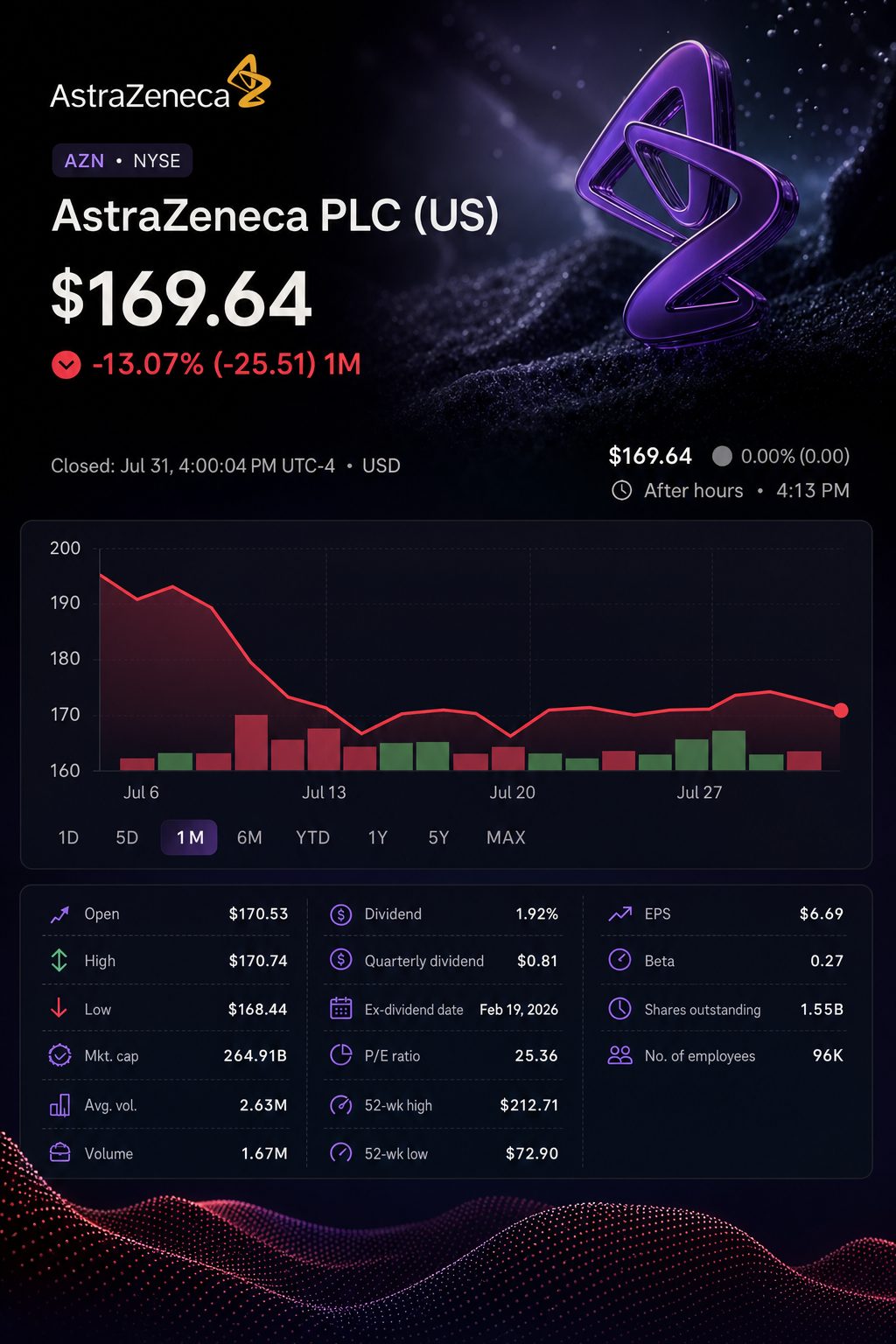
AstraZeneca finished Friday at $169.64, putting its valuation at $263.0 billion. Bristol Myers ended the day at $65.31, giving it a market capitalization of $133.4 billion. The primary focus for the market is not comparing company size, but rather assessing the exchange ratio.
Bristol Myers accounted for 45.7% of the combined companies’ second-quarter revenue, but makes up just 33.7% of their total equity value. The substantial difference could help all-share deal calculations and boost exposure to established products.
This initial baseline is based on Friday’s market valuations, second-quarter revenue, and outstanding June debt.
| Preliminary deal baseline | AstraZeneca | Bristol Myers | Combined |
|---|---|---|---|
| Equity value, $bn | 263.0 | 133.4 | 396.4 |
| Q2 revenue, $bn | 15.384 | 12.973 | 28.357 |
| Equity value/annualized Q2 revenue | 4.27x | 2.57x | 3.49x |
| June net debt, $bn | 26.9 | 31.7 | 58.6 |
| Total enterprise value, $bn | 289.9 | 165.1 | 454.9 |
Initial estimates. Enterprise value is calculated as equity value plus reported net debt. Sales multiples are based on annualized Q2 revenue.
AstraZeneca is valued at around 4.27 times annualized Q2 sales, while Bristol Myers stands at roughly 2.57 times. The blended figure comes to 3.49 times. These are approximate ratios and do not represent forecasts.
The discrepancy in valuations can be partially attributed to differences in operating mix. Since companies use varying definitions in their reporting, this comparison gauges concentration rather than matching business segments.
| Contribution and concentration | AstraZeneca | Bristol Myers |
|---|---|---|
| Fraction of total equity value | 66.3% | 33.7% |
| Portion of total Q2 revenue | 54.3% | 45.7% |
| Primary reported growth segment | Oncology: 47.6% of revenue | Growth Portfolio: 58.3% |
| Wider concentration indicator | Oncology and Rare Disease: 63.8% | Eliquis and Opdivo: 53.7% |
| Q2 growth indications | Oncology +15% CER; Rare Disease +8% CER | Growth Portfolio +15%; Eliquis +22%; Opdivo -3% |
No details on the deal terms were provided. A premium would swiftly alter the division of ownership. The scenarios below presuppose an all-stock buyout of Bristol Myers with net debt left at present levels.
| Hypothetical Bristol premium | Bristol share value, $bn | Total combined equity value, $bn | Bristol shareholders’ stake | Aggregate enterprise value, $bn |
|---|---|---|---|---|
| 0% | 133.4 | 396.4 | 33.7% | 454.9 |
| 20% | 160.1 | 423.1 | 37.8% | 481.6 |
| 25% | 166.8 | 429.7 | 38.8% | 488.3 |
| 30% | 173.4 | 436.4 | 39.7% | 495.0 |
Preliminary estimates for illustration only. These do not factor in synergies, fees, restructuring expenses or changes in financing.
Bristol shareholders would control roughly 38.8% if a 25% premium were applied. Combined enterprise value would total $488.3 billion. The deal’s reliance on cash means significant fresh financing would probably be necessary. AstraZeneca reported $5.0 billion in cash and investments and $26.9 billion in net debt.
With no added premium, the equity value would rank just beneath AbbVie and just above Merck, altering the industry’s scale landscape.
| Selected company | Friday market value, $bn |
|---|---|
| Eli Lilly NYSE:LLY | 1,029.2 |
| Johnson & Johnson NYSE:JNJ | 625.5 |
| AbbVie NYSE:ABBV | 445.2 |
| Potential AstraZeneca–Bristol merger | 396.4 |
| Merck NYSE:MRK | 321.6 |
| Novartis NYSE:NVS | 305.5 |
The best alignment is found in oncology and innovative treatments. In the second quarter, 63.8% of AstraZeneca’s revenue originated from its oncology and rare-disease segments. Bristol’s Growth Portfolio made up 58.3% of its sales, while Eliquis and Opdivo accounted for 53.7% of Bristol’s revenue.
Eliquis sales increased by 22%, but Opdivo posted a 3% drop. Bristol’s legacy drugs remained under pressure from generics. AstraZeneca continued to grapple with Farxiga losing exclusivity and pricing challenges in China. Scale would not address these issues.
AstraZeneca posted Q2 revenue of $15.38 billion last week, with core earnings coming in at $2.63 per share. CEO Pascal Soriot stated, “We remain confident in the strength of our pipeline.” Shares climbed 1.7% in early Monday trading after the announcement. AstraZeneca
Bristol Myers posted Q2 revenue of $12.97 billion and increased its outlook. The Growth Portfolio advanced 15%. “The Growth Portfolio continues to deliver,” CEO Christopher Boerner said. Shares rose roughly 1% on Thursday. Bristol Myers Squibb
Investors are expected to look for formal confirmation this week. Attention will then shift to premium, payment structure, governance, and headquarters location. Control over the pipeline will also be important. The negotiations might conclude without a deal.
Risks: The report is not yet confirmed. Any potential agreement may collapse, encounter regulatory challenges, or impact both companies’ finances. Patent expirations and clinical trial disappointments would persist following a merger.
![Asia Stock Market Today 23/08/2026 [UPDATE: 08:08 SGT] [Yield Shock Splits Asia: Weekly Recap and Week Ahead]](https://ts2.tech/wp-content/uploads/2026/08/Asia-market-dashboard-2026-08-23-0808-480x384.jpg "Asia Stock Market Today 23/08/2026 [UPDATE: 08:08 SGT] [Yield Shock Splits Asia: Weekly Recap and Week Ahead]")