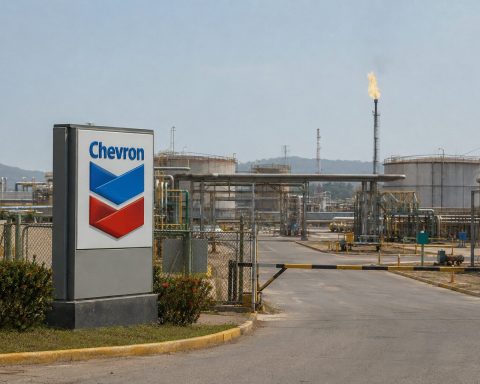

- Industry chiefs warn of a price crash. Chevron CEO Mike Wirth and other oil executives say U.S. oil output is surging and that 2026 will likely mark a trough for crude prices foxbusiness.com. With Permian Basin production “churning” and domestic supply surging, they expect that after next year’s low point, the market will rebalance and prices recover foxbusiness.com.
- Record U.S. production fuels oversupply. The Energy Information Administration (EIA) now projects U.S. crude output hitting ~13.5 million barrels per day in 2025 (a record) with only a marginal drop in 2026 reuters.com. Combined with OPEC+ loosening cuts, the International Energy Agency (IEA) warns of a huge global glut in 2026 – a surplus up to 4 million barrels/day according to its latest outlook reuters.com.
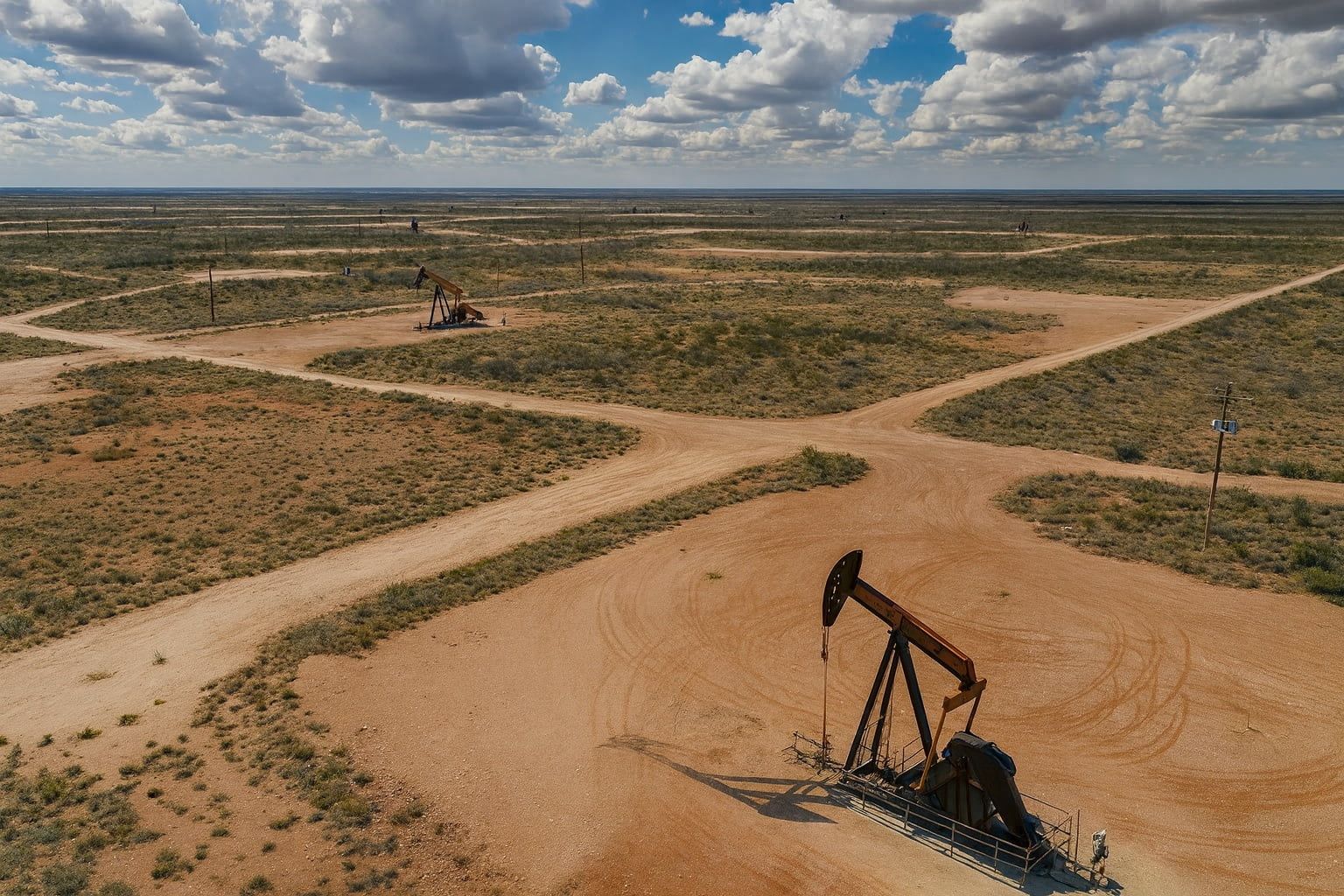
- Permian Basin’s outsized role. The Permian under Texas and New Mexico already accounts for roughly 40% of U.S. oil production, and it is expected to supply the vast majority of future output (eventually 70% by 2040 foxbusiness.com). Producers are adding rigs and pipelines; even with a modest rig pullback in October 2025, Permian activity remains near multi-year highs reuters.com.
- Robust demand but downward pressure. Oil demand is surprisingly strong – above 20 million barrels/day in the U.S., unusually high for the autumn season ts2.tech. Yet analysts caution that new supply (from shale and OPEC) and easing trade tensions are likely to outpace consumption. Even Bank of America notes that if U.S.-China trade frictions flare, Brent could tumble below $50 reuters.com.
- Stocks and markets rally ahead of the slowdown. Energy stocks have rallied on the boom-and-bust outlook. Chevron (CVX) is trading around $155 statmuse.com and Exxon Mobil (XOM) near $116 statmuse.com, each up for the month as investors bet on higher near-term energy prices. Smaller producers are also buoyed – Occidental Petroleum (OXY) is about $41 statmuse.com – even as experts warn these gains could stall when the predicted oversupply hits.
Permian Surge: “Crown Jewel” of U.S. Oil Production
The heart of the story is the Permian Basin, North America’s most prolific shale oil patch. It has been “producing for over 100 years and left for dead two or three times,” as Diamondback Energy’s CEO Kaes Van’t Hof notes, yet today the Permian alone yields over 6 million barrels per day – more than any country except the U.S. and Russia foxbusiness.com. Chevron’s Mike Wirth points out U.S. oil output (led by shale) now exceeds that of Saudi Arabia and Russia combined foxbusiness.com. Under the Trump administration’s energy policies, drilling and pipeline projects in the Permian have accelerated. Maria Bartiromo’s recent tour of Midland, TX, highlighted that Permian oil now supplies roughly 40% of U.S. production foxbusiness.com, a share slated to rise sharply.
Texas Congressman August Pfluger (R) – who joined the Permian tour – calls the basin the “crown jewel” of American energy pfluger.house.gov. He argues that the prior Biden administration’s regulatory agenda (from methane fees to LNG export limits) temporarily held back U.S. oil investment, saying they “drained the SPR for political reasons…attempted to impose a fracking ban” etc. pfluger.house.gov. Now, he and others say, policies are reversing – a new push for energy dominance is under way. Indeed, the White House recently proclaimed October “National Energy Dominance Month” in 2025, underscoring the renewed focus on fossil fuels (though details are sparse).
Meanwhile, industry groups report that oilfield activity is still ramping. U.S. rig counts ticked up for weeks, and despite a small pullback in mid-October, the Permian rig count remains around 250 rigs – the highest in years reuters.com. Cardinal Midstream and others are expanding pipeline capacity to carry more Permian oil and gas. Taken together, these factors mean U.S. crude production is on track to set new records. The EIA now forecasts about 13.5 mb/d in 2025 and only a slight decline in 2026 reuters.com, essentially cementing a year of oversupply.
Price Forecasts: 2026 as the “Low Point”
Oil executives and forecasters alike see these flows converging to a price dip in 2026. Mike Wirth tells Fox Business that “we’re prepared for prices in [2026] to be lower than they were in ’25” foxbusiness.com. His view: once all the extra Permian barrels hit the market, “the market will come back into balance” and prices will then recover to higher levels after 2026’s trough foxbusiness.com. Van’t Hof similarly says, “economics drive capital decisions” – today’s oil (~$57) isn’t exciting, so firms will cut costs and wait out the lean period foxbusiness.com.
These industry voices echo government projections. In October, the EIA surprised markets by raising its U.S. output forecast – calling for “record 13.53 million bpd in 2025” reuters.com – and warned that glut risks will “slash prices” ahead. It expects West Texas Intermediate (WTI) to average only about $65 per barrel in 2025 (≈15% below 2024 levels) reuters.com. The 2026 outlook is weaker: inventories are set to rise and global balances tilt slack. The IEA is even more bearish on next year’s supply-demand mix: its October report projects a 4 million-barrel/day surplus in 2026 reuters.com. That is roughly 4% of demand and far bigger than most predictions.
Short-term factors have driven oil prices down recently. Trade tensions between the U.S. and China re-emerged in mid-October, sending oil to five-month lows (~$62 Brent) as investors worried about faltering demand reuters.com. Even OPEC has cautioned that 2026 may see only a small supply deficit – implying ample spare capacity. The latest OPEC+ meetings are hinting at resumed monthly output increases (another ~137,000 bpd boost for December reuters.com) as Russia and Saudi compete for market share. Indeed, Reuters reports that OPEC+ members plan modest December hikes reuters.com, further adding to export volumes. U.S. sanctions on Russia have somewhat supported prices (an oil rally to over $66 in late October was sparked by new sanctions on Lukoil and Rosneft reuters.com), but even this effect is limited. IEA chief Fatih Birol notes that in a world with plenty of spare capacity, “the effect of sanctions on oil-exporting countries will be limited” reuters.com.
“We’ve got total oil demand above 20 million barrels a day – very impressive for shoulder season,” says analyst Phil Flynn of the Price Futures Group ts2.tech. In fact, the U.S. saw unexpected drops in crude inventories and strong fuel consumption in mid-October ts2.tech. But this demand surge may only temporarily support prices; many forecasters stress that supply growth will eventually overwhelm it. For example, Bank of America analysts warn that renewed trade flare-ups could send Brent below $50 if OPEC+ keeps adding output reuters.com. In sum, the consensus view is that oil prices will likely bottom out around 2026 before tightening later on.
Wall Street and Markets React
Investors have been positioning for this cycle. On Wall Street, energy stocks have climbed in recent weeks as crude rebounded from early October lows. A market strategist notes, “Oil’s rebound is putting some wind in the sails of energy stocks” ts2.tech – integrated majors like Chevron and Exxon, in particular, are “quickly retracing losses from earlier in the month” ts2.tech. Indeed, over the past month (October 2025), Chevron (ticker CVX) is up roughly 0.3% to about $155 statmuse.com, and Exxon Mobil (XOM) is up ~3% to ~$116 statmuse.com. These gains come even as analysts emphasize that 2026 could see sustained downward pressure on prices. Diamondback Energy’s Van’t Hof acknowledges that $57 oil isn’t cause for celebration – firms will simply “find ways to reduce costs…to live to fight another day” foxbusiness.com.
Smaller U.S. producers have also seen rallies. For example, Occidental (OXY), a key Permian driller, trades near $41 (as of Oct. 20, 2025) statmuse.com. (By comparison, a few weeks earlier on Oct. 6, OXY was around $33 statmuse.com.) Market analysts note that U.S. inventories began building in October after weeks of draws reuters.com, and that could cap oil’s upside near-term. Still, many investors remain bullish on the energy sector’s longer-term profitability – partly because companies are shifting capital away from low-return renewables back into oil and gas. For instance, BP recently pulled out of U.S. offshore wind projects and doubled down on oil developments, a move that “investors are applauding” as it boosts cash flow ts2.tech.
Stock markets aren’t the only beneficiaries. The U.S. is also shoring up its own reserves and exports. In late October, the Trump administration announced plans to buy 1 million barrels for the Strategic Petroleum Reserve foxbusiness.com, which some oil executives see as a bullish signal. Billionaire Harold Hamm (Continental Resources) even warned that U.S. crude exports and global demand could soon outpace the current surplus: “with about 18 months, that oversupply’s going to be gone…and then we need to watch out for some price shocks” foxbusiness.com. In other words, after oversupply peaks, downside is limited and prices may spike.
Policy and Political Angle
Energy policy is in the spotlight. Republicans – who regained the White House in 2025 – have made boosting oil/gas production a priority. They contrast this with earlier policies: as Rep. Pfluger bluntly put it, the last administration “tried to kill” the U.S. oil industry through taxes, bans and regulations pfluger.house.gov. The new federal government has rolled back many regulations and is emphasizing U.S. “energy independence” as both an economic and national security goal foxbusiness.com pfluger.house.gov. On Fox News and Fox Business, Maria Bartiromo and industry leaders framed the Permian surge as key to American competitiveness foxbusiness.com ts2.tech.
However, environmental and demand concerns still temper the outlook. The IEA and OPEC disagree on demand growth (OPEC is more optimistic about consumption), and neither expects a full return to $100 oil in the immediate term. Meanwhile, some analysts warn of a longer-term shift: EV uptake and climate measures could slow oil usage. None of the current forecasts factor in, say, a sudden move away from fossil fuels. But for now, with Permian output climbing and U.S. energy policy favoring production, the near-term picture is clear: plenty of oil looking for a market, which should keep prices in check until sometime after 2026.
Sources: Oil exec interviews and market data (Fox Business foxbusiness.com); EIA/IEA forecasts (Reuters reuters.com reuters.com); Permian production stats (Fox Business foxbusiness.com); stock quotes (Chevron statmuse.com, Exxon statmuse.com, Occidental statmuse.com from historical data); expert commentary (Filings & press releases pfluger.house.gov, analyst reports ts2.tech reuters.com). (Article compiled Oct. 28, 2025.)
Related articles: NYSE:CVX