
New York, July 13, 2026, 10:08 EDT
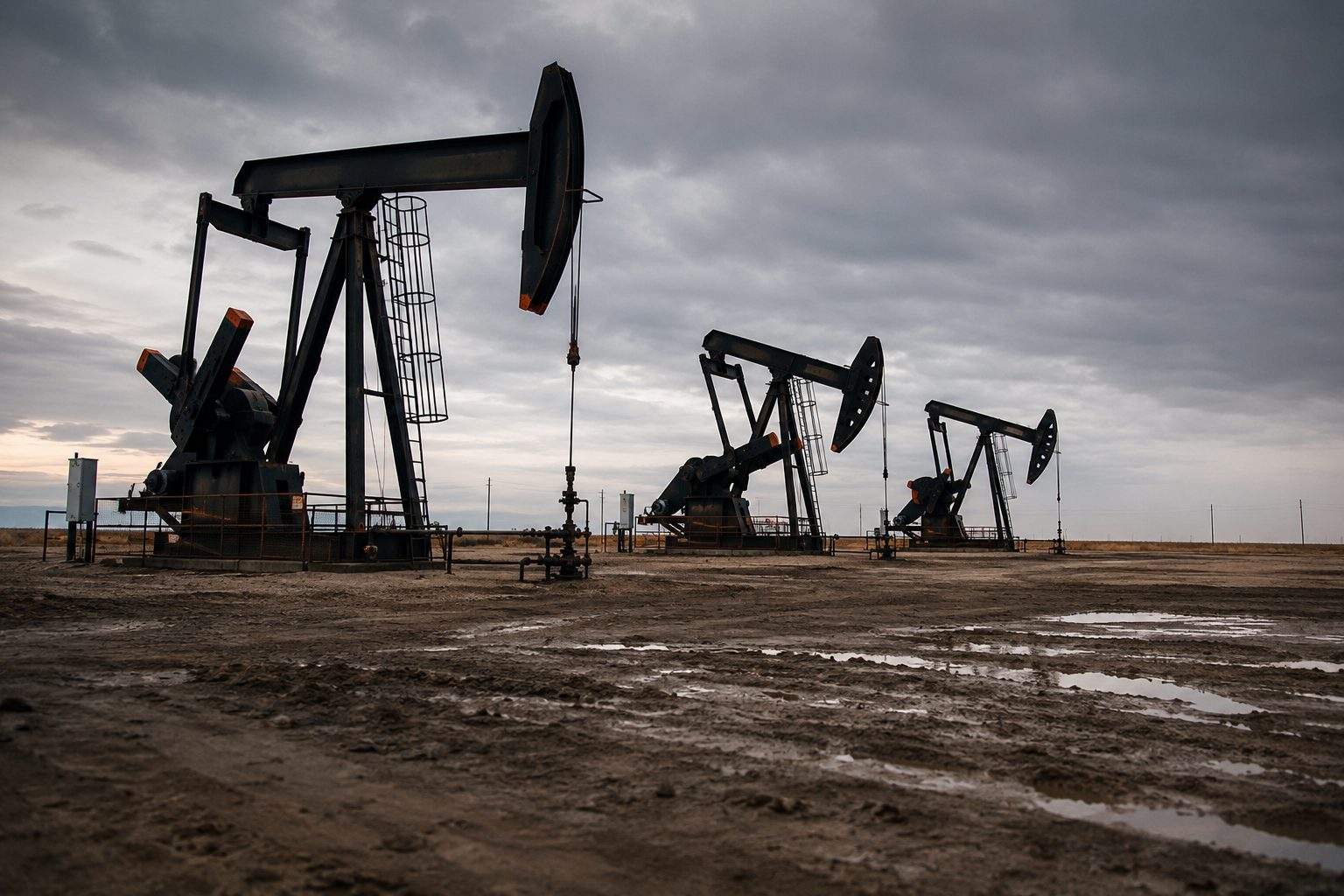
The two-year U.S. Treasury yield hit a peak not seen since February 2025 on Monday, as oil jumped again. Traders bet the Fed could hike rates one more time. Brent crude surged 4.5% to $79.43 when new U.S.-Iran attacks raised alarms over shipping risk at the Strait of Hormuz.
Investors got a clearer signal from what stayed flat. By 10 a.m. EDT, both two-year and 10-year yields were up 2.8 basis points compared with Friday, so the spread was steady at 34.6 basis points. One basis point is equal to 0.01 percentage point.
| Treasury measure | Friday close | Monday, around 10 a.m. | Change |
|---|---|---|---|
| Two-year yield | 4.216% | 4.244% | up 2.8 bp |
| 10-year yield | 4.562% | 4.590% | up 2.8 bp |
| 10-year minus two-year | 34.6 bp | 34.6 bp | unchanged |
The near-parallel move is worth noting. The two-year U.S. Treasury tends to track Fed policy expectations, and the 10-year yield is more about growth, inflation and the term premium investors want on longer debt. The action on Monday looked like markets raised the whole yield curve, but didn’t shift their core view on the economy much.
Traders aren’t shrugging off inflation. Federal funds futures show about 38 basis points more tightening priced in for the rest of the year. The Fed target is 3.50% to 3.75%, but the two-year yield is sitting about 49 basis points above the top end. Mohit Kumar at Jefferies Financial Group Inc. NYSE:JEF said there’s still room for “a fudge or a patch” to keep oil moving and put a lid on prices. Reuters
A Reuters survey of 74 strategists wrapped up July 9 shows some expect a shift after the energy shock ends. Joseph Purtell, portfolio manager at Neuberger Berman, said market expectations for one or two more Fed hikes are “excessive.” Jason Williams, Citigroup’s NYSE:C director of U.S. rates research, thinks “inflation is priced too sticky.” Williams said that skipping hikes could cut up to 30 basis points off the 10-year yield. Reuters
| Horizon | Two-year yield | 10-year yield | 10-year minus two-year | Spread change from now |
|---|---|---|---|---|
| Current | 4.244% | 4.590% | 34.6 bp | — |
| Three months | 4.00% | 4.48% | 48 bp | +13 bp |
| Six months | 3.90% | 4.48% | 58 bp | +23 bp |
| 12 months | 3.85% | 4.39% | 54 bp | +19 bp |
The medians point to a steeper curve, meaning the gap between long- and short-term yields widens by 13 to 23 basis points. Most of the expected shift lands in the two-year, which reacts to policy, not because long-term rates are dropping. Monday’s flat spread says that shift hasn’t begun.
But oil staying high could keep pushing up overall prices, or if there’s a real supply hit through Hormuz, things could change fast. Bank of America Corp. NYSE:BAC is calling for three Fed hikes—one each in September, October and December. That would probably lift shorter yields more, and tighten the curve rather than push it wider.
Traders watch for the June consumer-price numbers at 8:30 a.m. EDT Tuesday, with headline inflation last at 4.2% and core at 2.9% in May. Fed Chair Kevin Warsh will also testify before Congress. A cooler CPI print could back the strategists’ steepening call. An upside surprise and stronger oil prices may fuel talk of more rate hikes.
Related articles: NYSE:C


![Asia Stock Market Today 27/08/2026 [UPDATE: 00:10 SGT] [Chip Losses Narrow as KASE Global Enters Final Hour]](https://ts2.tech/wp-content/uploads/2026/08/Asia-market-dashboard-2026-08-27-0010-480x384.jpg "Asia Stock Market Today 27/08/2026 [UPDATE: 00:10 SGT] [Chip Losses Narrow as KASE Global Enters Final Hour]")