
LONDON, August 2, 2026, 23:06 BST
- BP’s UK North Sea operations delivered an average of 117,000 barrels of oil equivalent per day in 2025, representing roughly 5% of the company’s total output.
- The projected gross value, ranging from $2.0 billion to $2.6 billion, accounts for 10%-13% of BP’s $20 billion divestment goal.
- BP forecasts its preliminary net debt for the second quarter at $22-$23 billion. The company is set to announce its results on Tuesday, August 4, at 07:00 BST.
BP approaches its results on Tuesday following a divestment that may have a greater impact on its debt than on its production figures. The North Sea division accounted for just 5% of output projected for 2025. However, the unit’s estimated worth may make up 10%-13% of BP’s targeted asset sales.
Economic factors are a key driver behind the decision. This year, operating expenses in the North Sea are projected to reach $25.20 per barrel equivalent, while the worldwide average stands at $10.60. This places the basin’s costs at roughly 2.4 times higher than the global norm.
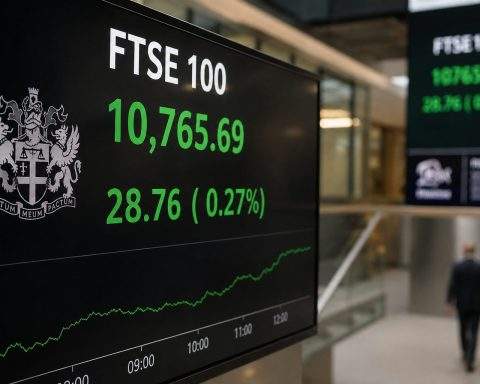
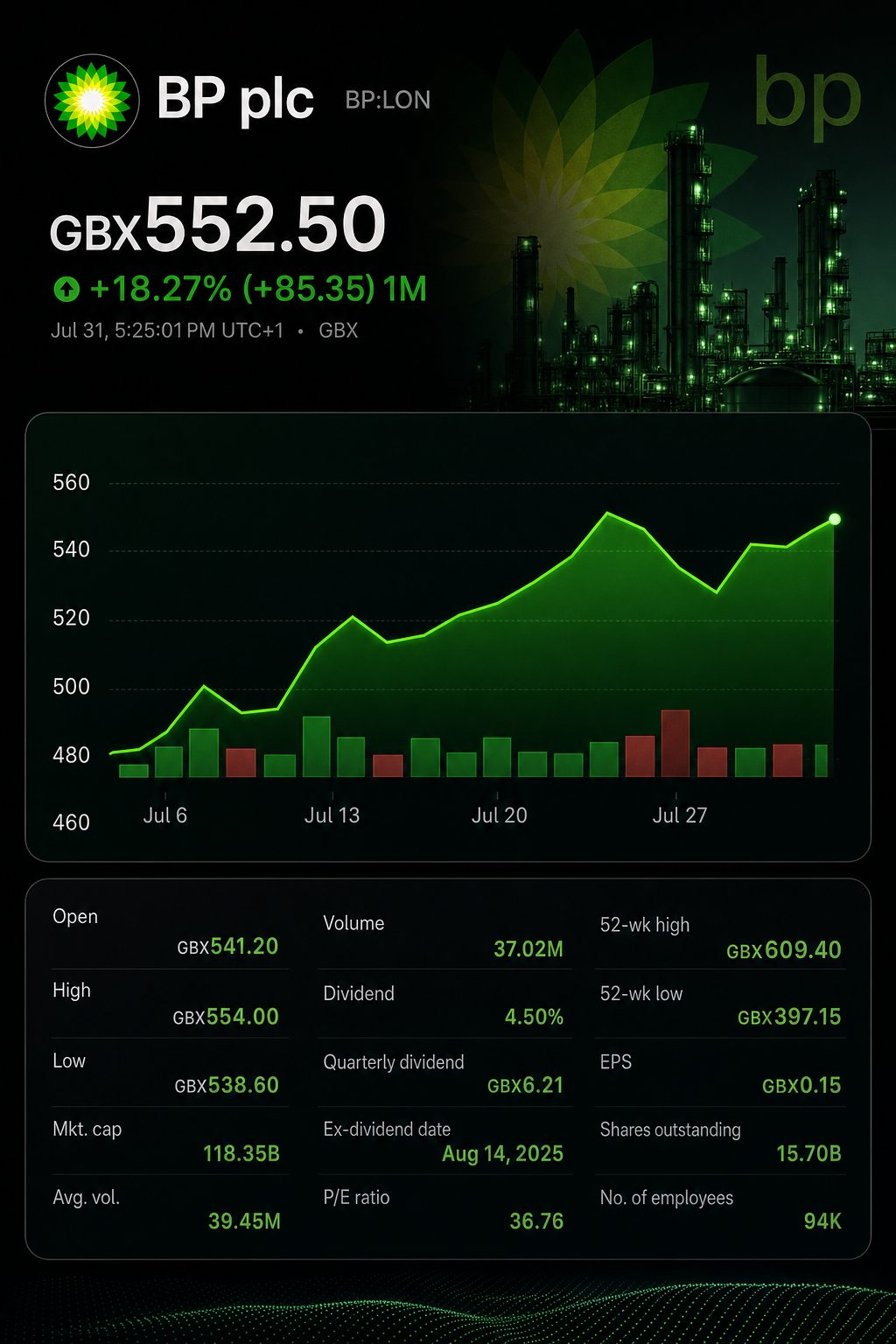
The London market was shut for the weekend as of this dateline. BP ended Friday at 552.50 pence, marking a rise of 1.77%. The FTSE 100 slipped 0.27%. Over the course of the week, BP advanced 0.75%.
The weekly change was behind Shell plc LON:SHEL, but nearly matched TotalEnergies SE EPA:TTE.
| Company | July 24 close | July 31 close | Weekly move |
|---|---|---|---|
| BP | 548.40p | 552.50p | up 0.75% |
| Shell | 3,305.50p | 3,383.50p | up 2.36% |
| TotalEnergies | €75.90 | €76.42 | up 0.69% |
Weekly shifts are based on the closing prices referenced.
Shell posted an adjusted profit of $9.84 billion in the second quarter, surpassing the consensus estimate of $8.92 billion. TotalEnergies disclosed earnings of $6.03 billion, reflecting a 12% increase compared to the first quarter. These results increase the expectations for BP’s cash generation.
BP aims to “direct capital to our highest-value opportunities,” according to Chief Executive Meg O’Neill. Industry sources place the potential value of the North Sea sale at close to $2 billion. Rystad Energy puts the risked value around $2.6 billion. Reuters
Tuesday’s report benefits from a favourable price structure, though volumes remain subdued. BP’s July trading update outlined initial ranges for major metrics.
| Metric | Q1 2026 | Q2 preliminary estimate | Implied change |
|---|---|---|---|
| Brent marker average | $81.13/bbl | $103.85/bbl | +28.0% |
| BP refining indicator margin | $16.90/bbl | $29.60/bbl | +75.1% |
| Upstream production | 2.339 million boe/d | 2.170-2.220 million boe/d | Decrease of 5.1%-7.2% |
| Refining throughput | 1.527 million b/d | 1.445-1.475 million b/d | Decrease of 3.4%-5.4% |
| Net debt | $25.3 billion | $22-$23 billion | Decrease of 9.1%-13.0% |
The Q2 numbers represent initial projections by the company. Variations are based on data previously reported by BP.
Earnings are supported by price markers, while reduced production and throughput have the opposite effect. Cash conversion could prove more significant than reported profits.
BP forecasts net debt between $22 billion and $23 billion, a decrease from $25.3 billion. The company also anticipates around $1 billion in post-tax impairments, primarily linked to transition businesses, which are not included in underlying profit.
The North Sea operation may further strengthen balance-sheet gains. While its share of production is limited, its potential financing impact is more significant.
| Metric | North Sea business or sale | BP or global reference | Implied ratio |
|---|---|---|---|
| 2025 output | 117,000 boe/d | 2.3 million boe/d group output | 5.1% |
| Projected gross value | $2.0-$2.6 billion | $20 billion divestment target | 10%-13% |
| 2026 operating expense | $25.20/boe | $10.60/boe global average | 2.38 times |
Reuters estimates and BP’s declared divestment target served as the basis for the ratios.
The actual sale price could fall short of those projections. Decommissioning obligations make valuation more difficult, along with the UK’s tax framework. BP’s acceptance of the Culzean divestment subtracts roughly 25,000 boe/d from its UK production.
Oil presents an additional factor. Brent finished at $90.12 on Friday, marking a 24% rise in July. OPEC+ on Sunday authorized a supply boost for September by roughly 188,000 barrels per day.
According to Rystad analyst Jorge Leon, the upcoming hurdle is “managing the surplus” once export flows return to normal. Leon’s main scenario anticipates a pause in the fourth quarter. If the surplus is delayed, BP’s pricing environment could nevertheless face pressure. Reuters
Risks: A decline in oil prices, soft bid interest, or postponed finalisation may hamper efforts to cut debt. Proceeds may also be reduced by decommissioning expenses. Additional transition impairments are possible after the initial $1 billion charge.
Investors are expected to focus on more than Tuesday’s profits. The more significant challenge for BP is demonstrating its ability to convert high-cost assets into liquidity. A realistic sales schedule and interim debt solution could help reinforce the company’s restructuring efforts.
Related articles: LON:BP