
Rivian Automotive, Inc. NASDAQ:RIVN is ending the week at the center of one of the EV market’s biggest storylines: a sharp stock swing tied to its first Autonomy & AI Day, new in-house self-driving silicon, and a push toward subscription software revenue. As of Sunday, December 14, 2025 (with U.S. markets closed for the weekend), Rivian shares last closed Friday, Dec. 12 at about $18.42, up roughly 12% on the day after a volatile two-session reaction to the company’s autonomy announcements.
Below is a detailed, publication-ready breakdown of today’s Rivian stock news, the latest Wall Street forecasts, and the most important catalysts and risks shaping the RIVN narrative heading into 2026.
What’s driving Rivian stock right now
1) Autonomy & AI Day: Rivian goes “vertical” on self-driving hardware and software
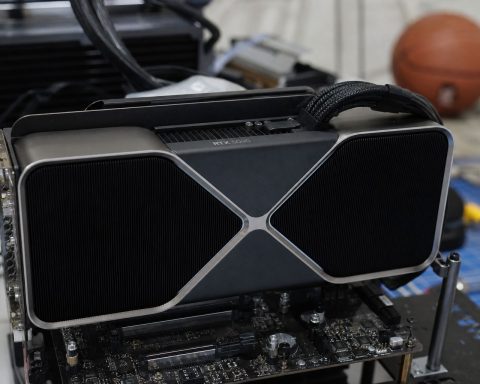
Rivian’s biggest near-term catalyst is straightforward: it’s attempting to move from “EV maker” to “EV + software platform,” emphasizing a roadmap that includes custom autonomy compute, a growing hands-free driving footprint, and paid feature bundles. Reuters reported Rivian unveiled its first custom self-driving chip—the Rivian Autonomy Processor—and confirmed it is shifting away from Nvidia processors for this stack, with the chip produced by TSMC. Reuters+1
The company also introduced Autonomy+, a paid driver-assistance package priced at $2,500 one-time or $49.99/month, positioned well below Tesla’s pricing for its more advanced package.
2) Hands-free driving expansion: from niche coverage to “mass-market map”
Multiple outlets highlighted Rivian’s plan to significantly expand its hands-free driving availability. The Washington Post reported Rivian’s Universal Hands-Free is intended to work on more than 3.5 million miles of paved, clearly marked U.S. roads—while still requiring drivers to remain ready to take over.
Car and Driver added that an OTA update starting this month expands hands-free compatibility from around 150,000 miles to 3.5 million miles, framing it as an important leap for Rivian’s driver-assist competitiveness.
3) The stock’s two-day whipsaw: sell the event, then buy the analyst notes
Rivian’s price action told the story in real time:
- Thursday, Dec. 11: Shares fell around 6%–8% after the announcements.
- Friday, Dec. 12: The stock rebounded sharply—Reuters reported it surged as analysts praised the AI strategy and the custom chip shift, with the session seeing a run-up toward the $19+ range before settling lower into the close.
This pattern matters for Google Discover readers because it reveals the market’s current posture on Rivian: enthusiastic about software upside, but still skittish about cash burn and execution risk.
Rivian’s “AI + subscriptions” strategy: why it matters for the stock
Rivian’s autonomy push isn’t just a tech flex—investors are evaluating whether the company can build recurring, higher-margin revenue streams that help bridge the long gap to sustainable profitability.
Investopedia summarized the investor logic well: Rivian is leaning harder into autonomy and AI to differentiate in a “challenging EV market,” with potential upside in subscriptions and even licensing longer-term—though plenty of technical hurdles remain. Investopedia+1
Rivian itself (via its product materials) indicates Autonomy+ is expected to be available starting February 2026, priced at $49.99/month or $2,500 one-time, and that deliveries include a 60‑day trial—signaling it’s already thinking like a software business about onboarding and conversion.
Car and Driver also notes an introductory free period for some hands-free capabilities before paid access applies (context that can affect take-rate assumptions investors model).
The R2 factor: Rivian’s next make-or-break vehicle cycle
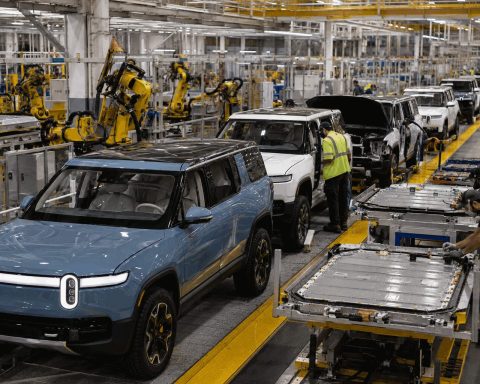
No matter how compelling autonomy headlines are, Rivian remains fundamentally dependent on executing its next product ramp.
- Reuters reiterated Rivian’s R2 is expected to begin rolling out in the first half of 2026 and will carry the new chips.
- Business Insider reported Rivian plans an initial R2 launch without lidar, with a lidar-equipped version later, and highlighted Rivian’s internal view that lidar has come down the cost curve dramatically—supporting a safer, more robust autonomy stack.
For RIVN stock, the R2 program is the junction where Rivian’s story either becomes:
- A scale story (volume + better unit economics), or
- A funding story (more cash needs if ramp stumbles).
Rivian’s latest fundamentals: what the most recent results show
While this week’s trading focus is autonomy, Rivian’s most recent reported quarter still anchors the valuation debate.
From Rivian’s Q3 2025 earnings call transcript, management highlighted:
- ~$1.6B consolidated revenue and $24M consolidated gross profit
- Adjusted EBITDA loss of ~$602M for the quarter
- ~$7.1B in cash, cash equivalents, and short-term investments at quarter-end
- 2025 delivery guidance reaffirmed at 41,500–43,500 vehicles
- Continued expectations of additional capital tied to the Volkswagen JV, with more expected in 2026
- Continued work with the U.S. Department of Energy on an up to $6.6B loan (status updates pending) Fintool
Reuters’ Q3 coverage similarly reported revenue of $1.56B, and emphasized that EV incentive changes pulled demand forward earlier in the year, complicating near-term demand comparisons.
Current Rivian stock forecast: analyst ratings, price targets, and what changed this week
The consensus view: still “Hold,” even after the AI-day rally
Two widely followed analyst consensus aggregators currently show Rivian in “Hold” territory, with average price targets below the latest close—an important reality check after Friday’s surge:
- MarketBeat: Consensus rating Hold; average 12‑month target $14.86 (with targets ranging $6.10–$25.00).
- StockAnalysis: Consensus rating Hold; average target $15.25 (range $10–$25).
The week’s headline calls: Needham up, Goldman up, Morgan Stanley cautious
The rally was amplified by notable analyst actions around the autonomy news cycle:
- Reuters reported Needham raised its price target to $23 after Autonomy & AI Day, citing growing confidence in Rivian’s position as vehicles become more software-defined.
- StockAnalysis also reflects the Goldman Sachs move to $16 from $13 (maintaining a hold/neutral stance) and highlights a recent Morgan Stanley downgrade action in early December.
- Investing.com described Morgan Stanley’s downgrade thesis as centered on R2 launch risks in a difficult EV market, plus headwinds like incentives and adoption friction. (Note: this is a secondary write-up; the key takeaway is the risk framing rather than the exact modeling figures.
Bottom line: the Street is rewarding Rivian for strategic clarity on software and autonomy—but many analysts are still pricing in material execution and market risks.
Other current Rivian news investors are tracking
Delivery van recall: headline risk, but contained to EDV fleet
On Dec. 3, 2025, Reuters reported Rivian is recalling 34,824 electric delivery vehicles (EDVs) in the U.S. because the seat belt system may fail to restrain the driver under certain misuse patterns. Rivian said it was not aware of incidents or injuries and released an OTA software update to detect misuse; inspections and replacements are to be done free of charge.
This is not (based on the reporting) a consumer R1 recall—but it is still a reminder that scaling fleets introduces quality and compliance costs investors must factor in.
Volkswagen partnership: a continuing strategic “runway” lever
Reuters reported in November that Volkswagen said technology developed with Rivian could potentially extend beyond BEVs in the future, and that winter testing on VW/Scout/Audi models was planned by year-end—another sign the partnership is broader than a one-time cash infusion.
Separately, Rivian’s own commentary in the Q3 call indicates the Volkswagen JV remains a key funding and platform lever into 2026.
What to watch next for Rivian stock (RIVN): key catalysts into 2026
Here are the most “stock-relevant” checkpoints investors will likely focus on from Dec. 14, 2025 onward:
- OTA rollout quality and customer experience
Hands-free expansion is only as valuable as real-world reliability and safety performance at scale. - Autonomy+ monetization signals
Pricing is set; what matters next is take-rate, churn, and feature cadence—especially once paid access becomes the default rather than promotional. - R2 production readiness and timing
The market’s patience for pre-revenue “promises” is limited; any slip in first-half 2026 timing could reframe the entire story. Reuters+1 - Cash discipline vs. “AI arms race” spending
Rivian argues vertical integration becomes an advantage at scale, but it can be expensive during buildout. Investors will watch whether autonomy investment expands faster than the company’s financial runway. Reuters+1 - Policy and incentive environment
Rivian’s recent quarters have been affected by incentive timing and regulatory changes, which can move demand forward (or compress it).
Outlook: is Rivian stock an “AI winner” or an EV execution bet?
As of Dec. 14, 2025, Rivian stock is being pulled by two forces at once:
- Narrative tailwind: autonomy, custom silicon, and subscriptions give Rivian a higher-ceiling story than “just another EV manufacturer.” Reuters+1
- Fundamental gravity: profitability and scale still depend on delivering R2 on time, navigating EV demand headwinds, and managing cash while building expensive autonomy infrastructure.
That tension is exactly why RIVN can rip higher on catalyst days and still carry a “Hold” consensus target that implies downside.
Related articles: NASDAQ:RIVN