
SCOTTSDALE, Arizona—It’s May 10, 2026, and the clock just hit 10:02 MST.
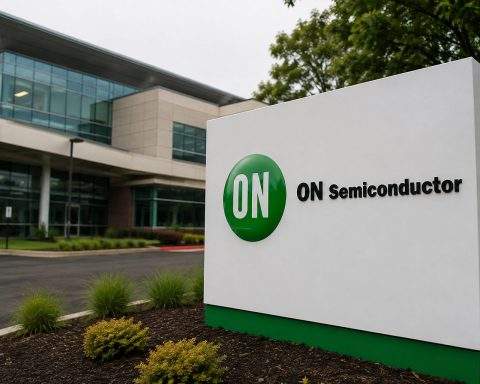
ON Semiconductor Corporation lined up $1.3 billion from a sale of zero-coupon convertible notes—these bonds skip interest payments and can later be swapped for equity—with the deal slated to wrap up Monday. Investors got the details in a May 7 filing: the notes mature in 2031 and come with a conversion premium set roughly 52.5% above ON’s May 6 closing price. The transaction throws a spotlight back on the chipmaker’s capital-raising playbook after a volatile stretch for the shares.
Why is this worth noting now? Onsemi told investors the chip cycle is recovering. According to Reuters, onsemi projected second-quarter revenue ahead of Wall Street targets, pointing to steady automotive demand and a comeback for silicon carbide chips—critical for boosting electric vehicle range and power efficiency.
The financing package touches debt, buybacks, and could result in some dilution. onsemi is eyeing net proceeds in the area of $1.28 billion. About $331.9 million is earmarked for buying back around 3.1 million shares. The rest, according to the filing, goes to general corporate uses, which includes debt repayment.
The stock wrapped up Friday at $103.20, a bump from Thursday’s $100.61 finish, though it stayed under the $105.77 reference price for the notes. Volume dropped sharply, with around 10.8 million shares changing hands Friday, down from 19.2 million the day before, LSEG data on onsemi’s investor site show.
The deal comes after onsemi posted first-quarter revenue of $1.51 billion. Gross margin landed at 38.5%. The company swung to a GAAP loss of 8 cents per share, but on a non-GAAP basis, earnings reached 64 cents. “We’ve moved beyond the cyclical trough,” said CEO Hassane El-Khoury, pointing to improving demand through the quarter. onsemi
“Strong operating leverage,” CFO Thad Trent said, as operating income climbed 10% from a year earlier on just a 5% gain in revenue. The company snapped up $346 million of its own shares during the quarter—roughly 160% of free cash flow. onsemi
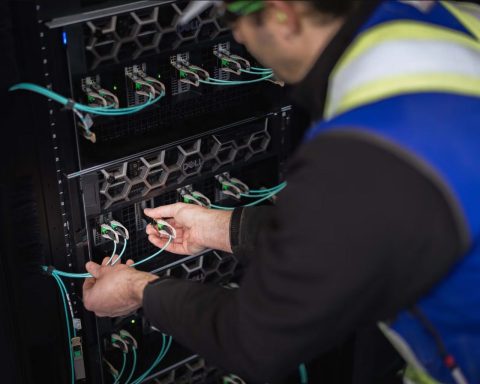
Growth is showing up in defined areas. onsemi reported that AI data-center revenue has jumped over 100% from a year ago and climbed more than 30% sequentially, thanks to wider use throughout the so-called “power tree”—that network of chips and modules handling electrical flow inside racks and servers. onsemi
Automotive stays front and center for onsemi. The company’s EliteSiC devices target 900-volt EV systems—a high-voltage setup that enables both faster charging and better efficiency. onsemi pointed to deeper collaborations with Geely and NIO this cycle. Competition is stiff in silicon carbide power chips: big players like Infineon, STMicroelectronics, and Wolfspeed are all in the mix. According to Mordor Intelligence, those names, along with onsemi and ROHM, dominate what remains a tightly held market.
The deal isn’t a one-way street. According to the filing, shareholders might see dilution if onsemi’s shares climb past the $211.54 warrant strike price. Hedge counterparties, for their part, could be trading, hedging, or using derivatives in ways that move the stock before the notes come due.
Market risk hangs over the recovery, which could easily turn patchy. Reuters reported earlier this year that onsemi was contending with bloated customer inventories, tougher silicon carbide competition, and EV sales that lagged forecasts — all issues that cheap capital won’t quickly solve.
Management isn’t boxed in by the balance sheet. As of April 3, onsemi listed $2.00 billion in cash and equivalents, another $400 million in short-term investments, and gross long-term debt sitting around $3.00 billion in its latest 10-Q. The company maintained it remained within debt covenant limits.
The question now is straightforward: will investors view the notes as opportunistic fundraising off a recent stock rally, or see them as an extra layer of complexity right as the company works to back up its auto and AI chip recovery story? As things stand, onsemi picks up cheap capital and a buyback. Common shareholders are looking at a high conversion price—though they’re still exposed to dilution risk.