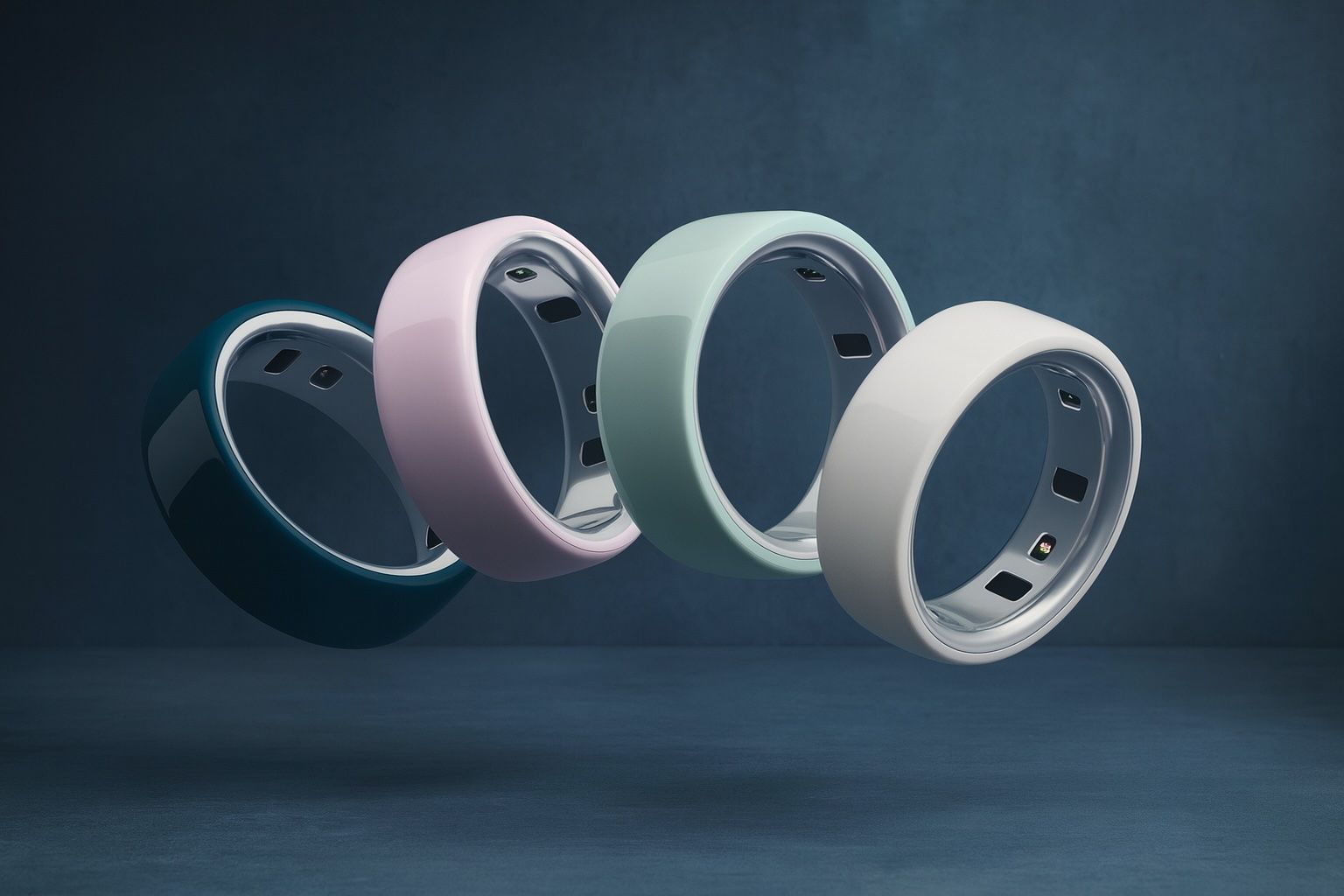

- High‑performance ceramic build: Oura’s new Ring 4 Ceramic is made from zirconia ceramic, a material with a Mohs hardness of 8.5 – harder than steel and approaching sapphire. The colour isn’t painted on; it’s baked into the ceramic, so scratches don’t cause fading ouraring.com. Oura sells four hues — Cloud (off‑white), Tide (light green), Petal (pink), and Midnight (dark blue) — inspired by minerals and glazes found in traditional pottery businesswire.com.
- Pricing and options: The ceramic rings cost US $499, a premium over Oura’s standard titanium Ring 4 ($349) and roughly the same as the gold‑plated model. Membership to unlock full features remains US $5.99/month or $69/year. Each ring ships with a polishing pad to buff out metal scuffs businesswire.com.
- Smart Sensing tech and improved sensors: Oura claims a 30 % improvement in blood‑oxygen (SpO₂) accuracy and 120 % better signal quality versus its third generation ring 9to5google.com. The new sensor array tracks heart‑rate variability, skin temperature, respiratory rate and stress metrics and offers sleep, readiness and activity scores.
- Battery life and durability: The ring lasts 5–8 days per charge and recharges in 20–80 minutes. It is water‑resistant to 100 m (328 ft) and is 3.51 mm thick — slightly thicker and heavier than the metal version because of the ceramic shell ouraring.com. A ceramic ring weighs roughly 5.1–8.1 g, compared with 3.3–5.2 g for the titanium model 9to5google.com.
- Portable charging case: Oura’s new $99 charging case stores up to five full ring charges, allowing users to travel without a cable. The clamshell‑style case is made from recycled aluminum, uses USB‑C, recharges both ring and case in 90 minutes, has LED indicators showing remaining charge, and is splash‑resistant businesswire.com.
- Multi‑ring support: Users can now pair multiple rings to a single account and switch between them without losing data — ideal for coordinating with different outfits or charging schedules wired.com.
- Health Panels blood‑test service: For $99 per panel (currently U.S. only), Oura will order a blood test through Quest Diagnostics and display results for over 50 biomarkers (cholesterol, thyroid hormones, vitamin D, etc.) next to sleep and activity metrics. An AI tool called Oura Advisor contextualises the data but does not provide medical advice businesswire.com.
Oura reinvents its smart ring through material science
Oura has dominated the smart‑ring category — more than half of the 5.5 million rings sold to date were shipped in the last year wired.com. The Finnish–American company is now addressing fashion‑conscious and health‑obsessed consumers with the Oura Ring 4 Ceramic Collection, a series of premium rings made of zirconia ceramic. Unlike metal rings coated with paint, the color in zirconia ceramic comes from minerals baked into the material, so the hues remain rich even when the ring surface is scratched businesswire.com. Zirconia is lightweight and hypoallergenic, making it comfortable for extended wear. Oura’s designers quote a Mohs hardness of 8.5, meaning the ring is harder than steel but still subject to scuffing; the company includes a polishing pad and advises wearing the ring on the non‑dominant hand to minimise contact with metals ouraring.com.
Chief design officer Miklu Silvanto said the team wanted to avoid the “silver and black pieces of technology that are just smaller versions of phones.” Ceramic allowed them to explore color, texture and form, merging jewellery with health tech ouraring.com. CEO Tom Hale framed the collection as part of a broader strategy to let members “be more free and personalised” in how they use Oura, citing multi‑ring support and portable charging as ways to wear the ring anywhere without worrying about battery or style businesswire.com.
Enhanced sensors, longevity and comfort
The Oura Ring 4 Ceramic retains the same Smart Sensing hardware found in the titanium Ring 4 but with sensor tuning and improved signal quality. Oura says its redesigned photoplethysmography (PPG) array delivers 30 % more accurate blood‑oxygen saturation and improves signal quality by 120 % compared with the third‑generation ring 9to5google.com. The ring also measures resting heart rate, heart‑rate variability, skin temperature, respiratory rate, movement and stress. These data feed into Oura’s readiness, sleep and activity scores that summarise recovery and exertion, giving wearers actionable insights.
The ceramic ring houses a slightly larger battery than the metal version, supporting five to eight days of wear. It fully charges in 20–80 minutes and is water‑resistant to 100 m, making it suitable for swimming and showering ouraring.com. However, the ceramic shell adds weight and thickness; at 3.51 mm (compared with 2.88 mm for the titanium ring) and 5.1–8.1 g, some users may notice the difference 9to5google.com.
Portable charging solves a pain point
One criticism of previous Oura rings was the proprietary charger that tethered users to a cable. Oura’s solution is a palm‑sized charging case, similar to wireless‑earbud cases. The case holds enough power for five full recharges and displays charge status with LED dots. It uses USB‑C and charges both ring and case simultaneously in about 90 minutes businesswire.com. Made from recycled aluminum and featuring a splash‑resistant finish, the case fits easily into a pocket or bag and doubles as secure storage. At $99, it’s an additional expense but addresses battery anxiety for travellers and those who wear multiple rings. Multi‑ring support means the app seamlessly recognises whichever ring is on your finger, so you can charge one ring while wearing another wired.com.
From wearables to personalised healthcare
Perhaps the most ambitious announcement is Health Panels, Oura’s optional blood‑testing service. For $99, Oura members can schedule a blood draw at a Quest Diagnostics lab and get results for over 50 biomarkers — such as cholesterol, vitamin D, blood sugar and thyroid hormones — in the Oura app. The app juxtaposes these biomarkers with sleep, readiness and activity data to highlight patterns. An AI assistant called Oura Advisor helps interpret results, though the company stresses it does not provide medical diagnosis businesswire.com. Health Panels are currently available only in the U.S. and not in certain states (Arizona, Hawaii, Rhode Island, New York, New Jersey), and only to customers aged 18–65 businesswire.com.
This move positions Oura as more than a data tracker; it becomes a bridge between wearables and clinical diagnostics. Jason Russell, Oura’s VP of consumer software products, described the panels as an affordable alternative to traditional lab testing, emphasising that existing services are often expensive and require doctor orders techcrunch.com. Pairing blood biomarkers with day‑to‑day metrics could help users understand how lifestyle choices impact long‑term health and may give Oura a competitive edge as competitors like Ultrahuman, RingConn and Samsung consider their own ring products.
Market context and outlook
The smart‑ring space is heating up. Oura faces competition from startup Ultrahuman, which markets a metabolic‑monitoring ring; RingConn, which offers a low‑subscription ring; and rumours of Samsung’s Galaxy Ring expected next year. By releasing a ceramic collection with fashion‑forward colours and a charging case, Oura signals that it wants to own the conversation around smart rings as both jewellery and health tools. The addition of Health Panels and multi‑ring support shows Oura striving to build a platform rather than a single gadget.
Oura’s strategy seems to be paying off. The company claims that over half of its lifetime sales occurred within the past year wired.com, evidence of growing consumer appetite for discreet wearables. While the $499 price tag may deter casual buyers and the subscription may be off‑putting for those already paying for other health apps, the Ceramic Collection offers a blend of fashion, technology and new health features that could appeal to luxury‑minded consumers and early adopters. As the company expands its service offerings and navigates regulatory hurdles, the Oura Ring 4 Ceramic could mark a turning point in wearable health — where rings double as stylish jewellery and personalised health companions.
Related articles: Stock Market