
JACKSONVILLE, Florida, May 10, 2026, 15:02 EDT
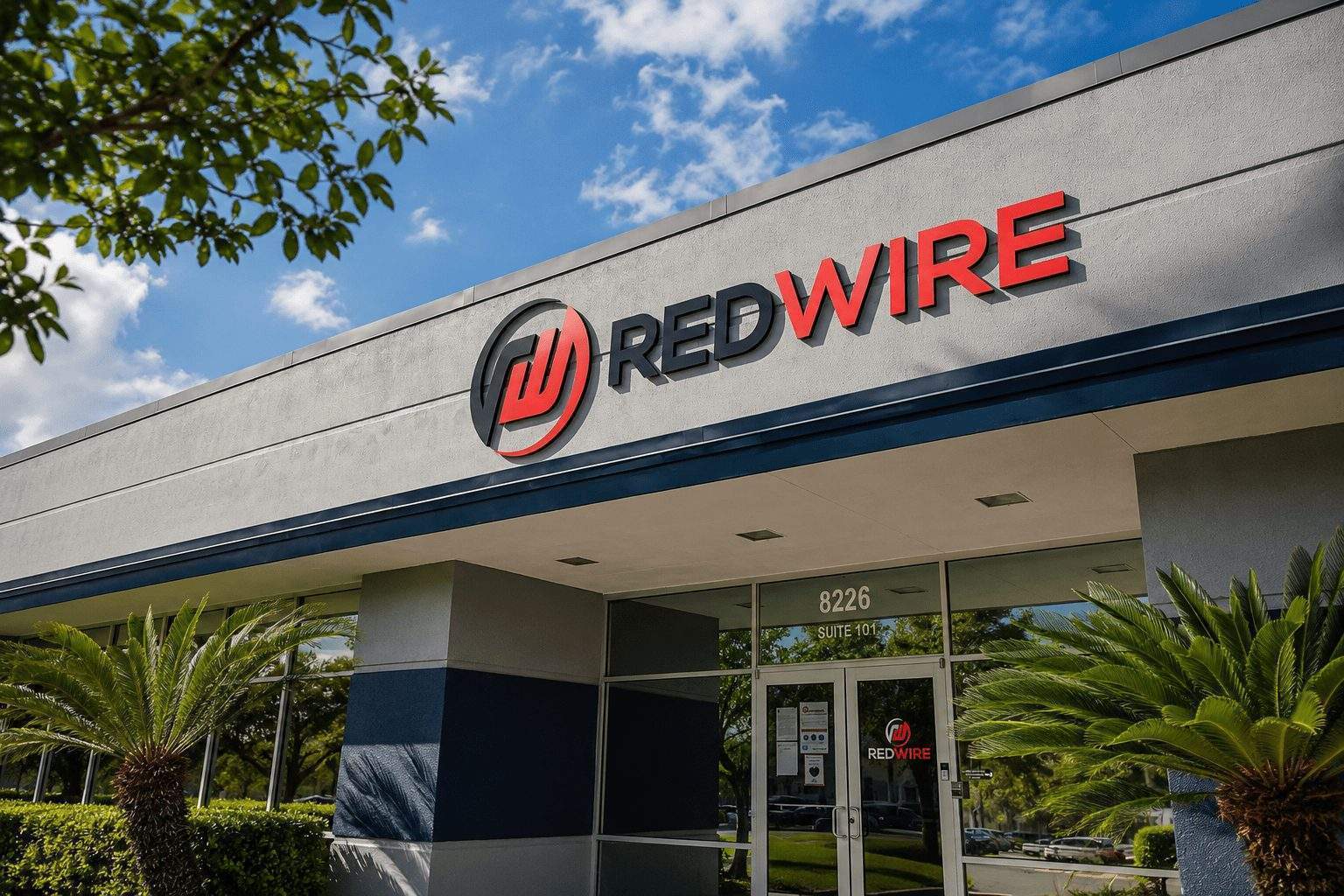
Redwire Corporation soared roughly 20% on Friday, with the space and defense firm’s stock closing at $11.07—lifting its market cap to around $2.14 billion. Investors latched onto news of a record contracted backlog, even as the quarterly loss ballooned.
This is a crucial moment for Redwire, which wants evidence that its Edge Autonomy buyout last year—and its broader stretch into defense tech—can actually turn government appetite into real sales rather than just splashy contract news. According to a recent filing, first-quarter revenue jumped 58% year-over-year, while gross margin hit 27%. The backlog, too, expanded, reaching $498.1 million compared to $411.2 million at 2025’s close.
Redwire’s first-quarter revenue climbed to $97.0 million, compared with $61.4 million in the same period last year. The net loss, though, ballooned to $76.5 million from $2.9 million, according to a filing. Management cited acquisition-related expenses and equity comp linked to Edge Autonomy as factors behind the loss.
Redwire is experiencing “very strong demand” for its products, according to Chief Executive Peter Cannito, pointing to both the company’s book-to-bill ratio and an all-time-high backlog. The book-to-bill figure—a key metric tracking new contract awards versus revenue booked—jumped to 1.92 for the quarter, up from 0.92 a year ago. Redwire Corporation
Redwire kept its 2026 revenue guidance unchanged at $450 million to $500 million. CFO Chris Edmunds pointed to the margin improvements and strong liquidity backing the target. The company wrapped up March holding $175.2 million in total liquidity, counting both cash and available borrowings.
Edge Autonomy is still the wild card here. Redwire wrapped up its $160 million cash-and-stock buyout in June 2025—handing over about 49.8 million shares—and folded Edge into its Defense Tech arm. According to the filing, the deal brought in $36.4 million in first-quarter revenue but also bumped up SG&A, with $42.1 million linked to accelerated vesting of Edge incentive units.
Recent wins for the company: a $12.8 million deal for ELSA solar array wings with Moog, over $20 million in purchase orders related to Stalker uncrewed aerial systems—drones, essentially—and a role in the European Space Agency’s quantum-secure satellite project alongside Honeywell Aerospace. Redwire also pointed to NASA funding for its drug-development efforts aboard the International Space Station.
Redwire is up against some heavyweight names in a packed industry. Space Systems Command tapped Redwire Space Missions as one of 14 companies picked for the Andromeda contract, putting it in direct competition with giants like Lockheed Martin, Northrop Grumman, and L3Harris to handle geosynchronous-orbit reconnaissance and surveillance. The contract is structured as an IDIQ—indefinite-delivery/indefinite-quantity—so agencies can order services as needed, but there’s no guaranteed windfall.
The Andromeda contract has ballooned in the last few days. According to Air & Space Forces Magazine, the Space Force now plans to lift the deal’s ceiling from $1.8 billion to upwards of $6.2 billion, driven by higher demand for reconnaissance and surveillance satellites.
Col. Bryon McClain of the U.S. Space Force described the RG-XX program as a way to give warfighters sharper intelligence in the “contested GEO belt”—that’s the stretch of geosynchronous orbit where satellites keep pace with Earth’s rotation. According to Space Systems Command, the initiative focuses on detecting, tracking, and analyzing space objects of interest. Space Security Center
Redwire moved to boost its financial leeway earlier this month. On May 6, the company set up an at-the-market equity program that could see it sell as much as $350 million in common stock. The potential cash is set aside for working capital, capex, paying down debt, acquisitions, or other corporate needs.
The risks loom large here. Redwire flagged that contracts could shrink or disappear through terminations, amendments, or outright cancellations, and many multiyear deals hinge on yearly funding approvals. The company also noted it might not secure additional financing on favorable terms if it needs to raise more cash—an important complication for a company still running at a loss as it tries to expand.
The question now is if backlog actually turns into cash. Redwire reported a year-over-year drop in its operating cash outflow and said its current liquidity is enough to handle working capital and debt payments for at least the next 12 months. Still, investors are focused on whether growing demand in the defense-space sector will be enough to balance out the costs tied to expansion.
Related articles: Space Industry