
New York, May 1, 2026, 12:02 (ET)
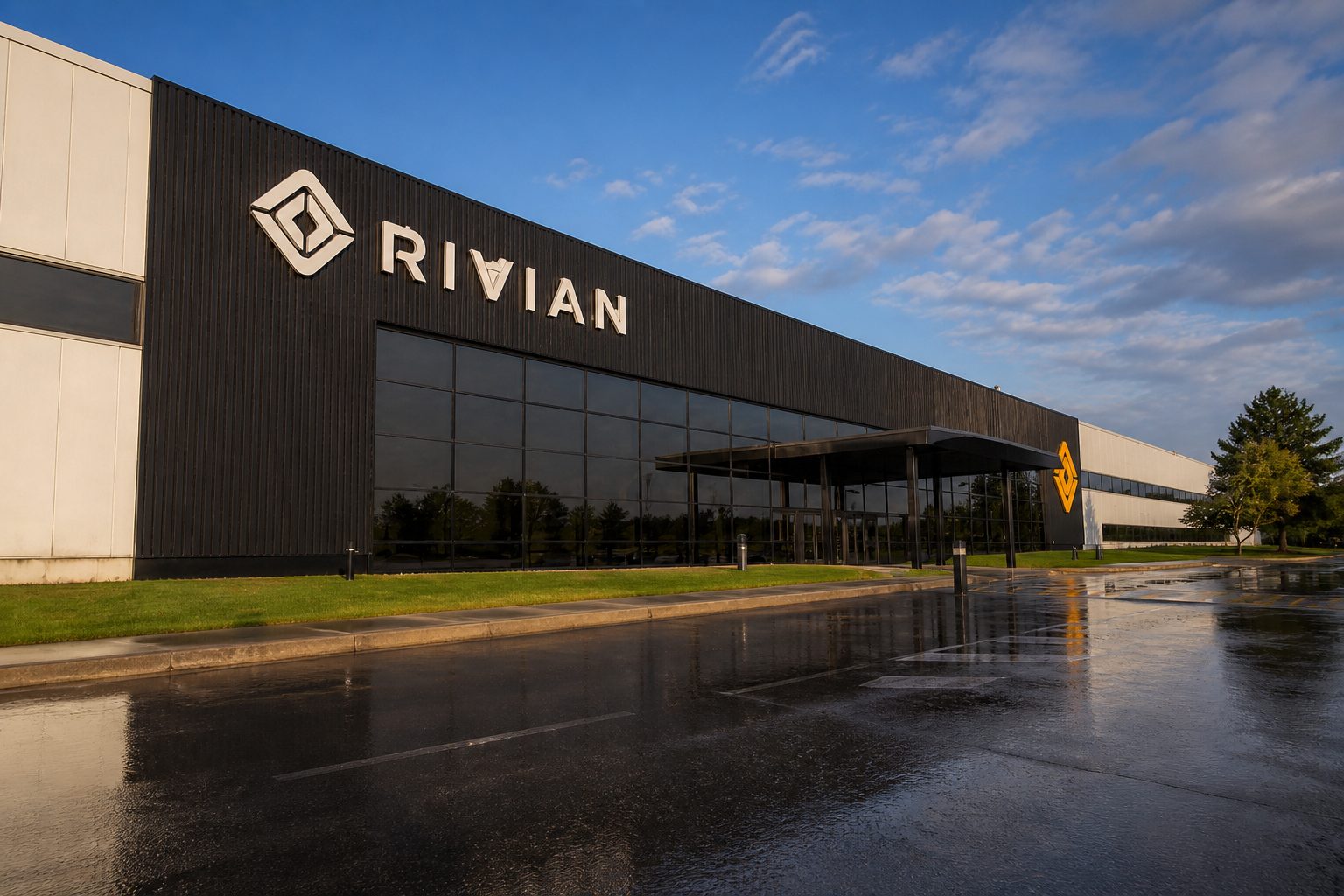
Rivian Automotive stock slid 5.7% to $15.47 late Friday morning, after the EV maker announced its federal loan for a new Georgia plant would drop to as much as $4.5 billion. That update landed as Rivian boosted the site’s initial planned capacity and posted stronger-than-expected quarterly revenue.
Timing is the sticking point here. Rivian only recently kicked off saleable R2 SUV production at its Normal, Illinois plant, delivering first units to employees. Customer handovers are still a few weeks out. The R2 is Rivian’s attempt to expand outside its premium R1 pickup and SUV lineup, targeting a broader base.
Competition is fierce. Rivian’s R2 goes up against Tesla’s Model Y, aiming for a lower price point, but it’s a tough push after the company lost a major U.S. EV tax credit—a blow that hit demand all across the industry.
Rivian’s first-quarter revenue climbed 11%, hitting $1.38 billion. Net loss narrowed to $416 million, better than last year’s $541 million shortfall, benefiting from a $506 million gain linked to the Series A capital raise and the Mind Robotics deconsolidation. Adjusted EBITDA loss came in at $472 million—a figure that excludes interest, taxes, depreciation, amortization, and certain other items.
Rivian’s expansion plans shift after the Georgia loan reset. The automaker says the revised loan package totals roughly $4.01 billion in principal, plus $494 million in capitalized interest. Drawing on the funds is now targeted for early 2027, pending certain conditions. For the first phase, Rivian is aiming to build 300,000 vehicles annually—50% higher than its earlier goal—with production still lined up for late 2028.
RJ Scaringe, Rivian’s CEO, told Reuters the reshaped deal “reflects the level of confidence” Rivian holds in its midsize platform. Previously, the company was in line for $6.6 billion toward its Georgia plant, according to Reuters. Reuters
Rivian stuck to its 2026 delivery outlook, still calling for 62,000 to 67,000 vehicles. For the first quarter, the company turned out 10,236 vehicles and delivered 10,365. Automotive revenue slid 2% to $908 million, with a $100 million drop in regulatory credits sales chipping away at the top line.
Software and services pulled in $473 million for Rivian, up 49%. The company disclosed Volkswagen Group’s $1 billion investment after the two firms’ software joint venture hit its winter-testing targets. As part of the deal, Rivian issued roughly 62.9 million Class A shares at $15.90 apiece.
Rivian’s turning to Uber for backing too. In a March filing, SMB Holding, tied to Uber, committed to invest $300 million, with another $950 million possible if targets are met. The two companies are working together to build and roll out R2-based Level 4 robotaxis—these are vehicles capable of driving on their own in certain scenarios, with no one at the wheel.
But there’s still room for hiccups. CFO Claire McDonough warned investors that Rivian’s R2 launch will likely weigh on automotive gross profit through the second and third quarters, with relief not expected until the fourth. Supply chain issues aren’t off the table, either—Scaringe flagged “a lot of unknowns,” from raw-material price swings to finding backup suppliers. The Motley Fool
Rivian wrapped up the quarter holding $4.83 billion in cash, cash equivalents, and short-term investments. Total liquidity tallied $5.39 billion, factoring in the company’s asset-based revolving-credit facility. Free cash flow came in at negative $1.08 billion for the period, meaning Rivian burned through more cash than it generated after operating expenses and capital spending.
Rivian filed an automatic shelf registration on April 30, clearing the way to issue Class A shares, preferred stock, debt, warrants, and other securities as needed. The move doesn’t signal an imminent sale, but gives Rivian flexibility to raise capital for key projects like R2, operations in Georgia, and its autonomy initiatives.