
New York, May 29, 2026, 11:01 (EDT)
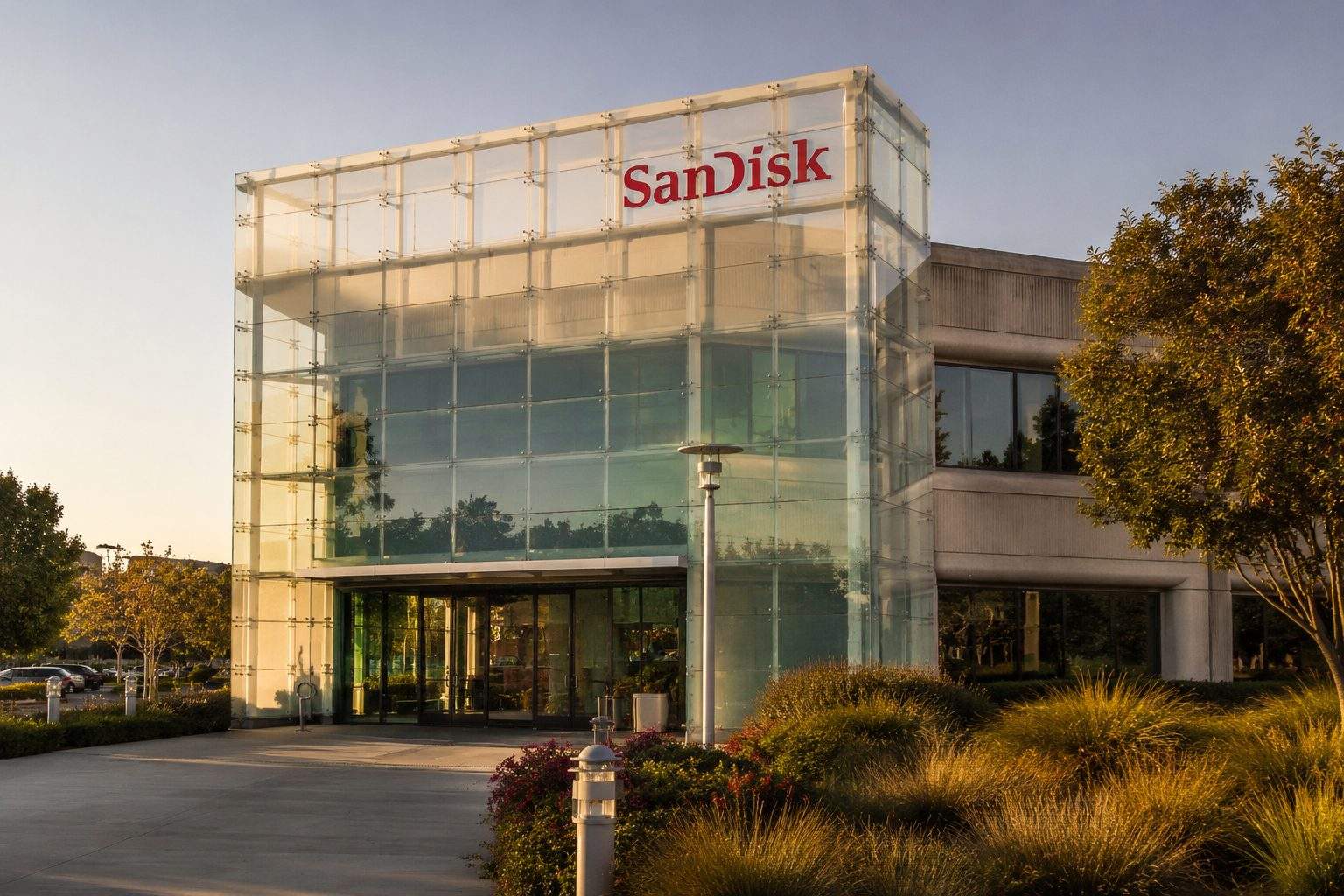
SanDisk traded near all-time highs on Friday after Susquehanna hiked its price target to $3,250 from $2,000. The move is the latest in a string of bullish calls on the storage-chip name, now seen as a top AI play. Shares rose $15.16 to $1,656.80 by late-morning on Nasdaq after hitting $1,707.71 earlier.
SanDisk’s place in the market is drawing more attention now, as investors shift focus beyond just Nvidia-like processors. Memory and storage are needed to support AI, which requires moving and storing all that data. SanDisk makes NAND flash, used in SSDs, and tighter supply from data center orders is a factor. Barclays analyst Tom O’Malley called memory and storage the “most attractive vertical below accelerators” this week—accelerators being the chips used for AI work. Investing.com
The shift on contracts is different. SanDisk wants to smooth out its memory business with long-term customer deals. These deals promise supply to buyers and set minimum revenue for SanDisk. The company reported $41.6 billion in remaining performance obligations in its 10-Q—future revenue from customer agreements still to be recognized, and most hasn’t been billed yet.
SanDisk shares have surged, making it tough to dismiss the rally. Barron’s said the stock has jumped over 4,300% since it split from Western Digital in February 2025, outpacing many analyst targets. Most analysts still rate the stock Buy.
Barclays raised SanDisk to Overweight from Equal Weight and doubled its price target to $2,300 from $1,200. The bank said the sector is now in a different phase with more long-term contracts, tighter supply, and clearer pricing. The supply-demand gap could stick around through calendar 2027, Barclays added.
SanDisk isn’t only seeing higher NAND prices, according to O’Malley. Barclays called the company “aggressive and structurally innovative” on contracts. A summary of the note showed three of its latest contracts bring in about $42 billion in minimum revenue, with more than $11 billion in financial guarantees tied to five signed deals. TradingView
SanDisk put out its fiscal third-quarter results last month, showing $5.95 billion in revenue, a 97% jump from the prior quarter. Data-center revenue climbed 233%. CEO David Goeckeler called this period a “fundamental inflection point.” SanDisk set guidance for fourth-quarter revenue in the $7.75 billion to $8.25 billion range and said non-GAAP diluted earnings should come in between $30 and $33 a share. Non-GAAP cuts out certain costs. Sandisk Corporation
Memory and storage stocks are picking up more bullish calls. Investor’s Business Daily said Mizuho’s Vijay Rakesh boosted his price target on SanDisk to $1,825 and on Micron to $1,150. D.A. Davidson’s Gil Luria also upped Micron, pushing the target up to $1,500. Barclays moved its Micron target higher to $1,175 and kept an Overweight rating, TheStreet reported.
Western Digital and Seagate are facing the same investor questions as cloud buyers look for storage supply they can count on, not just low costs. Barclays said long-term deals linked to nearline hard-disk demand at both Seagate and Western Digital give some clarity that wasn’t there in previous spot-heavy cycles.
But the trade is still dealing with an old-cycle risk. Memory often faces sudden oversupply. In its filing, SanDisk flags demand swings, price drops, tariffs, trade fights, inflation, moves from rivals, and supply-chain snags as risks for its numbers. A slowdown in AI spending or a quick ramp in capacity would put those new contracts to the test.
Right now, Wall Street is treating SanDisk more like a piece of key data-center infrastructure than just another memory supplier. What comes next is seeing if SanDisk can actually convert those customer deals into real cash, and do it without losing the margins that pushed the shares up.
Related articles: NASDAQ:SNDK