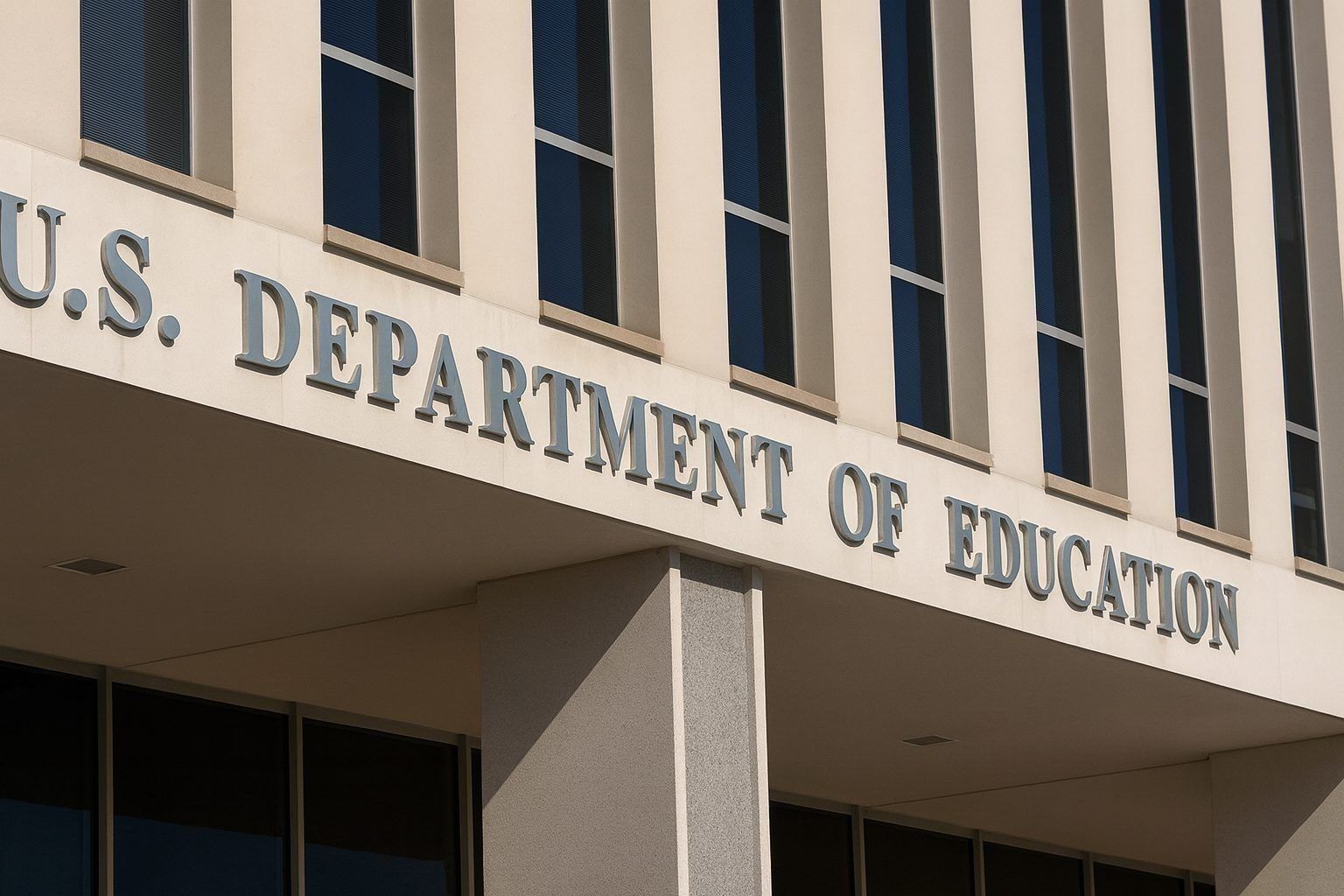

The SAVE student loan repayment plan is set to end under a Missouri settlement as delinquencies rise and borrowers brace for higher payments. Here’s what changes next.
WASHINGTON — The federal student loan landscape is shifting again, and for millions of borrowers the timing couldn’t be worse. The Trump administration’s Education Department is moving to shut down the Biden-era SAVE income-driven repayment plan through a proposed settlement with the state of Missouri — a deal that would permanently close the door on new enrollments, push current participants into other repayment options, and sharply narrow one of the most generous paths to lower monthly payments and eventual forgiveness.
As of December 14, 2025, the policy fight is colliding with a harsher economic reality. New reporting this weekend highlights how student debt is reshaping household budgets — from holiday spending cutbacks to rising delinquency that is dragging down credit scores across the country.
Below is what’s changing with SAVE, what borrowers should expect next, and why the broader student loan system is entering a new, higher-stakes phase.
Key takeaways (for borrowers and families)
- SAVE is being dismantled via a proposed legal settlement with Missouri; court approval is still required.
- More than 7 million borrowers currently enrolled — plus about 450,000 who expressed interest — could be forced to move to “legal repayment plans.” U.S. Department of Education
- The timeline is unclear, and that uncertainty is part of the problem: borrowers may see higher bills and disruptions to forgiveness progress.
- Today’s warnings are not theoretical: over 9 million borrowers have already transitioned into delinquency since credit reporting resumed, according to the Financial Stability Oversight Council’s 2025 annual report.
- On top of the policy whiplash, borrower stress is showing up in daily life: a new survey cited in weekend coverage found 40% of borrowers say student loans keep them from meeting basic needs — a strain now spilling into holiday spending decisions.
What is the SAVE plan — and why was it so popular?
SAVE (“Saving on a Valuable Education”) was designed as a more borrower-friendly version of income-driven repayment (IDR). While details varied by borrower, the core idea was simple: monthly payments tied to income (and family size) rather than a fixed schedule — and, for some, a faster route to forgiveness.
In a PBS NewsHour interview this week, Washington Post higher education reporter Danielle Douglas-Gabriel described SAVE’s appeal in practical terms: it raised the threshold of “disposable income” counted in the payment formula, which lowered monthly bills for many participants. SAVE also offered an accelerated cancellation track for some borrowers with smaller original balances (for example, borrowers who took out less than $12,000 and had been in repayment for 10 years). PBS
That combination made SAVE meaningful to borrowers with tight budgets — including teachers, nonprofit workers, and early-career graduates — especially as inflation and housing costs stayed elevated.
What the Trump administration is doing now: the settlement to end SAVE
On December 9, the U.S. Department of Education announced a proposed settlement with Missouri that would end SAVE and resolve a multi-state legal challenge. The department framed the plan as “illegal” and positioned the settlement as the final step in winding it down — but it is not final until the court signs off. U.S. Department of Education
Here’s what the Education Department says would happen if the settlement is approved:
- No new enrollments in SAVE
- Pending SAVE applications denied
- Current SAVE borrowers moved into other “legal repayment plans”
- Borrowers would have a limited time to choose a new plan, with the department pointing borrowers to the Federal Student Aid Loan Simulator and ongoing updates on StudentAid.gov.
ABC News reported that Trump administration officials have argued that borrowers were “misled” into SAVE with promises of very low payments and quicker forgiveness. Education Secretary Linda McMahon also cited an estimate that the program could have cost taxpayers hundreds of billions over a decade. ABC News+1
Why SAVE is ending: the legal battle behind the program’s collapse
SAVE has been fighting for survival almost since it launched.
According to the Education Department’s timeline, SAVE regulations were published in 2023 with major provisions slated to take effect in 2024 — but the plan ran into immediate legal resistance from Republican-led states. The department says:
- Parts of SAVE were enjoined in July 2024 by the U.S. District Court for the Eastern District of Missouri
- The program was fully enjoined in February 2025 by the U.S. Court of Appeals for the Eighth Circuit, which required the government to end the program’s 0% interest treatment during administrative forbearance U.S. Department of Education
PBS’s transcript describes how the litigation created cascading operational issues: borrowers were placed into a kind of holding pattern, and the mechanics of applying to other IDR plans were disrupted because of how enrollment systems had been tied together.
What happens to borrowers currently in SAVE?
1) Many borrowers are still in limbo — and the exit ramp is not clearly marked
The most immediate challenge is that, even with a settlement announced, borrowers still don’t have a clear calendar. In the PBS segment, Douglas-Gabriel emphasized that the “big question” is timing — and that the settlement itself hasn’t spelled out exactly when SAVE will fully wind down. PBS
Investopedia also noted that the Department of Education has not announced an exact date for when SAVE borrowers must transition, even as millions are expected to resume payments after years without required bills.
2) Payments could rise — sometimes dramatically
The biggest fear among borrower advocates is straightforward: higher monthly payments.
In the PBS interview, one teacher described seeing her monthly payment jump from $373 to $875 after switching out of SAVE into a different income-driven plan — a reminder that “income-driven repayment” does not always mean “affordable,” depending on which plan replaces SAVE and how discretionary income is defined. PBS
Investopedia has separately reported that some borrowers could see monthly payments increase by $100 to $500 depending on what plan they land in and their circumstances.
3) Forgiveness progress is a major worry
Borrower advocates have warned that changes could disrupt progress toward eventual forgiveness, including for borrowers aiming for long-term IDR cancellation or those working toward Public Service Loan Forgiveness (PSLF). ABC News quoted advocates who argue that SAVE borrowers may lose months of progress or face higher costs.
At the same time, the government has signaled that other forgiveness pathways remain in place (such as PSLF for qualifying public service jobs), even as SAVE itself is dismantled.
Why the December 14 update matters: delinquencies and household stress are rising now
The SAVE fight is happening against an ugly backdrop: borrowers are already falling behind at scale.
Student loan delinquency is surging — and credit scores are taking the hit
The Financial Stability Oversight Council (FSOC) 2025 annual report notes that over 9 million student loan borrowers have transitioned to delinquency since credit reporting resumed, and those delinquencies have driven steep declines in credit scores — with the report citing an average VantageScore drop of nearly 100 points among affected borrowers.
Weekend reporting from the Financial Times similarly highlights that more than 9 million borrowers missed at least one student loan payment in 2025, and it underscores how student debt is becoming a standout risk compared with other consumer credit categories.
Holiday spending is becoming collateral damage
New weekend reporting also shows how student debt is shaping consumer behavior in real time. A Guardian story published this weekend cites a survey by the Institute for College Access & Success (TICAS) and Data for Progress in which 40% of borrowers said student loans make it harder to meet basic needs like food, housing, and transportation — pressure that intensifies during the holiday season, forcing many to cut back on gifts and travel.
In that context, a policy shift that potentially raises monthly payments for millions isn’t just a Washington story — it’s a kitchen-table story, landing as budgets are already stretched.
How the “One Big Beautiful Bill Act” fits into the SAVE story
Another reason borrowers are confused: SAVE is not the only moving piece.
ABC News reported that Trump’s domestic policy agenda — the “One Big Beautiful Bill Act” — included changes that reshape the repayment-plan landscape, including new structures slated to take effect for future loans and a major narrowing of current options. ABC News
In the PBS segment, Douglas-Gabriel noted that congressional action earlier this year was already on track to wind down SAVE by 2028, but the settlement could accelerate that timeline — again, without a clear public schedule yet.
What borrowers should do now (practical steps, not panic)
If you’re enrolled in SAVE — or you recently applied — here are the most realistic moves to make while the court process and agency guidance play out:
- Watch for official outreach and keep your contact info current
The Education Department says Federal Student Aid will begin direct outreach to impacted borrowers and provide guidance in the coming weeks. Make sure your email, phone, and mailing address are updated with your servicer and on StudentAid.gov. - Use the Loan Simulator to compare plans
The department is steering borrowers to the Federal Student Aid Loan Simulator to estimate payments and identify eligibility for alternative repayment plans. Run scenarios now so you’re not making decisions under a short deadline later. - Be realistic about payment shock — and budget early
Reports of payment increases are not isolated. If SAVE disappears, many borrowers should plan for a higher required payment than they expected when they enrolled. - If you’re pursuing PSLF, document everything
Even if SAVE ends, PSLF remains a central pathway referenced in current coverage. Keep careful records of qualifying employment and payments, and monitor guidance on how any plan transition affects counting rules. - Be alert for scams
Any time repayment programs change, scams spike. Stick to official channels and be skeptical of anyone charging fees for “guaranteed forgiveness” or urgent “SAVE replacement” enrollment.
What to watch next
Over the next days and weeks, borrowers and servicers are watching for three things:
- Whether the court approves the settlement (SAVE doesn’t officially end until that happens).
- How quickly the department forces transitions for current SAVE borrowers — and what happens to borrowers who don’t select a new plan in time.
- Whether delinquency continues to rise, especially if millions re-enter repayment at higher monthly payments while household budgets are already strained.
Related articles: Stock Market