
- A coronal-hole high-speed stream traveling at about 750 km/s is slamming Earth’s magnetosphere and has prompted NOAA to issue a G2 (Moderate) geomagnetic-storm watch for 24–25 June 2025.
- The storm could push aurora visibility as far south as Illinois, Ohio, and New York on the night of 24–25 June 2025.
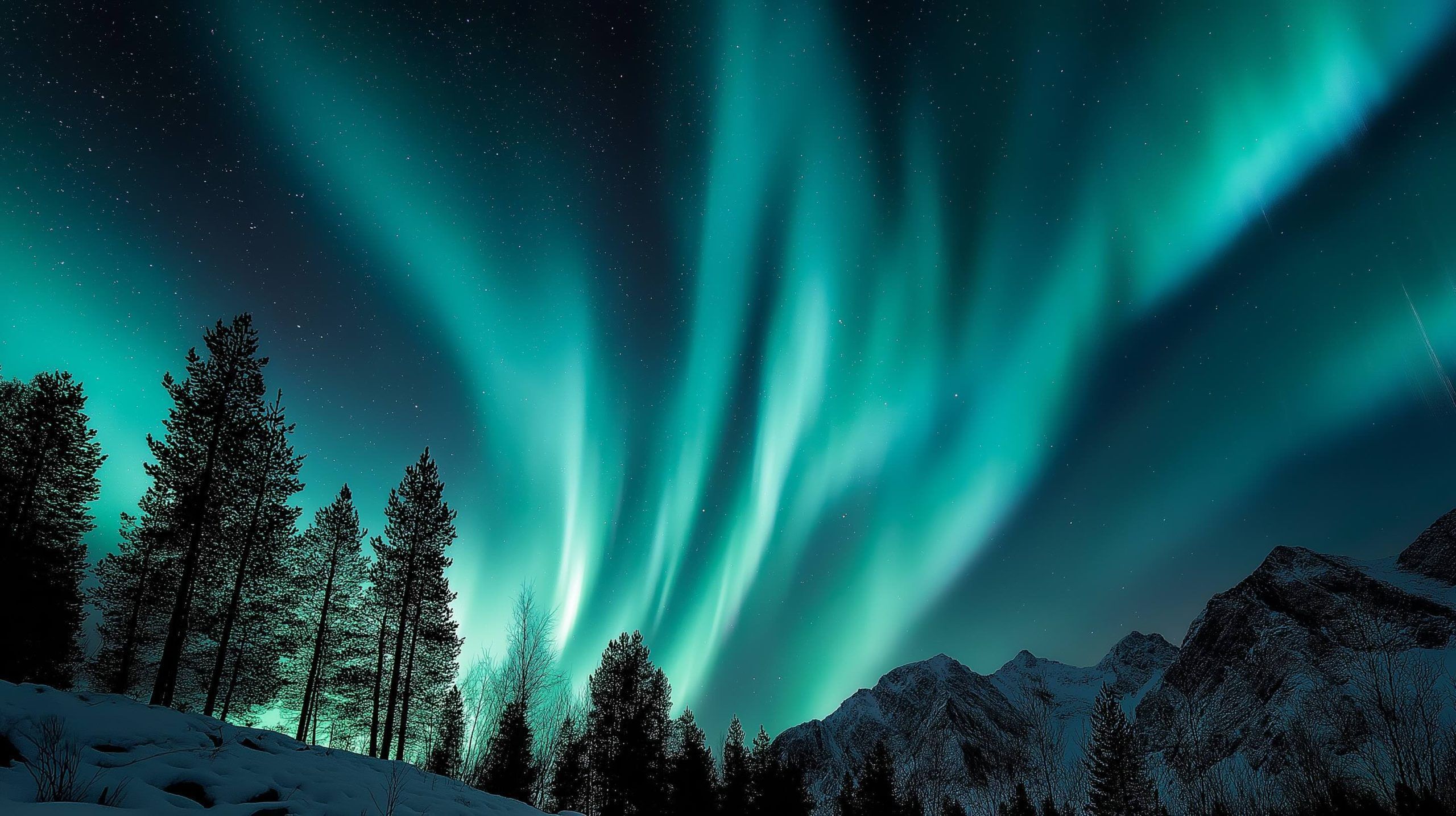
- The disturbance already produced vivid green and magenta curtains seen from Texas to Alberta earlier this month.
- NOAA SWPC reported K-index values of 4 late Monday, indicating active conditions likely to produce auroras in the northern tier of the United States.
- Updated view-line maps show the aurora oval dipping into at least 14 states from Washington and Idaho to Michigan and Vermont, with a chance of farther south displays if the storm strengthens to G3.
- If the storm intensifies to G3, the aurora oval could slide to roughly 40° N, bringing displays near Cincinnati, St. Louis, or Salt Lake City.
- Solar Cycle 25 is near maximum, with sunspot counts running 20–30% above NOAA’s original forecast and possibly ranking among the strongest in 70 years.
- More flares and CMEs mean more frequent auroras and a higher risk of satellite drag and radio blackouts.
- NOAA’s 27-day outlook indicates three additional high-speed streams likely in July–August, with the peak of auroral activity lagging solar maximum by about 18 months.
- Best viewing window is local midnight plus/minus two hours (roughly 02:00–09:00 UTC on 24–25 June), with tips to drive away from light pollution, monitor Aurora Forecast apps, and set camera exposures to ISO 1600–3200 and 10–15 seconds.
A burst of high‑speed solar wind from a giant coronal‑hole on the Sun is slamming Earth’s magnetic field this week, prompting NOAA to issue a G2‑level geomagnetic‑storm watch and raising the odds that the aurora borealis will spill far beyond its usual haunts—potentially as far south as Illinois, Ohio and New York on the night of 24–25 June 2025. The same disturbance already produced vivid curtains of green and magenta seen from Texas to Alberta earlier this month. Below is a deep‑dive into what is happening, where and when to look, why Solar Cycle 25 is rewriting aurora records, and what risks the storm poses to power grids, GPS and satellites.
1. What’s happening right now?
- NOAA alert. The Space Weather Prediction Center (SWPC) placed Earth under a G2 (Moderate) geomagnetic‑storm watch after modelling showed a recurrent, negative‑polarity coronal‑hole high‑speed stream on course to arrive late 24 June UTC swpc.noaa.govbeaumontenterprise.com.
- K‑index already climbing. SWPC’s live alerts page registered K‑index values of 4 (active) late Monday, the threshold at which auroras often become visible across the northern tier of U.S. states swpc.noaa.gov.
- Where you might see it. Updated “view‑line” maps released by NOAA show the aurora oval dipping into at least 14 states from Washington and Idaho to Michigan and Vermont, with a chance of brief displays farther south if the storm reaches G3 strength beaumontenterprise.comspace.com.
2. The science behind this week’s light show
| Solar trigger | Effect on Earth |
|---|---|
| Coronal‑hole high‑speed stream (CH HSS)—an open‑field region on the Sun spewing plasma at ~750 km/s swpc.noaa.gov | Compressed solar wind piles up against Earth’s magnetosphere, driving geomagnetic indices to storm levels and widening the auroral oval. |
| Solar Cycle 25 near maximum. Sunspot counts are running 20–30 % above NOAA’s original forecast, possibly indicating an earlier, stronger peak livescience.combusinessinsider.com | More flares and CMEs mean more frequent aurora—and a higher statistical risk of satellite drag and radio blackouts. |
“We anticipate additional solar and geomagnetic storms leading to opportunities to spot aurora over the next several months, as well as potential technology impacts,”
— Dr. Kelly Korreck, NASA Heliophysics Division businessinsider.com
3. Where & when to watch
Best viewing windows
- Local midnight ± 2 h—That’s when the auroral oval is typically centered over a viewer’s longitude.
- 24–25 June, 02:00–09:00 UTC (10 p.m.–5 a.m. EDT Tuesday night into Wednesday) while the main shock of the high‑speed stream is expected to buffet Earth space.combeaumontenterprise.com.
States with “good” or “fair” chances (G2 level)
Alaska, Washington, Oregon, Idaho, Montana, North Dakota, South Dakota, Minnesota, Wisconsin, Michigan, New York, Vermont, New Hampshire, Maine space.comyahoo.com.
What if the storm intensifies to G3?
The oval could slide to roughly 40° N—think Cincinnati, St. Louis or Salt Lake City—replicating the extreme May 2024 display that painted skies over Texas and California foxweather.comwashingtonpost.com.
4. Expert voices on the risks
- “The bigger the storm, the further south the lights—but with it comes the threat to critical infrastructure. We always have to be careful what we wish for,” warns Bill Murtagh, NOAA SWPC program coordinator businessinsider.com.
- Elsayed Talaat, NOAA’s director of space‑weather observations, notes that May 2024’s extreme storm cost U.S. farmers an estimated $500 million in GPS‑related delays businessinsider.com.
- Solar physicist Daisy Dobrijevic tells Space.com that the current coronal hole “has a history of producing vivid auroras one solar rotation earlier, so confidence is high” space.com.
5. Why Solar Cycle 25 is so energetic
- The Sun’s 11‑year magnetic cycle is cresting roughly six months earlier than the official July 2025 projection, with monthly sunspot numbers already topping 160—well above the 125 upper‑range forecast livescience.com.
- Forbes and Business Insider analyses suggest the peak could rank among the strongest in 70 years, boosting both the frequency and the latitude reach of auroras forbes.combusinessinsider.com.
- In the southern hemisphere, the same solar storm sequence lit up skies from Tasmania to New South Wales on 1 June theguardian.com—evidence that both aurorae are responding to a globally heightened solar wind.
6. Potential impacts beyond the light show
| System | Possible effect during G2–G3 storm |
|---|---|
| Power grids | Geomagnetically‑induced currents can overheat transformers; utilities in Quebec and Scandinavia are on heightened alert businessinsider.com. |
| GPS / precision agriculture | Position errors > 5 m documented in May 2024; farmers lost half a billion dollars in planting delays businessinsider.com. |
| Aviation | Polar‑route flights may be re‑routed below 60° N to limit radio‑blackout exposure and radiation dose beaumontenterprise.com. |
| Satellites & LEO mega‑constellations | Atmospheric drag spikes; SpaceX lost 38 Starlink craft in a 2022 G3 event—industry now runs drag‐forecast models in near real time businessinsider.com. |
7. How to maximise your chances of seeing the aurora
- Dark skies: Drive at least 25 mi/40 km from urban light domes and face north (or south in the southern hemisphere).
- Real‑time apps: Install Aurora Forecast 3‑Day (NOAA data feed) or follow @NWSSWPC on X for K‑index alerts swpc.noaa.gov.
- Photography: Use a tripod, ISO 1600–3200, 10–15 s exposure; even faint pillars invisible to the eye often pop on camera foxweather.com.
- Stay safe: If you rely on HF radios or precision GPS, have contingency plans for intermittent outages through 26 June businessinsider.com.
8. The outlook for the rest of 2025
NOAA’s 27‑day outlook shows three additional high‑speed streams likely in July–August, and scientists stress that the statistical peak of auroral activity lags solar maximum by roughly 18 months swpc.noaa.govbusinessinsider.com. In other words, tonight’s show is probably a preview—expect multiple continental‑scale aurora events through at least mid‑2026 as Solar Cycle 25 gradually decays.
Further reading (recent, high‑quality sources)
- Yahoo News: “Northern lights might be visible June 1 in 24 states” yahoo.com
- Washington Post: “Solar storm has reached Earth, could bring auroras to U.S. South” washingtonpost.com
- Space.com: “Moderate geomagnetic storm could spark northern lights across the U.S.” space.com
- AccuWeather: “When will the northern lights be visible in the U.S. again?” accuweather.com
- Business Insider: “The sun is at its 11‑year maximum—what it means for technology and auroras” businessinsider.com
Stay warm, keep your camera batteries charged—and look up!
Related articles: Weather