
NEW YORK, July 17, 2026, 04:20 EDT
- SpaceX was indicated 4.52% lower at $125.18 in early premarket trading.
- Flight 13’s planned suborbital mission would have added no lasting network capacity.
- Elon Musk said two Raptor engines would be replaced, with a retry likely early next week.
SpaceX lost an estimated $53 billion in implied equity value after hours following the Starship Flight 13 abort. Early premarket trading deepened the decline to 4.52%.
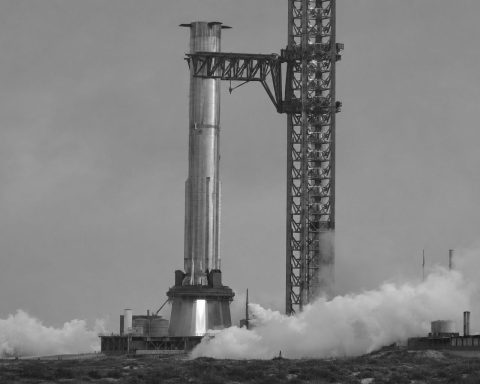
The rocket stayed on the pad. The planned suborbital mission would have added no lasting network capacity.
The reaction points to deployment timing. SpaceX says an operational Starship can carry 60 V3 satellites, totaling 60 Tbps of designed downlink.
U.S. cash markets were closed at the dateline. Nasdaq premarket trading had opened, with SpaceX indicated at $125.18.
On-screen telemetry showed four of 33 Super Heavy engines did not ignite. The automatic system shut down the other 29 before liftoff.
“Some of the engines didn’t start, triggering an automatic launch abort,” Musk said. He said two Raptors would be replaced before another attempt, probably early next week. Reuters
Flight 13 was designed as a suborbital systems test. The satellites would briefly link with the orbiting network, then demise after deployment.
| Measure | Flight 13 test | Planned operating launch |
|---|---|---|
| V3 satellites | 20 | Up to 60 |
| Aggregate designed downlink | 20 Tbps | 60 Tbps |
| Destination | Suborbital reentry | Low Earth orbit |
| Lasting capacity deployed | None planned | Up to 20× Falcon 9 |
Preliminary aggregate estimates multiply SpaceX’s stated 1 Tbps design by satellite count. Flight 13’s units were expected to burn up during reentry.
The $53 billion figure is a preliminary estimate. It applies the 3.08% aftermarket decline to SpaceX’s $1.73 trillion closing market value.
For scale, SpaceX spent $3.004 billion on Space-segment research and development in 2025. The estimated loss was almost 18 times that annual spending.
The company expects Starship payload delivery to start in 2026’s second half. Its prospectus warns that delays could slow next-generation satellite deployment.
SpaceX closed Thursday at $131.11, below its $135 IPO price for the first time. It marked the stock’s fifth straight decline.
The wider space trade was already weak. Rocket Lab NASDAQ:RKLB fell 11.61%, while AST SpaceMobile NASDAQ:ASTS dropped 17.04%. The Nasdaq Composite lost 1.47%.
The extra SpaceX decline began after the abort. Its timing suggests investors isolated launch risk from Thursday’s broader selloff.
Next week begins with engine replacement and a new launch window. Investors will watch whether all 33 Raptors ignite and remain stable.
President Gwynne Shotwell has said Flight 14 could attempt orbit, depending on Flight 13. SpaceX targets a monthly launch cadence.
Risks: Extended-hours trading has lower liquidity and higher volatility. Further engine or pad issues could delay the V3 rollout and its capacity gains.
Related articles: Aerospace