
NEW YORK, August 5, 2026, 11:08 a.m. EDT — U.S. markets have opened.
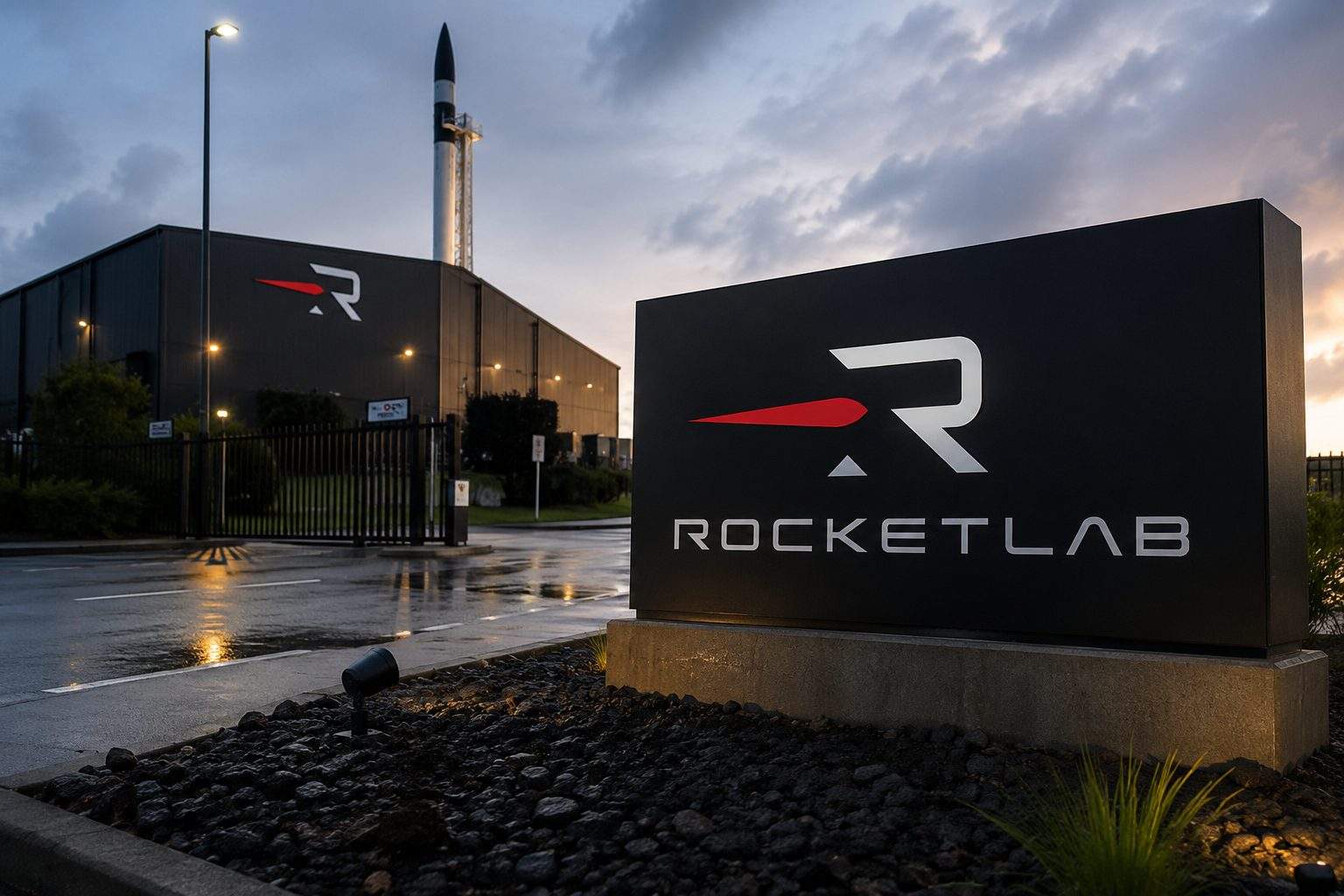
Rocket Lab NASDAQ:RKLB secured a $397 million contract from the U.S. Space Force to construct, deploy, and manage satellites designed to monitor airborne targets. The agreement also includes the Neutron rocket, which is currently under development.
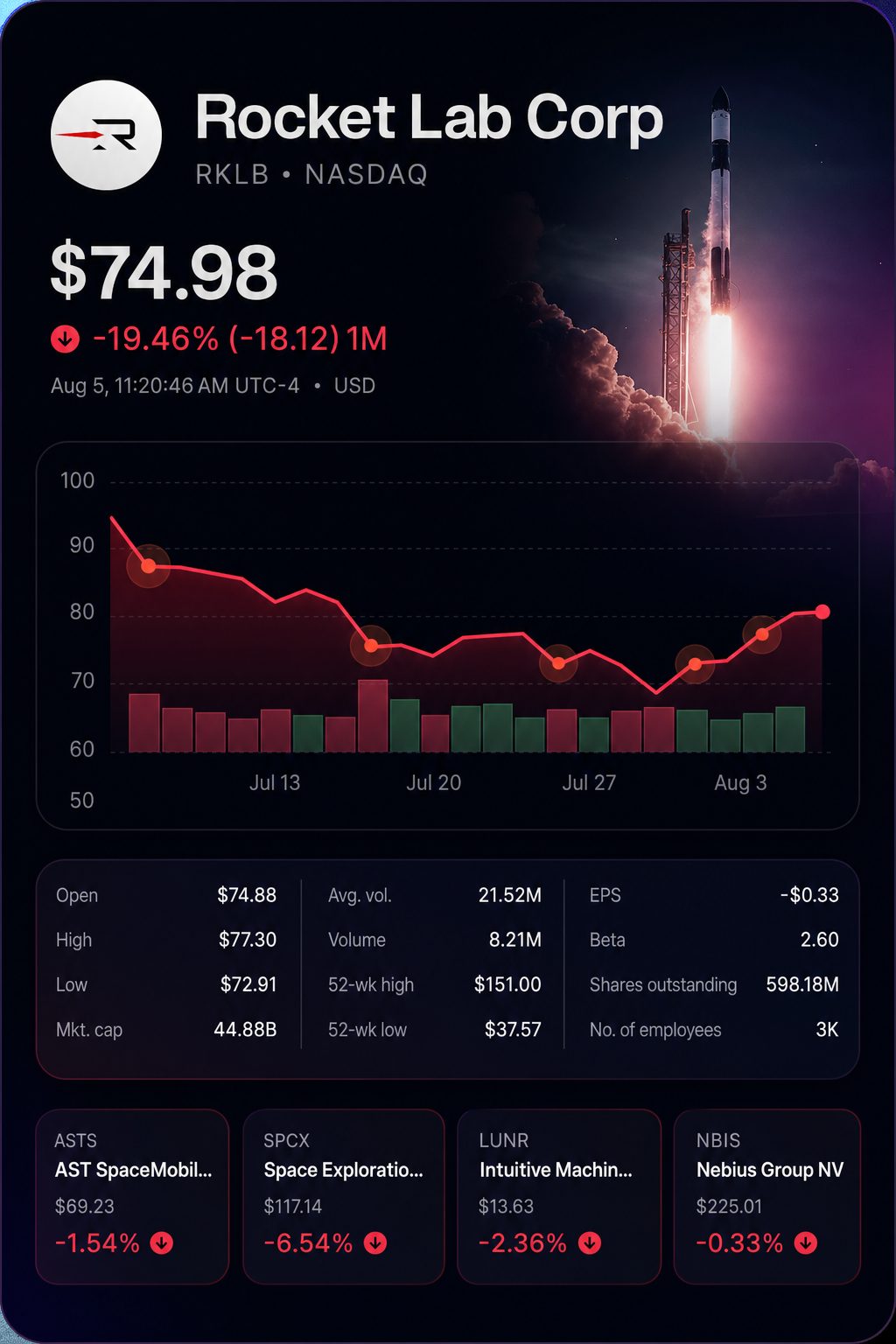
Scale is at the heart of the investor perspective. The award amounts to 1.98 times the company’s revenue from the first quarter and about 18% of its backlog as of March. Still, it makes up just 0.88% of Rocket Lab’s total market capitalisation of $45.1 billion.
The stock touched a high of $78.38, up 5.2% from Tuesday’s closing price, before paring gains to trade nearly unchanged at $74.50 by late morning. The shift heightens pressure on performance.
Contract size compared to Rocket Lab’s financial resources
| Measure | Comparison | Investor read-through |
|---|---|---|
| Portion of $615 million contract | 64.6% | Main beneficiary in this round of awards |
| Contract relative to Q1 revenue | 1.98 times | Substantially larger than present business volume |
| Contract versus midpoint of Q2 guidance | 1.71 times | Revenue expected to be distributed across multiple quarters |
| Contract compared to March backlog | About 18.0% | Significant: not guaranteed to be added to backlog immediately |
| Contract versus market capitalization | 0.88% | Valuation effect limited unless project delivers on profit |
The figures are based on the announced award, first-quarter revenue of $200.3 million, guidance midpoint of $232.5 million, a backlog of $2.2 billion, and current market capitalization.
Rocket Lab is set to build several “Flatellites” equipped with sensors and low-latency connections. The company will launch these on its Neutron rocket, operate the mission, and provide tracking data. The agreement also covers a potential addition of more spacecraft. Rocket Lab Corporation
Rocket Lab’s “vertically integrated, constellation-class satellite capabilities” make the company well-positioned for the task, Chief Executive Sir Peter Beck said. The contract will assess that assertion by putting three of the company’s business units to the test simultaneously. Rocket Lab Corporation
The Space Force awarded its second task order, valued at $615 million, to three vendors. Rocket Lab received 64.6% of the total. STR and an undisclosed contractor are dividing the remaining $218 million, but their respective allocations have not been made public.
Comparison of SB-AMTI contracts
| Awardee | Award stage | Disclosed value | Scope or status |
|---|---|---|---|
| SpaceX NASDAQ:SPCX | First task order, May 2026 | $4.16 billion | Deployment of initial constellation planned for 2028 |
| Rocket Lab | Second task order, August 2026 | $397 million | Flatellites, Neutron launch services and operational work |
| STR and unnamed vendor | Second task order, August 2026 | $218 million combined | Amounts for each vendor remain undisclosed |
The two rounds cover separate areas and should not be considered as the same contract. SpaceX launched Nasdaq trading in June.
Col. Ryan Frazier stated the second directive underscores the importance of “diversifying our capabilities” and steering clear of reliance on a single technical option. This shields the Pentagon from becoming dependent on any one supplier and ensures ongoing competition in future production phases. Space Force
The service anticipates an operational capability by 2028, according to officials, but achieving complete worldwide coverage is projected to require additional time. Spacecraft quantity is only one factor, as sensor performance, data processing speeds, and connectivity are also critical.
Rocket Lab has disclosed $753 million in Space Force awards since May, representing around 34% of its March backlog in gross value. This does not translate directly to an immediate backlog boost, as options and accounting timing are not aligned.
Latest Space Force contracts for Rocket Lab
| Announcement | Program | Scope | Gross value |
|---|---|---|---|
| May 21, 2026 | GEO space-domain awareness | Deployment of two satellites with operational support for up to five years | $90 million |
| July 27, 2026 | Suborbital missile-defense testing | 12 scheduled launches plus six additional launch options | $266 million |
| August 4, 2026 | SB-AMTI airborne-target tracking | Multiple Flatellites included, covering launch and ongoing operations | $397 million |
| Total | $753 million |
Gross announced value reflects optional work and is not the same as revenue recognition.
Rocket Lab is set to release second-quarter earnings following Monday’s market close. The company previously projected revenue between $225 million and $240 million and expects a GAAP gross margin of 33%-35%. Adjusted EBITDA loss is anticipated in the $20 million-$26 million range. Market participants are focused on Neutron delivery schedule, contract timing and fixed-price profit margins.
Analysts on Wall Street are optimistic overall, though projections differ significantly. According to MarketWatch, there are 15 Buy ratings, three Overweight, and four Hold recommendations, with no Sell ratings reported. The consensus price target stands at $116.24, suggesting a 56% potential increase from the current $74.50.
Highlights of analyst recommendations
| Date | Firm and analyst | Recommendation | Target | Implied move from $74.50 |
|---|---|---|---|---|
| Aug. 3 | Clear Street, Gregory Pendy | Buy | $129 | +73% |
| July 27 | KGI Securities, Rob Chang | Buy/Outperform | $107 | +44% |
| July 22 | Stifel Financial NYSE:SF, Erik Rasmussen | Buy | $132 | +77% |
| July 16 | Piper Sandler NYSE:PIPR, Alexander Potter | Neutral/Hold | $83 | +11% |
| June 30 | Goldman Sachs NYSE:GS, Noah Poponak | Hold | $76 | +2% |
Analyst forecasts are targets and not assurances. Implied price moves reference the most recent share price.
Risks persist. The contract operates on a firm-fixed-price basis, meaning Rocket Lab carries the burden of any cost overruns. Awarded options are not guaranteed to be exercised. Any delays in the Neutron program or lackluster sensor results could push revenue recognition back and put pressure on margins.
Rocket Lab’s full-spectrum defense model receives validation with the award. Market response highlights the next phase. Investors are now looking for execution spanning spacecraft, launch, and operational domains.
Related articles: NASDAQ:RKLB