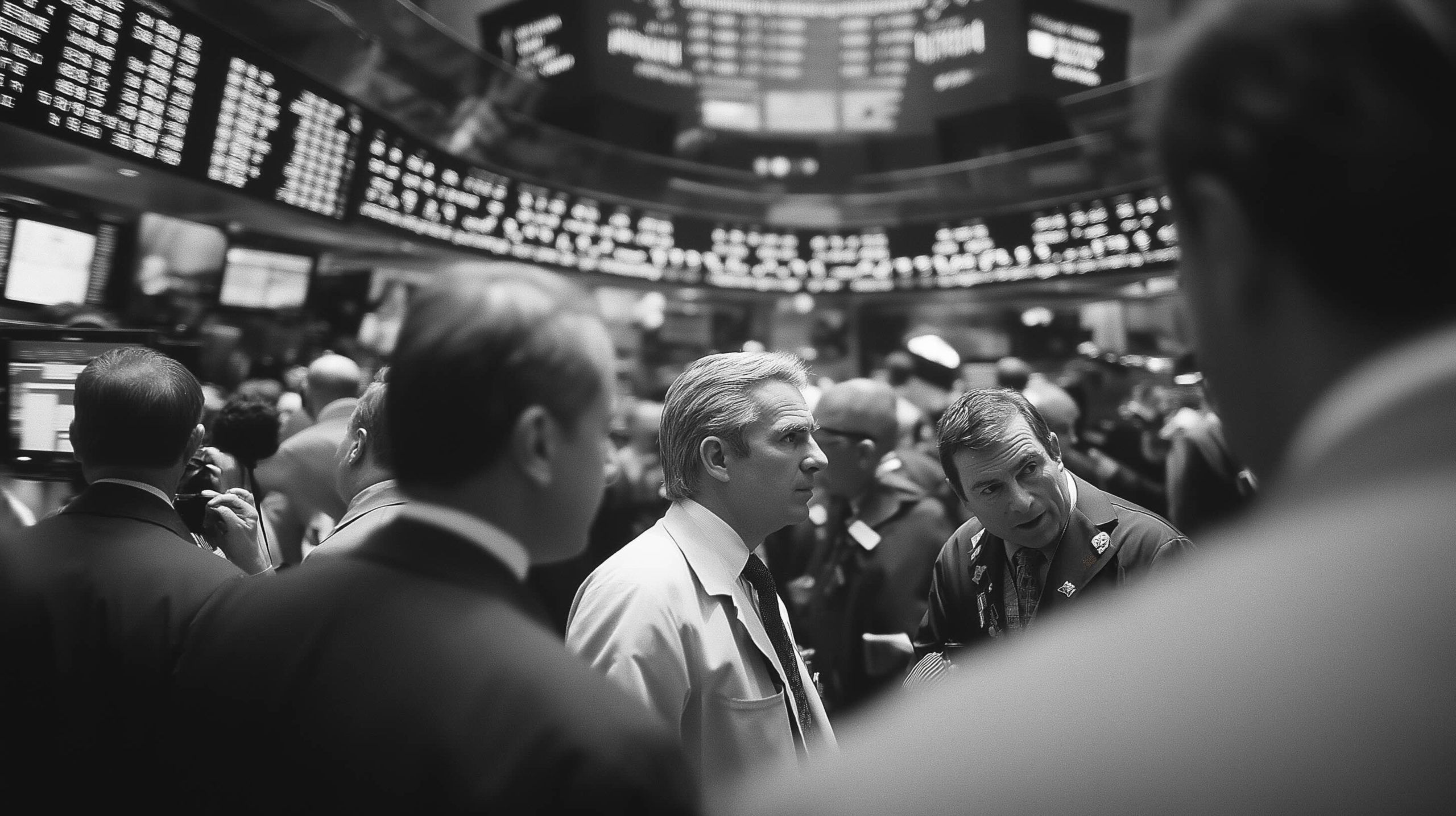
- Wall Street Hits Fresh Peaks: All three major U.S. stock indexes closed at record highs on Monday amid optimism over a potential U.S.-China trade deal and upbeat anticipation for Big Tech earningstriblive.com. The Dow topped 47,500 (+0.7%), the S&P 500 jumped 1.23% to its first-ever finish above 6,800, and the Nasdaq surged 1.86%, extending a rally driven largely by tech megacaps.
- Fed Easing Fuels Rally: Investors are also banking on easier monetary policy. Cooler inflation data “all but sealed” expectations for a Federal Reserve rate cut this weektriblive.com, boosting risk appetite. The market’s “fear gauge” (VIX) fell to one-month lows as hopes for Fed interest rate relief and a trade truce calmed recession jitterstriblive.combloomberg.com.
- AI-Powered Tech Boom: The “Magnificent Seven” tech giants (Apple, Microsoft, Alphabet, Amazon, Meta, Nvidia, Tesla) have soared to record valuations on the AI frenzy, adding an estimated $6 trillion in market cap since ChatGPT’s debutreuters.com. Massive spending on AI – roughly $400 billion by major cloud firms this year – is driving growthreuters.com, but also stirring debate over how much of this boom is hype.
- Bubble Warnings Mount: A chorus of experts warns the AI-driven rally may be outpacing reality. Tech leaders like OpenAI’s Sam Altman and Amazon’s Jeff Bezos caution that frothy valuations have “outrun fundamentals”reuters.com. Even JPMorgan CEO Jamie Dimon has pointed to “bubble-like” conditions and risks of a sharp correction if lofty Big Tech expectations don’t pan outts2.tech. One AI pioneer, Andrej Karpathy, blasted today’s AI models as “slop,” arguing the industry is “making too big of a jump” without real results yetreuters.com.
- Crucial Earnings Test Ahead: This week will make or break the rally. Five of the Magnificent Seven – Microsoft, Apple, Alphabet (Google), Amazon and Meta – report earnings in the next 48 hourstriblive.com. Together they account for about one-third of the S&P’s value, and their results (and AI outlooks) will be pivotal. “With five of the Mag Seven reporting this week, the market expects to hear confirmation that all this AI CapEx is coming through – that the revenues and profits from AI are coming through,” says Wells Fargo strategist Scott Wrentriblive.com. Any disappointment could stall the rally, analysts warn, especially since these stocks’ rich valuations leave “no margin for error”ts2.tech.
- Bulls vs. Bears: Despite the cautions, many on Wall Street remain bullish. Corporate earnings have been remarkably strong – over 85% of S&P 500 companies beating forecasts so far, the best hit rate in yearseconomictimes.indiatimes.com – which “justifies the rally” and could set the stage for a year-end surgets2.techts2.tech. “It’s been a spectacular start to earnings season,” notes Carson Group’s Ryan Detrickts2.tech. Likewise, investor Eric Schiffer argues the AI revolution is only beginning and “we are not at a bubble stage yet,” as adoption and revenue will eventually catch up to the hypereuters.com. Bears, however, counter that valuations are stretched by historical standards (U.S. market cap now ~219% of GDP)ts2.tech. Global regulators from the IMF to the Bank of England have warned that AI-fueled stock prices look “stretched” and could see a sharp reversal if growth stallsts2.tech. Some wary investors are even rotating out of the frothiest AI plays, dusting off dot-com era strategies to avoid getting burned by a potential tech downturnreuters.com.
Record Highs on Trade Optimism and Fed Hopes
Wall Street’s euphoria to start the week was driven in large part by hopes of a U.S.-China trade truce and a friendlier Fed. On Monday, the S&P 500 notched its second straight record close, and the Dow and Nasdaq also finished at new all-time highstriblive.com. Investors cheered news that U.S. President Donald Trump will meet China’s President Xi Jinping on Thursday, aiming to finalize a deal framework that could pause new U.S. tariffs and roll back China’s export curbs on rare-earth mineralstriblive.com. After two days of talks in Malaysia, U.S. officials signaled China may boost purchases of U.S. farm goods (like soybeans) and ease its rare-earth restrictions – developments that “boosted hopes for easing U.S.-China tensions,” according to Wells Fargo strategist Scott Wrentriblive.com.
The mere prospect of a trade détente provided “rocket fuel” for global marketsreuters.com. Stocks exposed to China leapt: U.S.-listed Chinese tech giants Alibaba, JD.com and Baidu jumped 3–5% on the daytriblive.com. Tech and semiconductor shares led the charge in U.S. markets, as optimism over a trade deal and strong earnings propelled the Nasdaq up nearly 2%. The Philadelphia Semiconductor Index climbed 2.7% to a fresh peaktriblive.com. Chipmakers Nvidia (+2.8%) and Qualcomm (+11%) were standout gainers – the latter after unveiling new AI chips for data centers that stoked enthusiasm about future salestriblive.com.
Meanwhile, expectations that the Fed will cut interest rates on Wednesday added another tailwind. Last week’s cooler CPI report showed inflation continuing to ease, which “opened the door” for the Fed to potentially reverse course on policyts2.tech. Futures markets are pricing in a 90%+ chance of a quarter-point cut at the Fed’s Oct. 29 meetingts2.tech, the first rate reduction in years. “We got some good news on the inflation front,” said Ryan Detrick, adding that a December rate cut now also looks likelyts2.tech. The growing certainty of Fed easing has buoyed high-growth tech stocks that are sensitive to interest rates. In anticipation of a more accommodative Fed, investors piled into risk assets – even Bitcoin joined the rally, touching record highs as rate-cut bets weakened the dollarenergynews.oedigital.com.
With trade tensions easing and monetary policy turning supportive, Wall Street’s risk appetite is back. The CBOE VIX index, a gauge of market volatility, dropped to its lowest in about a monthtriblive.com. “Clearly” the progress on U.S.-China negotiations “boosted sentiment,” analysts notedts2.tech, while the imminent Fed pivot has put the wind at the market’s back. “In the absence of fresh data” due to a partial government shutdown delaying reports, a dovish Fed stance “will be supportive of the rally in the near term,” observed Jordan Rizzuto of GammaRoad, reflecting the upbeat moodts2.tech.
AI Boom: Huge Rewards – and Bubble Risks
Underpinning the market’s surge is the extraordinary tech rally fueled by artificial intelligence. The seven U.S. tech giants dubbed the “Magnificent Seven” have seen their combined market value swell to an astonishing $12–13 trillionts2.tech. Since late 2022 – around the launch of OpenAI’s ChatGPT – those big-cap tech stocks have added roughly $6 trillion in market capitalizationreuters.com as investors piled into anything AI-related. This cohort now makes up over one-third of the entire S&P 500’s worthts2.tech, an unprecedented concentration of market power in a few names.
The AI gold rush is evident in corporate spending: the major cloud companies are on track to invest about $400 billion in AI infrastructure just this yearreuters.com. The aim is to capitalize on what many see as a transformative technology wave. In cloud computing alone, demand for AI services is so intense that Microsoft, Google, and Amazon have struggled with capacity limits even as they log 30–40% growth in their cloud unitsreuters.com. Wall Street has rewarded this AI mania handsomely – Nvidia, the leader in AI chips, has seen its stock skyrocket and even briefly become the world’s most valuable company by market cap, overtaking Applets2.tech. By late October, Apple itself was flirting with a unprecedented $4 trillion valuation after its shares hit record highs on strong iPhone 17 sales and investor excitement over its AI and hardware ecosystemts2.techts2.tech.
However, the specter of an AI bubble looms over this boom. Skeptics point out that real-world returns on many AI investments remain elusive. A widely cited MIT study found only about 5% of AI projects delivered measurable benefits to the businesses piloting them, with most initiatives fizzling out or failing to scalereuters.com. “Overall, the models are not there,” warned Andrej Karpathy, co-founder of OpenAI, calling much of today’s AI frenzy misguided “slop” rather than solid progressreuters.com. In other words, despite billions poured into AI, tangible payoff in productivity or profits has been limited so far.
Top investors and business leaders have also sounded alarms. Sam Altman, CEO of OpenAI, Jeff Bezos, and Goldman Sachs’s David Solomon are among those cautioning that tech stock prices may be running far ahead of fundamentalsreuters.com. JPMorgan’s chief Jamie Dimon recently said he is “far more worried” about speculative excess in this market, remarking that parts of Big Tech look “bubble-like” and could see a “significant correction” if earnings don’t justify the hypets2.techts2.tech. One red flag: some financing deals in the AI realm are starting to resemble the late-1990s dot-com era. For instance, chipmaker Nvidia’s mooted $100 billion investment into OpenAI – one of its biggest customers – and OpenAI’s eye-popping $1 trillion in cloud-compute purchase commitments with partners like Oracle have raised eyebrowsreuters.com. “When the same companies are both funding and relying on each other, decisions may no longer be based on real demand…but on reinforcing growth expectations,” observed Ahmed Banafa, an engineering professor at San Jose State Universityreuters.com. Such circular deals, he noted, aren’t necessarily bad on their own, but if they become widespread “they increase systemic risk” in the marketreuters.com.
Valuations are undoubtedly elevated. By one measure (the Buffett Indicator of total market cap to GDP), U.S. stock valuations are around 219% – well above levels that preceded past crashests2.tech. And global authorities are paying attention: the Bank of England and IMF have both warned recently that AI-driven stock gains may be overextended and vulnerable to a sharp reversal if the rosy growth narrative faltersts2.tech. In short, the AI boom has created tremendous wealth – but also lofty expectations that could be tough to satisfy quarter after quarter. This sets the stage for a critical inflection point as big tech companies report results and forecasts that will either validate the AI hype – or give credence to the bubble fears.
Big Tech Earnings: A Make-or-Break Moment
All eyes on Wall Street are now turning to earnings from Big Tech, which kick off in earnest mid-week. On Wednesday (Oct. 29) and Thursday, five of the “Magnificent Seven” – Microsoft, Alphabet (Google), Meta Platforms, Amazon, and Apple – will report their Q3 resultstriblive.com. These five alone account for roughly 25% of the S&P 500’s market capeconomictimes.indiatimes.com, meaning their performance and guidance could sway the entire market’s direction. After a three-year bull run largely powered by Big Tech, some are calling this a make-or-break week. “This week could determine whether the rally continues, or if it takes a pause,” said Talley Leger, chief market strategist at Wealth Consulting Groupeconomictimes.indiatimes.com.
Investors will be scrutinizing not just the headline numbers, but what tech executives say about the future – especially regarding AI investments. The tech titans have been plowing tens of billions of dollars into AI R&D, data centers and talent, in a race to dominate the emerging AI economy. To keep stock prices climbing, they’ll need to convince the market that these huge expenditures will pay off in tangible growth. “To sustain the gains, investors are looking for assurances that the flow of tens of billions of dollars for computing infrastructure will continue – and ultimately pay off down the road,” Bloomberg analysts noted ahead of the earnings rusheconomictimes.indiatimes.comeconomictimes.indiatimes.com. In other words, Big Tech must show that AI is boosting their bottom lines, not just their hype.
So far, expectations are high but not unrealistically so. Analysts forecast solid growth for the Big Tech cohort this quarter – on the order of ~15% earnings growth collectively, more than double the ~6–7% average for the rest of the S&P 500ts2.tech. Revenue is expected to rise at a healthy clip for all five. In particular, Wall Street is projecting robust gains in the cloud computing arms that power many AI services: Microsoft’s Azure cloud revenue is estimated to be up about 38%, Google Cloud around 30%, and Amazon’s AWS roughly 18% year-over-yearreuters.com. Those growth rates reflect red-hot demand for AI and digital services. Indeed, Microsoft is expected to post ~15% overall revenue growth (a big acceleration for such a large company), Alphabet ~13%, Amazon ~12%, and Meta a whopping ~22% jump thanks to a rebound in digital ad spendingreuters.com.
However, profit margins are a concern. All that spending on new technology and infrastructure has costs: aside from Microsoft, which has kept expense growth in check, the Big Tech firms are seeing profit growth slow to the weakest in 10 quarters as expenses catch upreuters.com. If their earnings calls hint that AI investments are straining profitability without near-term payoff, it could spook investors. “What the market expects to hear is confirmation that all this AI CapEx is coming through,” says Wells Fargo’s Scott Wren – meaning evidence that those AI initiatives are already yielding revenue and efficiency gains, or at least poised to soontriblive.com. Any hint that the AI spending spree is overhyped or inefficient may trigger a negative reaction in these stocks that have been priced for perfection.
On the flip side, clear signs of AI-driven success could extend the rally. Many analysts remain optimistic that Big Tech will clear the bar this week. The current earnings season has been a boon for confidence: as noted, over 85% of reporting S&P companies beat estimateseconomictimes.indiatimes.com, the strongest rate in several years. This includes some early Big Tech reporters – e.g. Tesla, which kicked off “Mag 7” earnings by beating revenue forecasts (though it missed on profit)ts2.tech, and chipmakers like Intel and AMD, which delivered better-than-expected results and upbeat outlooks, igniting their stocks last weekts2.tech. Those positive surprises have helped soothe concerns about other headwinds (from U.S.-China tensions to high bond yields)economictimes.indiatimes.com. “It’s been a spectacular start…justifying the rally,” as Carson Group’s Ryan Detrick put itts2.tech. If Microsoft, Apple and their peers likewise impress – or even just meet the lofty expectations – bulls say the market could enjoy a year-end melt-up. Some analysts have already raised price targets on Big Tech: Evercore ISI, for example, cited Apple’s stronger-than-expected iPhone demand in China in boosting its outlook for the stockts2.tech. With Big Tech shares at record highs, any upside surprises in their reports could fuel another leg higher.
Boom or Bubble? Outlook Divided
As the market sits at record levels, the key question is whether this is the start of an AI-driven golden age for stocks – or the peak of an unsustainable bubble. The coming days may provide an answer. The general sentiment is cautious optimism: the economy has proven resilient, inflation is cooling, and the Fed is shifting to growth-friendly policies, all of which suggest the bull run could continue into 2024. “Wall Street expects easy money,” said Detrick, referring to the anticipated Fed rate cutsts2.tech. Lower interest rates would reduce pressure on high valuation stocks, giving tech companies more breathing room to grow into their valuations. “This dovish Fed stance will be supportive of the rally in the near term,” agreed strategist Jordan Rizzutots2.tech. In this view, as long as Big Tech delivers decent numbers and doesn’t shatter the AI narrative, there’s little reason to bet against the stock market’s momentum. Indeed, some investors argue that AI is a genuine paradigm shift – a multi-year productivity boom in its early innings. “Adoption may be low right now, but that’s not a forward indicator…with greater innovation, adoption is going to grow,” says Eric Schiffer, CEO of Patriarch Organization, which holds all the Mag7 stocks. “I don’t think we are at a bubble stage yet,” he maintainsreuters.com. In other words, the best may be yet to come if AI truly transforms businesses in the coming years, unlocking new revenue streams and efficiencies. Bulls also point out that consumer spending and corporate earnings have held up well even with higher interest rates, so any Fed easing could further bolster growth and valuations.
The bearish camp, however, sees thin ice under this rally. They note that stock prices already reflect years of future growth that might not materialize. “Rich valuations leave no margin for error,” as one analyst quippedts2.tech. Any misstep – an earnings miss, a cautious outlook, or a geopolitical flare-up – could prick the tech bubble. For instance, Tesla’s 4.3% jump Monday on trade optimism could be short-lived, cautioned Christopher Brown of Synovus Trust, noting the EV maker’s stock is still expensive “even with the best negotiated U.S.-China trade deal.”triblive.com That kind of skepticism underscores how unforgiving the market could be if reality underperforms the hype. The rapid run-up in AI stocks has also concentrated risk: a handful of companies now wield outsized influence on indexes, so a stumble by any one could drag down the whole market. Jamie Dimon’s warning of a potential “significant correction” reflects the concern that a setback for the Magnificent Seven – say, weaker guidance on cloud spending or AI uptake – would reverberate widelyts2.tech. Moreover, macro risks haven’t disappeared: the Middle East conflict and a potential U.S. government funding showdown in November hover in the background, any of which could revive volatility.
For now, wall Street’s trajectory hangs in the balance of this week’s events. The Federal Reserve’s decision on Wednesday and Chairman Powell’s comments will set the tone on interest rates. Mere hours later, Microsoft, Alphabet and Meta will reveal their earnings, followed by Amazon and Apple the next dayreuters.com. It’s an extraordinary convergence of catalysts. “Midweek double whammy,” some traders are calling itts2.tech. By week’s end, investors should have a clearer sense of whether the AI-fueled rally has more room to run – or if the air is starting to leak out of the tech bubble. As Bloomberg’s market team noted, the stakes are high: this stretch “will present a big test for the artificial intelligence narrative that has propelled the stock market to record highs”bloomberg.com. Pass that test, and the bulls could be vindicated with further gains. Fail it, and October 2025 might be remembered as a peak of exuberance before a pullback. In the words of one market strategist, “this week could determine whether the rally continues, or if it takes a pause.”economictimes.indiatimes.com Investors and analysts on both sides of the boom-vs-bubble debate are watching closely, ready to adjust their outlooks – and portfolios – depending on what reality has in store in the days ahead.
Sources: Reuterstriblive.comtriblive.comreuters.comreuters.com; CNBC/Yahoo Financets2.techts2.tech; TS² Techts2.techts2.tech; Bloomberg/Economic Timeseconomictimes.indiatimes.comeconomictimes.indiatimes.com; and others.