
New York, July 13, 2026, 07:08 EDT
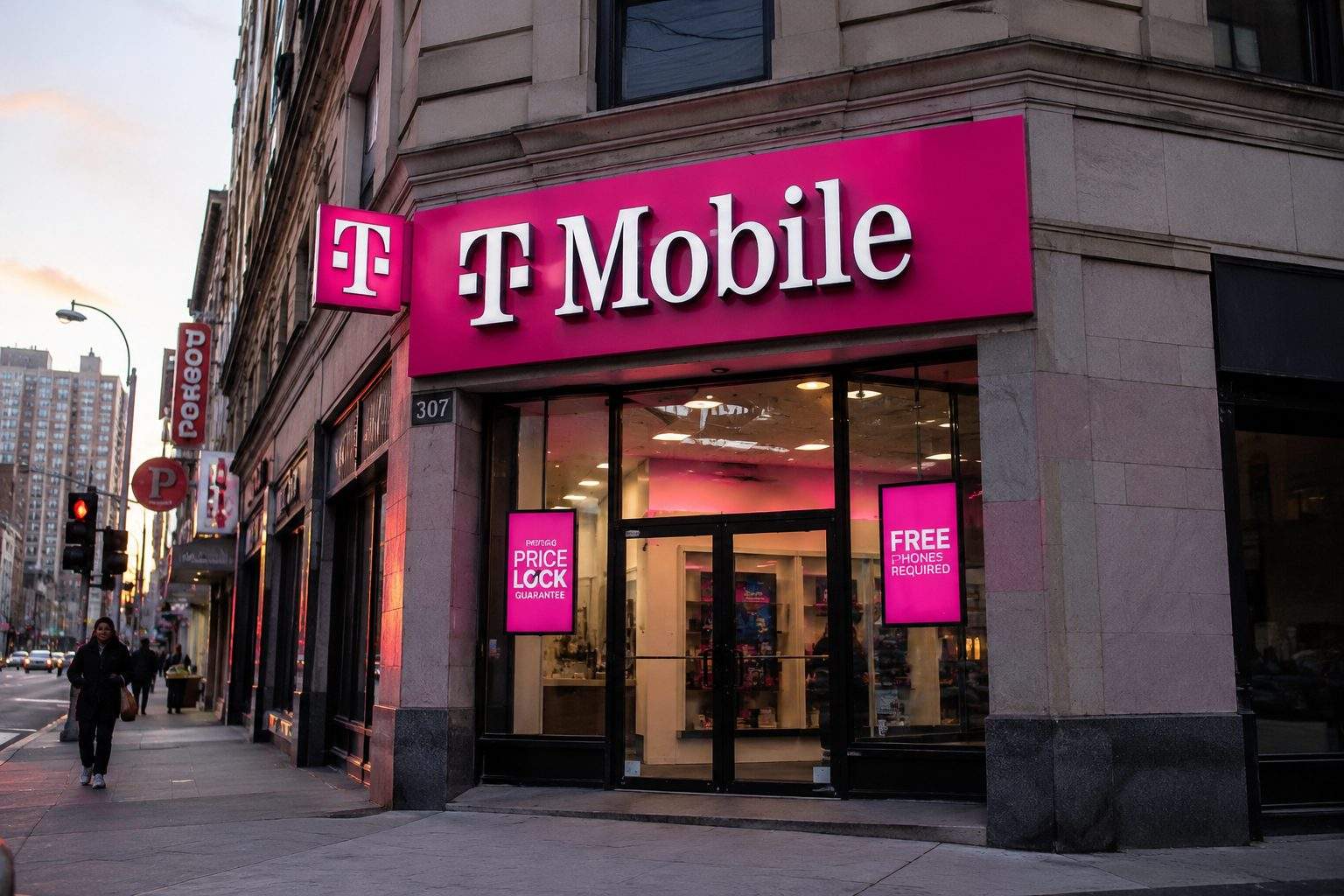
T-Mobile US NASDAQ:TMUS has restricted two of its richest switching offers to new wireless accounts, narrowing reimbursements that can reach $800 per line and $3,200 per account. The exception covers customers whose existing account carries only T-Mobile Home Internet or T-Satellite service. Dominick Miserandino, CEO of retail-technology firm RTMNexus, called the change “a deliberate play to cross-sell and diversify its customer base into other high-growth products.” TheStreet
The timing turns a customer-policy story into a profitability test. A four-line household hit by the full $6-per-line legacy-plan increase and the loss of the $10-per-line KickBack credit would pay as much as $768 more a year. That is 24% of the maximum $3,200 subscriber-acquisition subsidy — money spent to pull a customer from a rival — available through Keep and Switch; it is an upper-bound illustration, not company guidance.
| Four-line account illustration | Monthly change | Annualized amount |
|---|---|---|
| Legacy-plan increase at published maximum | +$24 | +$288 |
| Loss of KickBack on four qualifying lines | +$40 | +$480 |
| Combined upper bound | +$64 | +$768 |
| Maximum Keep and Switch reimbursement | — | $3,200 one-time |
The calculation assumes all four lines receive the full $6 increase and previously earned KickBack. It does not estimate T-Mobile’s actual revenue.
T-Mobile is retiring about 1,100 legacy billing codes covering plans including Magenta, Simple Choice and ONE. Customers facing an increase will pay up to $6 more per line, while KickBack, which cut $10 from lines using less than 2 gigabytes a month, was scheduled to retire on July 13. Chief Operating Officer Jon Freier said removing the old plans “reduces significant complexity.” TheStreet
That customer base was already yielding more. First-quarter postpaid average revenue per account, or ARPA, rose 3.9% to $151.93, net account additions increased 6% to 217,000, and postpaid account churn — the monthly share of accounts that leave — rose to 1.04% from 0.94% a year earlier. T-Mobile said rate-plan optimization and higher fee revenue helped; CEO Srini Gopalan said the company could “deepen the engagement with our existing base.” SEC
For investors, the quality of the next dollar matters. Revenue collected from an existing household does not require a fresh device-payoff reimbursement. Keeping the offers available to Home Internet- or satellite-only accounts, meanwhile, gives T-Mobile a route to turn a single-product relationship into a larger wireless household.
Competition is not standing still. Verizon Communications NYSE:VZ advertises its Simplicity plan at $30 a line for switchers using AutoPay, against a standard $45 price. AT&T Inc. NYSE:T markets Value 2.0 at $30 a line for four lines after a $5 monthly bring-your-own-device credit for up to 36 months, with AutoPay and paperless billing; it also offers switching reward cards worth up to $800.
| Carrier | Main offer used to win customers | Main conditions |
|---|---|---|
| T-Mobile US | Up to $800 of device balance per line; four-line maximum | New wireless account, eligible port-in and qualifying financed device |
| Verizon | Simplicity at $30 a line for switchers, versus $45 normally | AutoPay; taxes and fees are extra |
| AT&T | Value 2.0 at $30 a line on four lines; reward cards up to $800 | Bring-your-own-device credits, AutoPay and paperless billing; taxes and fees extra |
Verizon’s pricing push has some operating momentum behind it. The company reported 55,000 postpaid phone net additions in the first quarter, its first positive first-quarter result since 2013 and an improvement of more than 340,000 from a year earlier. CEO Dan Schulman said Verizon was “reducing friction to increase loyalty and create genuine value.” Verizon
Consumer commentary is not audited data, but it can show where the value narrative is moving. A July 4 Android Authority column ranked Verizon’s Simplicity as the strongest current postpaid choice among the three national carriers, while noting that prepaid service may still be cheaper and that Simplicity does not include a subsidized phone. T-Mobile’s old price-disruptor position is being contested.
But the investor math is deliberately an upper bound. T-Mobile has not disclosed how many accounts will receive the full $6 increase, how many qualifying KickBack lines remain or how often it pays the maximum switching reimbursement. Higher churn, heavier retention discounts or a price response from Verizon and AT&T could absorb much of the revenue lift.
The next test is whether T-Mobile can keep ARPA rising while account churn stabilizes and more Home Internet- or satellite-only customers add voice lines. If those measures move together, the changes will look like disciplined growth. If churn rises again, the extra bill revenue may prove expensive.
Related articles: NASDAQ:TMUS