
New York, May 12, 2026, 12:05 (EDT)
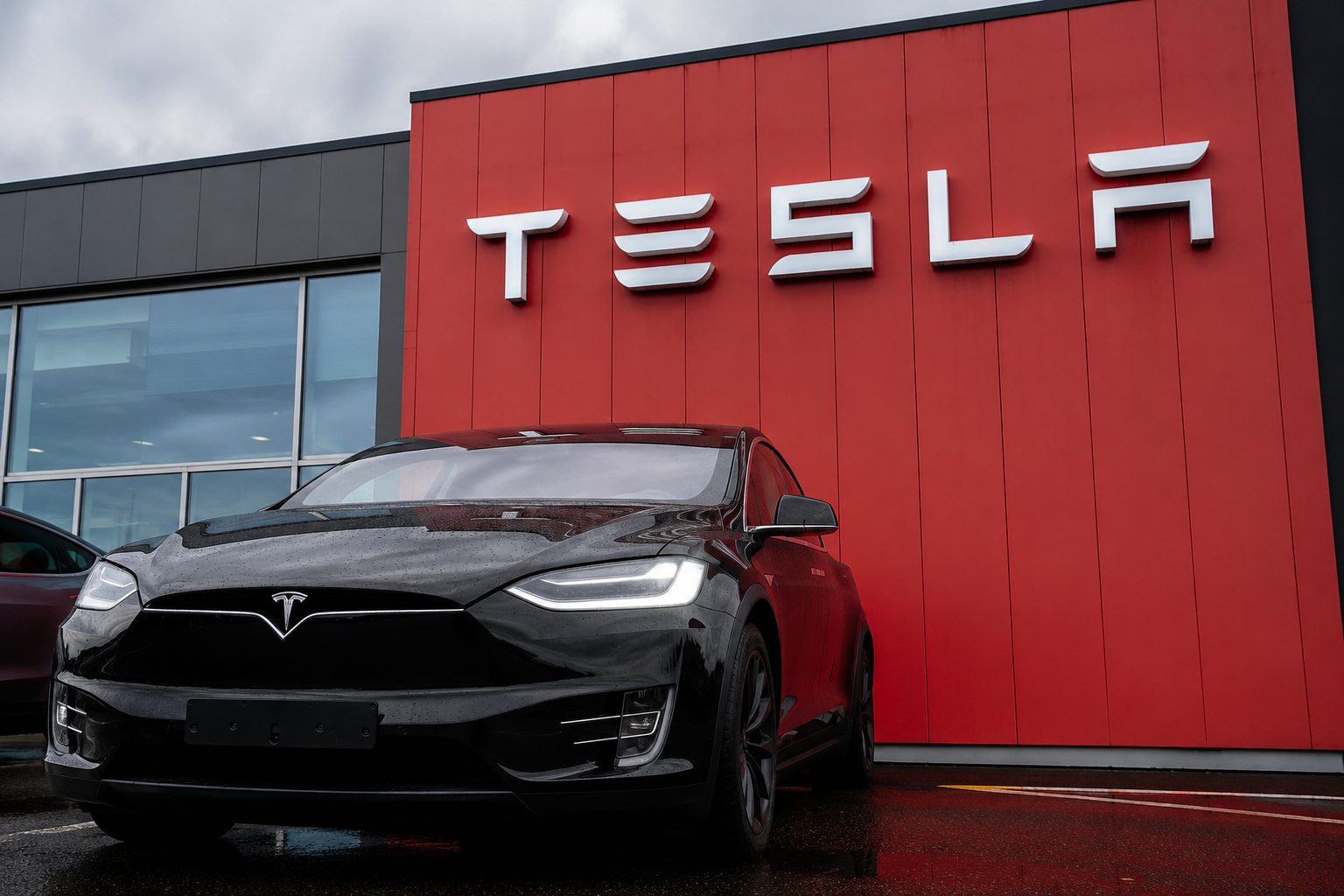
- Tesla shares slipped roughly 3.9% around midday to $427.60, paring back gains after touching $447.56 earlier. That drop took a chunk out of the recent rally powered by AI and momentum out of China.
- Two things hit the market hard: hotter-than-expected inflation took a bite out of high-multiple growth names, and new reports showed Tesla’s Texas robotaxi launch remains patchy, slow, and thin.
- Bulls lean on optimism for Full Self-Driving subscriptions, potential China approval, progress with Optimus, and more battery output. Bears, though, flag risks in execution, heavy capital outlays, and a valuation that bakes in plenty already.
Tesla shares slipped on Tuesday, with the AI narrative still in play. The rally had been fueled by optimism for Full Self-Driving—Tesla’s for-pay driver-assist system, which continues to need a human at the wheel—potentially catching on in China. But Tuesday’s action felt like a reality check, as the market weighed just how much of that promise it’s willing to price in without seeing tangible results.
The “why” here isn’t complicated. Tesla opened below where it finished Monday, managed a quick jump near $448, then reversed as the morning wore on—hitting session lows while the broader market faltered. April CPI clocked in at 3.8% year over year, just above a 3.7% estimate. High rates undercut the present value of distant profits, and Tesla’s valuation still leans heavily on its future as a software-and-robotics player, not just a carmaker. Reuters
Tesla faced another headache: Reuters journalists in Texas tried out the automaker’s robotaxis and ran into long waits, not many cars, and drop-offs that left them a good distance from their destinations. That Dallas ride? What’s usually a 20-minute trip dragged on for nearly two hours. For investors, this isn’t trivial—Tesla’s lofty valuation leans heavily on hopes for robotaxi expansion.
The bull thesis still has legs. In its Q1 update, Tesla reported 1.28 million active FSD subscriptions, a 51% jump from a year earlier. Paid robotaxi miles almost doubled compared to the previous quarter. The company pointed to FSD approval in the Netherlands, which it says could open doors in other parts of Europe, and noted it’s still working toward regulatory clearance in China.
The bear argument: operating results haven’t caught up with market expectations. Reuters tallied roughly 50 Tesla robotaxis in Austin, compared to over 250 for Waymo, and in 27% of checks, found no Tesla cars ready. Waymo, owned by Alphabet, isn’t matching Tesla’s ambitious timelines—but in Austin, it’s fielding a bigger fleet.
China’s still calling the shots. Tesla pumped out 79,478 Shanghai-built EVs in April, up 36% from last year and including exports—a boost that’s gone some way to restore faith after a rocky 2025. But Reuters pointed out that full FSD approval for China is now seen slipping to the third quarter, missing the initial Q1 mark. Pressure isn’t letting up from cheaper Chinese competitors either.
The divide in sentiment is clear. Piper Sandler’s Alexander Potter claims Tesla’s roughly $400 stock price doesn’t factor in Optimus, telling clients that investors effectively get the humanoid robot business “for free.” That’s the core bullish pitch: autos underpin the story, with software and robots offering potential upside. TipRanks
The pushback centers on cash and timing. Tesla, as CFO Vaibhav Taneja put it, is in the midst of a “very big capital investment phase.” Right now, capital expenditures are set to top $25 billion—money earmarked for factories, equipment, big-ticket assets. Elon Musk flagged a “very significant increase” in spending, saying the outlay would be worth it down the road. Business Insider
The broader economic setup isn’t exactly doing that narrative any favors. Over on Polymarket, traders put the likelihood of zero Fed rate cuts in 2026 at 62%. At the same time, Kalshi’s “next Fed rate hike” contract had 47% odds of a hike before July 2027. That doesn’t spell doom for Tesla, but it definitely ups the ante for anyone making profit projections that far ahead. Polymarket
The competitive backdrop isn’t easing up. GM ticked up midday, Ford slipped roughly 1.1%, and Rivian dropped 2.1%, putting Tesla in line with the sector’s weaker mood—though it lagged most close peers. On the ride-hailing side, Uber shares were on the rise, even with Tesla’s robotaxi ambitions facing fresh scrutiny. The market seems to be drawing a line: there’s a clear difference between a functioning platform now and the promise of fully driverless rides later.
Some positive headlines surfaced as well, yet the stock barely reacted. Tesla announced plans to inject nearly $250 million into expanding battery-cell output at its Grünheide facility outside Berlin, bumping the plant’s annual capacity goal up to 18 GWh from the previous 8 GWh. While that’s a nod to the supply-chain ambitions over the long haul, it leaves today’s big uncertainty around robotaxi reliability—and what it’ll cost to get there—untouched.
The stock, then, isn’t moving on Tesla’s ambition alone—it’s about whether that ambition can be tracked in numbers now. On Monday, investors piled in for China-FSD and the AI angle. By Tuesday, the market wanted to see uptime, regulatory traction, and more transparent economics.
Related articles: NASDAQ:TSLA