
NEW YORK, August 19, 2026, 08:30 EDT
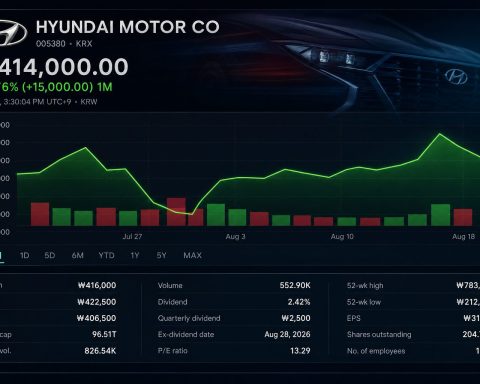
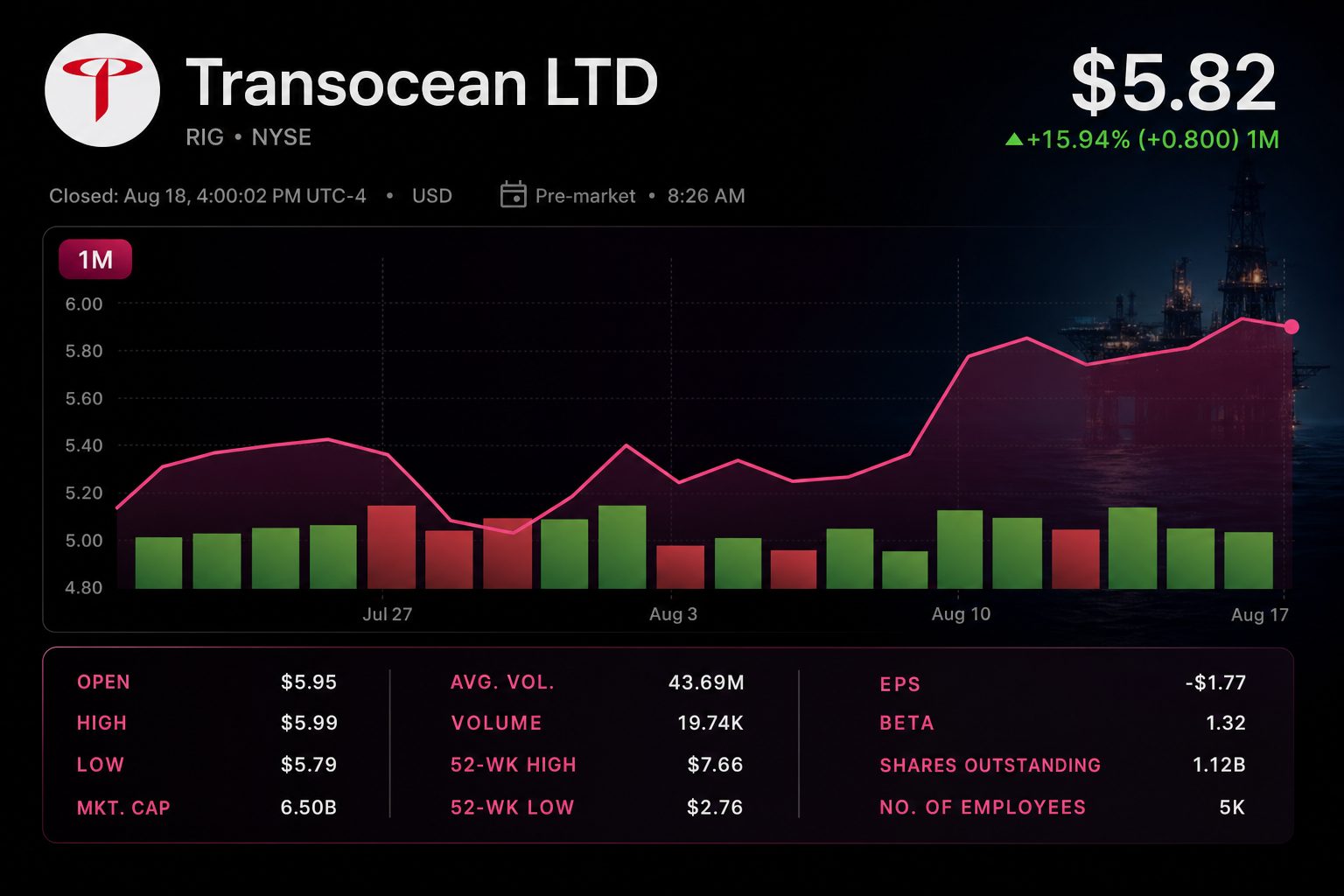
- Transocean ended Tuesday at $5.82, a fall of 0.85%, with 38.7 million shares traded.
- Brent climbed to its highest level in three weeks, approaching $91.56 ahead of the U.S. market open on Wednesday.
- The driller’s backlog stands at $6.7 billion, higher than its debt principal of $5.1 billion.
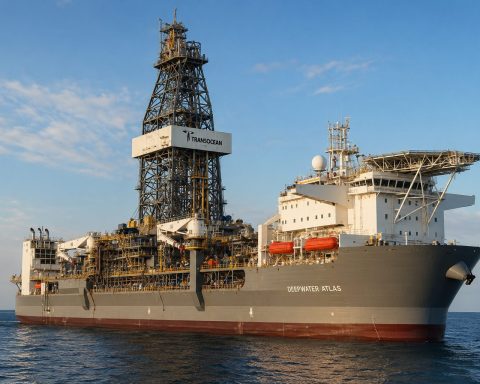
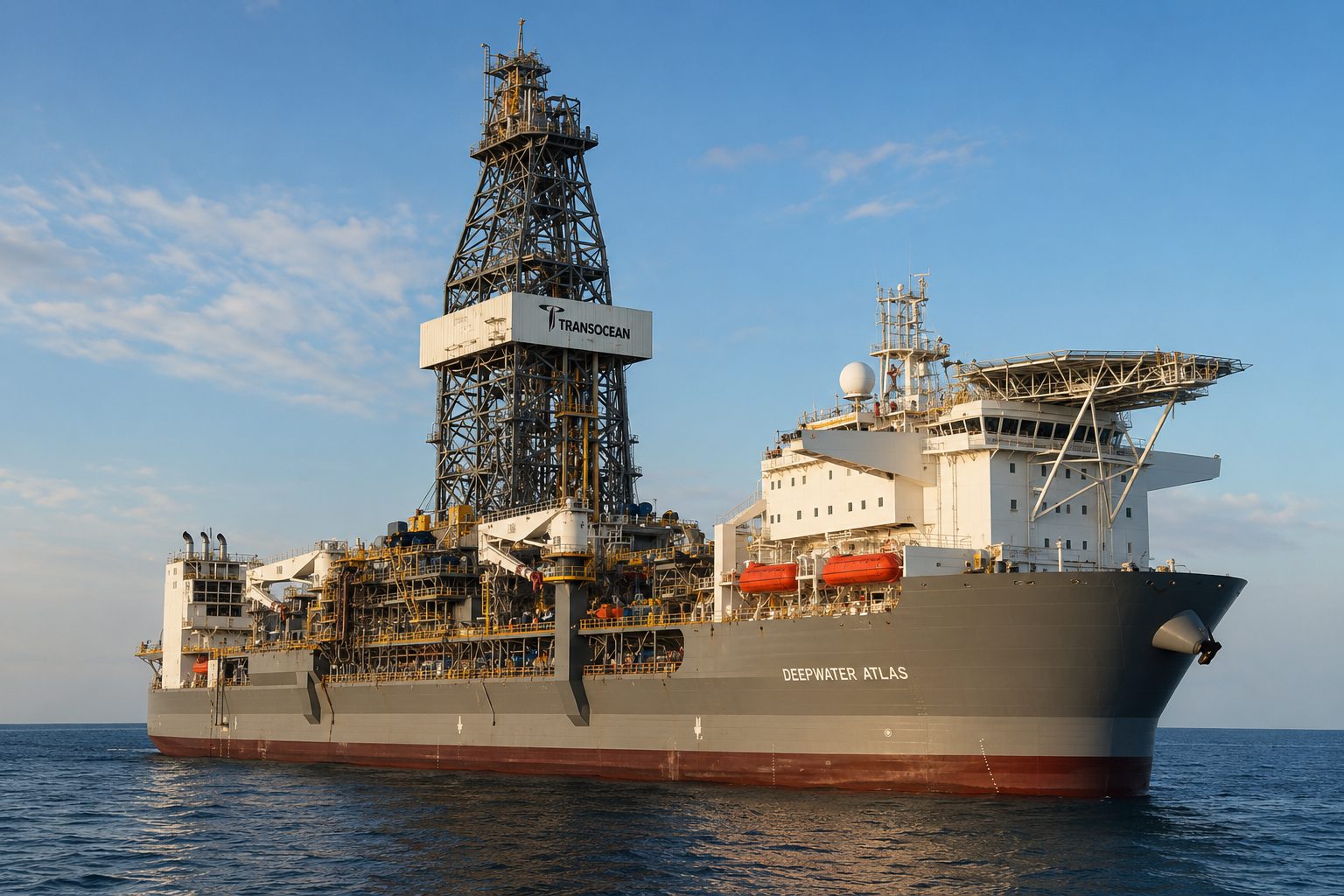
Transocean Ltd. NYSE:RIG shares underperformed amid a renewed advance in oil prices, prompting investors to consider its substantial contract backlog alongside its debt-heavy balance sheet. The stock finished Tuesday at $5.82, marking a decline of 0.85%, with trading volume reaching 38.7 million shares. That activity ranked RIG as one of the most heavily traded stocks in the U.S. session.
The distinction is significant. Offshore rigs are paid contracted dayrates, rather than a daily crude price. While elevated oil prices may encourage future investments, actual cash flow is influenced by utilization levels, the commencement of contracts, and periods of inactivity.
Brent increased by 54 cents to $91.56 a barrel in early trade on Wednesday. U.S. crude was up 59 cents at $85.53. Both benchmarks reached their strongest values since late July, as ongoing uncertainty over shipping in the Strait of Hormuz continued.
| Market snapshot | Latest | Change / context | Timestamp |
|---|---|---|---|
| RIG close | $5.82 | down 0.85% | August 18, 16:00 EDT |
| RIG volume | 38.7 million | Among top actives | August 18 close |
| Brent crude | $91.56 | up $0.54 | August 19, early Europe |
| WTI crude | $85.53 | up $0.59 | August 19, early Europe |
Transocean’s most recent quarter highlights how equity can react differently compared to oil prices. Revenue for the second quarter dropped 10.6% from the previous period, while adjusted EBITDA was down 29.1%. However, free cash flow increased by 55.9% to reach $212 million.
| Operating measure | Q2 2026 | Q1 2026 | Q2 2025 |
|---|---|---|---|
| Contract drilling revenue | $966m | $1,081m | $988m |
| Revenue efficiency | 97.0% | 97.3% | 96.6% |
| Adjusted EBITDA | $312m | $440m | $344m |
| Free cash flow | $212m | $136m | $104m |
| Debt principal | $5,107m | $5,137m | $6,654m |
The cash performance allowed Transocean to cut its principal by $30 million in the quarter. Total debt stood $1.55 billion lower versus the prior year. However, principal currently makes up around 76% of disclosed backlog, meaning even minor operational shortfalls could significantly impact equity value.
As of August 5, backlog stood at approximately $6.7 billion, representing close to seven quarters of recent drilling revenue, with the contracts extending over several years. An additional $1.0 billion deal with Equinor ASA NYSE:EQNR is still pending license-partner approval.
| Contract and capital marker | Value | Investor read-through |
|---|---|---|
| Reported backlog | $6.7bn | Roughly 6.9 times Q2 sales |
| Pending Equinor work | $1.0bn | No impact on backlog yet |
| Five new Q2 fixtures | $292m | Average dayrate sits at about $461,000 |
| Debt principal | $5.1bn | 23% lower versus a year ago |
| Q2 free cash flow | $212m | More than twice last year’s period |
Chief Executive Keelan Adamson stated the quarter delivered “excellent cash flow and improved liquidity.” He added that he anticipates high-specification deepwater and harsh-environment utilization rates to climb well into the 90% range during 2027. These projections continue to reflect management estimates.
Valaris Limited NYSE:VAL faces another scrutiny on its balance sheet following the proposed acquisition. The all-share deal assigns Valaris a value of $5.8 billion and puts the merged entity’s worth near $17 billion. Transocean is projecting $200 million in yearly synergies and aims for leverage of 1.5 times within two years after the deal closes.
Adamson spoke candidly at the time of the announcement. “We know that our debt level negatively impacts our equity value,” he said. The company aims to solve that issue through the merger, which remains subject to shareholder and regulatory approval.
| Analyst / firm | Latest rating | Target | Last action |
|---|---|---|---|
| Charles Minervino / Susquehanna | Positive | $7 | Reaffirmed, July 8 |
| Barclays | Overweight | $8 | Raised, May 7 |
| TD Cowen | Hold | $6 | Reaffirmed, May 6 |
| Morgan Stanley | Equal-weight | $7 | Reaffirmed, April 15 |
| Gregory Lewis / BTIG | Buy | $10 | Reaffirmed, February 9 |
Analyst targets show significant variation, with the five most recent figures ranging between $6 and $10. Of 11 covering firms, the consensus rating is Hold, comprising three Buy ratings, five Hold calls, and three Sells. The mean price target stands at $6.82, representing a roughly 17% premium to Tuesday’s closing price.
On Wednesday, oil is not the only key indicator. Investors are also monitoring if the crude rally lasts sufficiently to boost offshore spending and raise new dayrates. How much ultimately goes to shareholders depends on Transocean’s cash conversion and efforts to reduce debt.
Risks: Reduced tension in Hormuz may unwind oil’s risk premium. Delays in contracts, operational downtime, softer dayrates, setbacks in mergers or licensing may limit backlog conversion and hamper deleveraging.
Related articles: NYSE:RIG
Transocean: backlog versus leverage
Oil data: August 19, 2026, early European trade
The operating split
Analyst mix
Q2 cash improved while earnings softened
Price-target map
What changed
Cash conversion improved. Q2 free cash flow more than doubled year over year, while debt principal fell by $1.55 billion. Revenue and adjusted EBITDA still declined from Q1.
What matters next
Backlog quality beats a one-day oil move. Watch contract starts, 2027 utilization, the $1 billion Equinor approval process and the Valaris merger's promised $200 million of annual synergies.