
Published December 1, 2025
Key points
- Kevin Hassett has surged to the top of the shortlist to replace Jerome Powell as Chair of the Federal Reserve, with President Donald Trump saying he has already chosen his nominee but not yet naming the pick.
- Treasury Secretary Scott Bessent is finishing second‑round interviews with five Fed chair candidates and is openly calling for a “simplified” central bank, criticizing the current interest‑rate framework and massive balance sheet. Reuters+1
- The Fed’s balance sheet has shrunk from roughly $9 trillion to about $6.6 trillion, and policymakers have decided to end quantitative tightening (QT) as of December 1, a change some on Wall Street have dubbed a “December Fed flip.” Reuters+2intellectia.ai+2
- Crypto analysts, including those cited in a widely shared Forbes piece, argue that this $6.6 trillion pivot could spark a major Bitcoin price shock, even as the leading cryptocurrency has just plunged below $86,000 in a fresh risk‑off wave.
- The first week of December brings a cluster of US data and events—Powell’s speech, the official end of QT, jobs numbers and the PCE inflation report—that could quickly reshape both Fed expectations and Bitcoin sentiment.
Hassett moves to the front of Trump’s Fed chair race
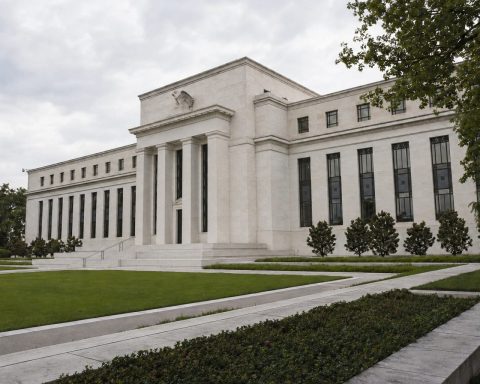
With Jerome Powell’s term as Federal Reserve Chair set to end in May 2026, the Trump administration is signaling that a major shift at the US central bank is coming.
Over the weekend, President Trump told reporters aboard Air Force One that he has already decided whom he wants to lead the Fed but declined to say whether that person is Kevin Hassett, the head of the National Economic Council and a longtime Trump economic adviser.
Hassett, for his part, played it coy on television—while also making clear he’d take the job. In a Sunday interview, he said that markets have been rallying on the expectation of a new Fed chair and added that if Trump chose him, he would be “happy to serve.” Reuters+1
Behind the scenes, prediction markets and analysts have been recalibrating:
- A MarketWatch analysis notes that bets on Hassett becoming the next Fed chair have surged, with prediction‑market platform Kalshi recently assigning him more than a 50% chance of being nominated—well ahead of rivals like Fed Governor Christopher Waller and former Governor Kevin Warsh.
- A detailed profile from crypto exchange Bitget describes Hassett as a dovish policy advocate who favors lower interest rates, easier credit conditions and faster shifts when data change, arguing that current rates are too restrictive for growth.
That dovish tilt aligns closely with Trump’s long‑standing calls for lower rates and a more aggressively pro‑growth Fed. It also matters for Bitcoin and other risk assets, which tend to benefit from easier monetary policy and weaker dollar conditions—one reason crypto commentators are now treating the Fed chair race as a macro catalyst, not just a Washington personnel story.
Scott Bessent and the push for a “simplified Fed”
If Trump’s choice of chair will define the who of the next Fed era, Treasury Secretary Scott Bessent is working hard to define the what.
In recent weeks Bessent has emerged as one of the Fed’s most vocal critics inside the administration. In a widely reported CNBC interview, he argued that US monetary policy has become “very complicated” and that the central bank’s current “ample reserves” system for controlling interest rates is “fraying” and needs to be simplified. Reuters
Key elements of Bessent’s critique, as laid out in a Reuters report and subsequent coverage: Reuters+1
- The Fed’s $6.56 trillion balance sheet, swollen by years of bond purchases, distorts market pricing, especially along the Treasury yield curve.
- The current rate‑control framework relies heavily on complex liquidity facilities—particularly the Standing Repo Facility and reverse‑repo operations—instead of the more straightforward corridor system used before the 2008 crisis.
- Maintaining this system has turned the Fed from a profit‑making institution into one running an accounting loss of roughly $240 billion, due largely to the interest it pays banks and money funds on reserves and reverse repos.
Bessent has also been leading the internal process to identify Powell’s successor. A Bloomberg‑linked report, echoed by The Business Times and other outlets, notes that he has been conducting second‑round interviews with five candidates and indicated that those interviews would wrap up by late November.
His goal, he has suggested, is to find a chair who understands how the Fed’s maze of tools interact—and who is willing to move the institution back toward something simpler and more transparent.
Critics warn that such an agenda, particularly when pushed so forcefully from the Treasury, could blur the lines between fiscal and monetary policy and potentially threaten the Fed’s operational independence. Supporters counter that with US debt still climbing and markets regularly jolted by liquidity squeezes, a simpler, smaller Fed might ultimately be more credible.
Inside the “December Fed flip” and the $6.6 trillion balance‑sheet pivot
The backdrop to this political drama is a major shift already underway in Fed policy.
At its most recent meeting, the Fed decided to halt the shrinkage of its balance sheet starting December 1, ending a three‑year quantitative tightening program that had reduced assets from around $9 trillion at the peak of pandemic‑era QE to roughly $6.6 trillion today.
A few key points about this pivot:
- Liquidity strains forced the change. As Reuters reported, late‑October money‑market turbulence—spikes in repo borrowing, unusual flows into and out of the Fed’s standing facilities and growing difficulty keeping the federal funds rate on target—persuaded policymakers they were close to the minimum level of reserves the system could handle.
- QT stops, but QE isn’t back (yet). For now, the Fed is simply letting its portfolio stabilize rather than shrink further. Over time, as currency demand grows and banks’ reserve needs rise, the balance sheet is expected to drift up again, even without an explicit new asset‑purchase program.
- Wall Street sees a $6.6T “flip.” A Benzinga‑sourced analysis summarized by Intellectia notes that investors view the end of QT as a $6.6 trillion turning point, with expectations that halting runoff will gradually increase liquidity and support risk assets. intellectia.ai
A Dow Jones/Wall Street Journal piece framed it as the Fed’s “$6.6 trillion test”—deciding when portfolio runoff becomes too risky for market functioning and how to communicate the shift without appearing to bail out markets once again. Morningstar
This is exactly the policy backdrop that the now‑viral Forbes article—“Just the Beginning — $6.6 Trillion December Fed Flip Predicted to Trigger Massive Bitcoin Price Shock”—is seizing on. While the full piece sits behind a paywall, re‑reports and crypto news aggregators describe its core thesis: that the December halt to QT is the first step toward a much larger money‑printing cycle that could dramatically reprice Bitcoin and other digital assets over the next few years. Forbes+2intellectia.ai+2
How the Fed pivot is feeding Bitcoin’s bull — and bear — narratives
Crypto commentators have been quick to stitch the Fed’s balance‑sheet pivot into a broader macro story.
According to the Intellectia/Benzinga summary of Wall Street views:
- The anticipated halt to QT is expected to boost overall dollar liquidity and ease pressure on long‑term Treasury yields.
- Analysts at large banks see this as supportive for risk assets, with some explicitly naming Bitcoin as a likely beneficiary in an environment where investors seek hedges against future money printing.
- Former BitMEX CEO Arthur Hayes is cited as forecasting a new wave of US deficit spending and central‑bank balance‑sheet expansion that could ultimately push Bitcoin prices into the seven‑figure range—though that is firmly in the realm of long‑term speculation, not consensus.
On top of that, a widely read BeInCrypto piece lists four US economic events in the first week of December—Fed Chair Powell’s speech, the official end of QT, job‑market data (ADP and weekly jobless claims) and the Fed’s preferred PCE inflation release—as potential catalysts that could flip Bitcoin’s short‑term trend “overnight.” As of December 1, futures markets tracked by CME’s FedWatch tool put the odds of a December 10 rate cut in the mid‑80% range, reflecting expectations for a more accommodative Fed stance. BeInCrypto
Put simply: in the bullish narrative, a Hassett‑led, Bessent‑influenced Fed that is ending QT and likely cutting rates soon is exactly the cocktail that could push Bitcoin to new highs.
But that story ran into a harsh reality check today.
Reality check: Bitcoin’s violent December selloff
Instead of a clean “Fed‑flip rally,” Bitcoin started December with a sharp slide.
- A Bloomberg report notes that Bitcoin dropped as much as 6% to below $86,000 in early Asian trading on Monday, with Ether falling more than 7% to about $2,800 and Solana losing nearly 8%.
- A separate BeInCrypto analysis calculates that the plunge wiped out a week’s worth of gains in one session, triggered around $400 million in liquidations within an hour and shaved about 4% from total crypto market capitalization, bringing it down to roughly $3.0 trillion.
- CoinDesk, via a TodayOnChain summary, links part of the selloff to a security incident in Yearn Finance’s yETH liquidity pool, where an attacker reportedly drained about 1,000 ETH (around $3 million), stoking fresh concerns about DeFi security and adding to the risk‑off tone.
Taken together, these reports underline two realities that can get lost in macro‑driven narratives:
- Crypto‑specific shocks still matter. Hacks, protocol exploits and ETF flows can overwhelm any slow‑burn macro thesis, at least in the short term.
- Macro works through positioning, not magic. The same liquidity expectations that fuel leverage and speculation on the way up can magnify liquidations when sentiment turns.
Even some of the more bullish analysts quoted by BeInCrypto warn that Bitcoin’s current chart resembles earlier cycles that produced deep corrections, with one chartist suggesting that a break of the $80,000 support zone could open the door to much lower levels—even if the longer‑term Fed/liquidity backdrop remains favorable.
None of this negates the idea that a looser Fed could be supportive for Bitcoin over time. It does, however, highlight that timing and leverage can matter as much as the direction of policy.
(As always, these developments are informational only and should not be treated as financial advice. Crypto assets are highly volatile and can result in significant losses.)
What to watch in the first week of December
For traders, investors and policymakers trying to make sense of this moment, the next several days look unusually packed:
- Powell’s speech & official end of QT (Dec 1)
- Powell is scheduled to speak the same day QT formally ends, just before the Fed’s communications blackout ahead of the December 10 meeting. Markets will scrutinize every hint about how he views inflation progress, labor‑market cooling and the appropriate pace of rate cuts.
- Fed chair announcement timing
- Trump has said he knows whom he will pick as the next Fed chair but has not yet gone public. Speculation centers on Hassett, whose dovish stance could reinforce expectations for faster and deeper easing in 2026 and beyond.
- Labor‑market data (ADP and weekly jobless claims)
- Strong job numbers could temper near‑term rate‑cut odds and weigh on Bitcoin and other risk assets; weak data would likely do the opposite, reinforcing the view that easier policy is coming and providing a potential tailwind to crypto.
- PCE inflation and rate‑cut odds
- Friday’s PCE release—the Fed’s preferred inflation gauge—will shape expectations for the December meeting and early‑2026 policy path. BeInCrypto reports that futures markets currently price roughly an 85–88% chance of a cut at the December 10 FOMC meeting.
Overlay those macro events with the ongoing Fed‑chair drama and Bessent’s campaign for a “simplified Fed,” and it’s clear why both traditional markets and the crypto world are treating this week as a potential inflection point.
Why it matters beyond Bitcoin
While Bitcoin’s price action grabs the headlines, the underlying story is bigger:
- For households and companies, a Hassett‑style dovish Fed could mean lower mortgage rates, cheaper car loans and easier refinancing—but also the risk that inflationary pressures re‑emerge if policy proves too loose.
- For bond markets, the end of QT and any subsequent tweaks to the Fed’s holdings will shape the supply‑demand balance in Treasuries, potentially flattening yields or even re‑igniting concerns about “financial repression” if real returns lag inflation. Reuters+1
- For the Fed itself, the combination of Bessent’s public criticism, a politically charged chair search and pressure to manage a $6.6 trillion balance sheet without destabilizing markets amounts to one of the most delicate balancing acts in its modern history.
The coming days will begin to clarify which vision of the Fed wins out: Bessent’s push for a simpler, smaller central bank, or a more technocratic path that keeps the ample‑reserves framework and large balance sheet in place.
Either way, the “December Fed flip” ensures that both Wall Street and the crypto world will be watching every word from Washington—and every tick in Bitcoin—very closely.
Related articles: Federal Reserve