
New York, June 13, 2026, 06:56 ET
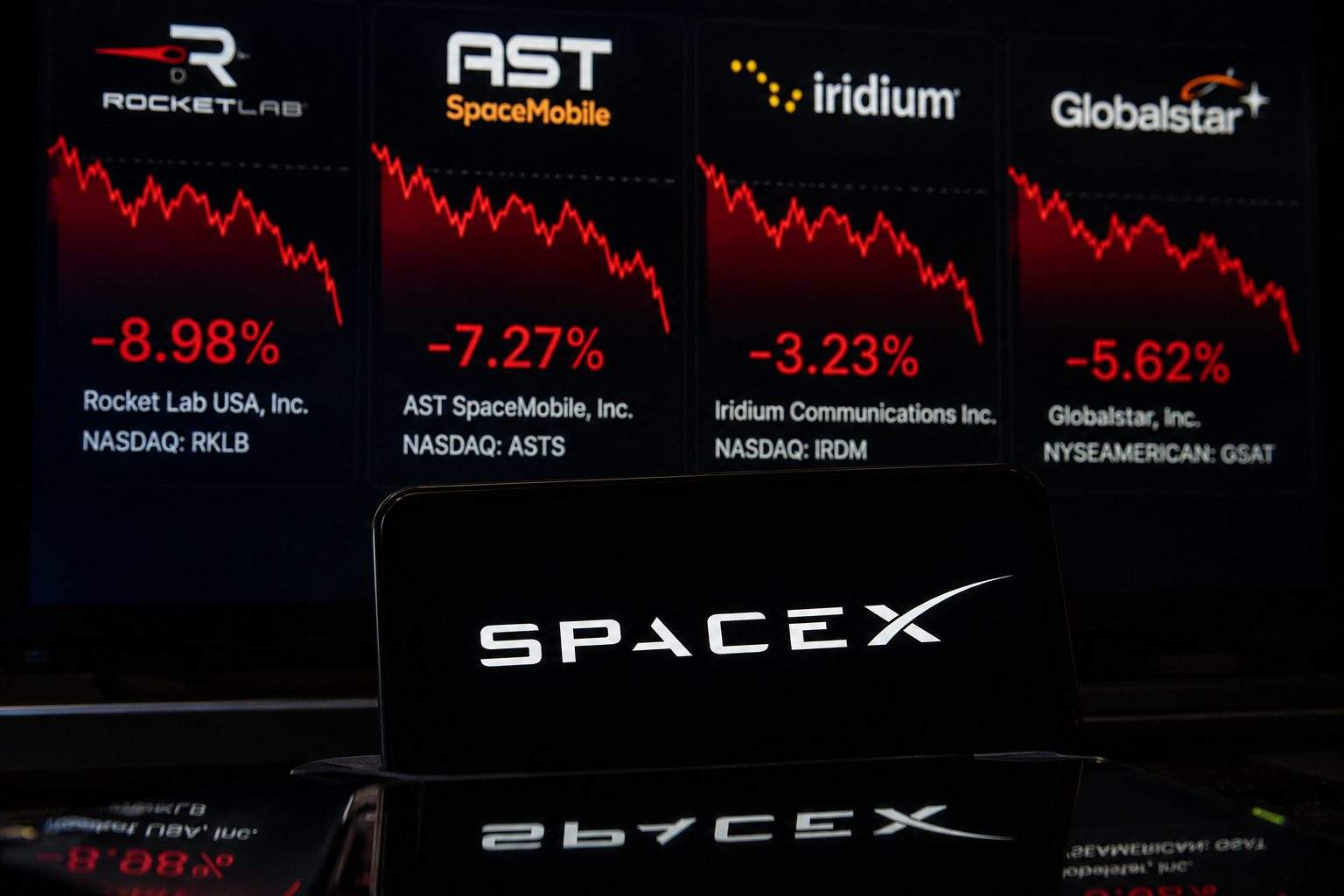
- SpaceX’s public debut pushed the sector into the spotlight, but smaller space and satellite stocks sold off hard.
- Rocket Lab’s addition to the Nasdaq-100 is a clear support catalyst, yet shares dropped along with the wider sector.
- AST SpaceMobile’s BlueBird satellite launch is up next on June 17, then Rocket Lab joins the index on June 22.
Space and satellite stocks in the U.S. pulled back hard to close out the week, with a selloff following SpaceX’s public trading debut. The IPO had sparked a rally earlier, but traders jumped to take profits after SpaceX started trading. SpaceX’s IPO was priced at $135 a share, selling 555,555,555 shares. Shares traded at $160.95, up 19% from the IPO price, according to latest market data. SpaceX’s public market debut sets a new valuation benchmark for other launch, satellite broadband, and space-infrastructure stocks.
Space stocks dropped across the board. Latest U.S. prices had Rocket Lab off 10.8%, AST SpaceMobile sliding 15.5%, Intuitive Machines down 13.1%, Planet Labs off 8.8% and Redwire losing 11.6%. The Procure Space ETF dropped 6.9%. ARK Space & Defense Innovation ETF lost 1.9%. Those declines in sector ETFs—baskets of shares that trade like stocks—point to a sector-wide move and not just a single name.
Stocks dropped mostly because of a shift in investor positioning, not because of a failed launch or bad earnings, Reuters said. Space stocks had already seen big gains this year before they slid on Friday, according to Reuters. IG Group’s Chris Beauchamp told Reuters some investors might be worried that “the hype can’t quite live up to expectations.” Talley Léger at The Wealth Consulting Group described it to Reuters as likely “capital recycling,” with institutions selling off smaller stocks to make room for a major new listing like SpaceX. Reuters
Rocket Lab was in focus this week after Nasdaq said it will join the Nasdaq-100 before trading starts on June 22. Adding a stock to a big index can lift demand, as funds tied to the Nasdaq-100—there are over 200, with $800 billion tracking the benchmark, according to Nasdaq—may need to buy it. Rocket Lab CEO Sir Peter Beck called the move “a landmark moment for Rocket Lab.” Shares still dropped as investors weighed space-stock pricing after the SpaceX listing. Nasdaq, Inc.
AST SpaceMobile is on traders’ radar as the company lines up its next big event. BlueBird satellites 8, 9 and 10 are set for launch on a SpaceX Falcon 9 from Cape Canaveral on June 17, targeting 2:39 a.m. EDT, with backup windows until 4:15 a.m. EDT. AST says it’s developing a direct-to-device satellite network aimed at bringing broadband straight to standard smartphones. The three satellites are set to grow the constellation and should nearly double peak data speeds over the earlier Block 1 BlueBirds, according to the company. But the schedule could change based on readiness, weather or other issues—so it’s an upside trigger, but also a nearby risk.
Planet Labs offers a fundamentals angle for bulls. The Earth-imaging satellite operator posted its best quarter yet earlier this month, with revenue up 42% year over year to $94.2 million, and total backlog increased 72% to over $906 million. Backlog is contracted work not yet booked as revenue, giving investors a view on future sales. Planet shares still fell Friday, showing that gains in revenue visibility can get swept aside when high-growth space names are sold as a group.
Space stocks look shakier and more selective than they did earlier this week. Bulls point to SpaceX’s IPO as proof that investors want space infrastructure. Rocket Lab has the index trade in play, AST’s got a launch on the calendar, and Planet shows revenue and backlog growth. Bears focus on valuations and execution risks. Most key public names in the sector still show negative P/E ratios — price divided by earnings per share — so investors are betting on future growth, not profits now. With facts available today, the space group looks risky overall, not broadly attractive. Rocket Lab and Planet have stronger stories, but all face risk from money rotating toward SpaceX, possible launch slips, and falling valuations.
Related articles: NASDAQ:ASTS