
Philadelphia, July 11, 2026, 11:08 (EDT)
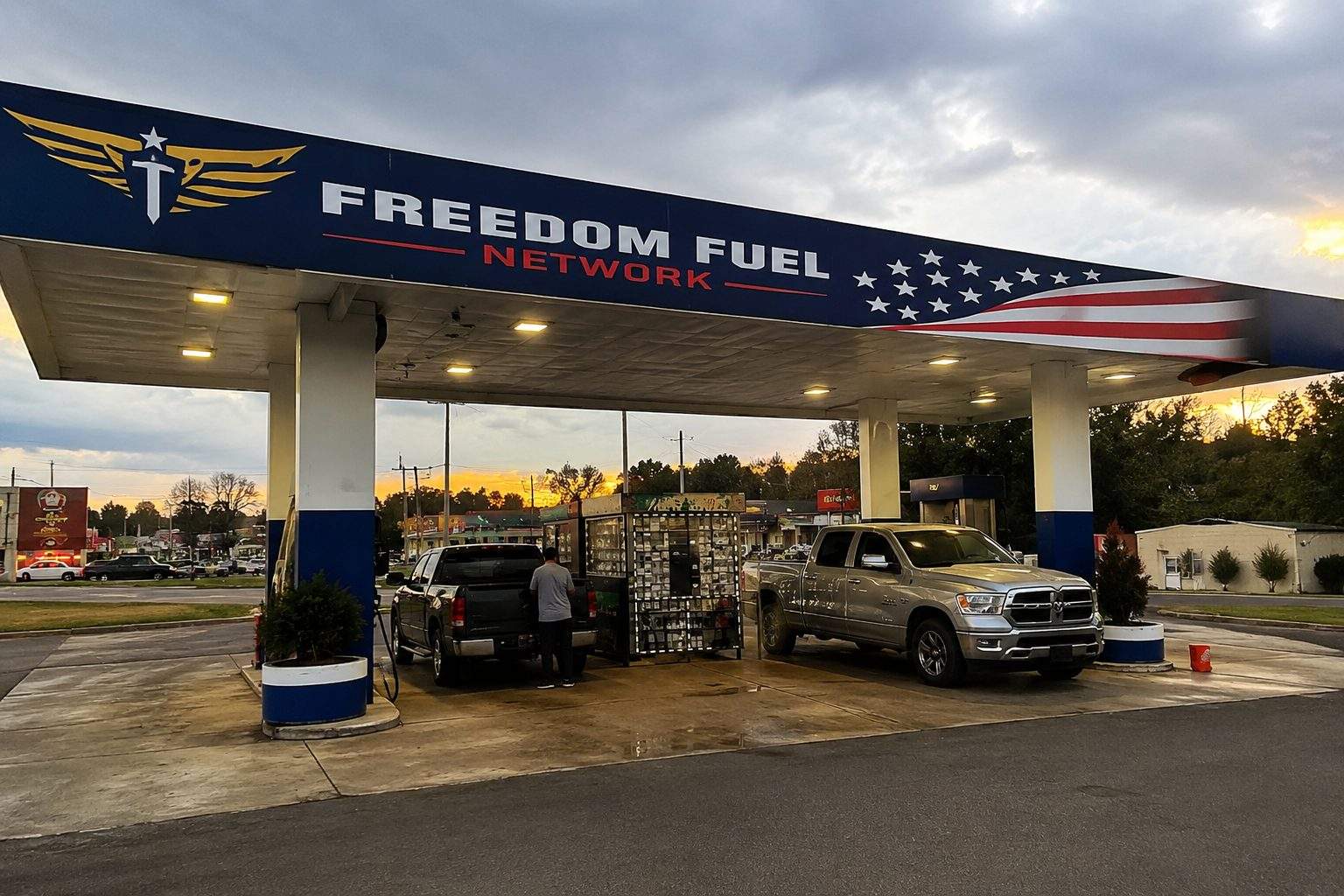
Freedom Fuel Network’s price hike in its first week lagged behind the jump in wholesale gasoline. On Friday, regular gas at a Bristol, Pennsylvania station was posted at $3.57 a gallon, 10 cents higher than the $3.47 launch price President Donald Trump pitched last week.
The wholesale benchmark price is up 14 cents. Pennsylvania’s OPIS rack price, which is the terminal rate before taxes and delivery, climbed to $3.03 a gallon on July 9 from $2.89 at launch. After state and federal gasoline taxes are rounded in, the benchmark is about $3.78 before freight and card fees. That leaves a 21-cent difference at the pump, wider than the 17-cent gap on July 3. Tom Kloza, Gulf Oil’s chief energy adviser, described the model as “jumping off a cliff.” 6abc Philadelphia
| Pennsylvania unit economics | July 3 launch | July 9 wholesale/July 10 pump |
|---|---|---|
| Pump price | $3.47 | $3.57 |
| OPIS rack price | $2.89 | $3.03 |
| Rack plus gas tax (rounded) | $3.64 | $3.78 |
| Gap per gallon (modeled) | 17 cents | 21 cents |
| Month gap on 68,000 gal | $11,560 | $14,280 |
The estimate includes about 57 cents of Pennsylvania tax and 18 cents in federal tax. It does not factor in delivery, payment processing, wages, or overhead. Freedom Fuel hasn’t disclosed its contracted supply cost.
The missing starting point makes the company’s bigger sales claim a cash-flow issue. Freedom Fuel reported over 50% higher average sales at its 25 stations, and said a few more than doubled, but didn’t say where volumes began. If each of its 20 Pennsylvania locations was selling the national station average of 68,000 gallons per month, the present margin means a total fuel shortfall of about $285,600. With 50% more volume, that climbs to around $428,400. Every extra 10,000 gallons at the same gap adds $2,100 more in losses.
U.S. markets were closed for the weekend, but replacement cost pressures kept building into the week’s finish. West Texas Intermediate crude rose 4% for the week, closing Friday at $71.41 a barrel. Brent finished at $76.01, up 5.4% over the week. AAA reported regular gas at $3.963 in Philadelphia’s Pennsylvania side and $3.882 nationally on Saturday. That puts the Bristol price around 39 cents and 31 cents lower, respectively.
U.S. gasoline stocks dropped by 1.9 million barrels last week to 212.1 million, putting inventories almost 10 million barrels under the five-year average. Petroleum-product exports set a weekly record at 8.7 million barrels a day. “Gasoline prices have rallied alongside the massive move higher in crude oil,” said StoneX Group NASDAQ:SNEX energy analyst Alex Hodes. Reuters
Fuel sellers that trade on the stock market can give some idea where margins are. Casey’s General Stores NASDAQ:CASY posted a fuel gross margin — sales minus fuel costs before most operating costs — of about 42.6 cents a gallon for its last fiscal year. Murphy USA NYSE:MUSA had 25.4 cents in the first quarter. CEO Mindy West called Murphy’s model a “low-cost high volume operating model.” SEC
| Operator and reporting period | Fuel margin per gallon | In-store margin benchmark |
|---|---|---|
| Freedom Fuel, July 9–10 estimate | –21.0 cents | Not disclosed |
| Murphy USA, first quarter 2026 | +25.4 cents | 20.0% merchandise margin |
| Casey’s, fiscal 2026 | +42.6 cents | About 42.2% combined inside gross margin |
Definitions vary. Freedom Fuel uses a spot cost estimate. Peers show company-reported margins, which aren’t final operating profit.
Freedom Fuel would need to add about $34,000 to $71,000 a month in shop sales to close the $14,280 fuel margin gap, not counting extra labor and card fees. That could be tough at some locations. The Philadelphia Inquirer found several sites had small or bare-bones stores and said the Brookhaven site was closed. “It’s difficult to see how these stations are making money,” said Jeff Lenard at the National Association of Convenience Stores. Inquirer.com
There’s still not much to go on for ownership or funding. A Delaware company filed for the Freedom Fuel mark on July 1, but the company site hasn’t listed who is behind it or shared any financials. The White House has said Freedom Fuel is private and not getting federal money. “Stations selling at this price, it’s not sustainable,” said Patrick De Haan, who leads petroleum analysis at GasBuddy. Fortune
The estimate doesn’t cover a full P&L. A supplier rebate, lower contract price, cheaper freight, or a boost in shop sales could help make up the difference. Lower wholesale prices would help, too. On the flip side, if crude or terminal prices climb again and pump prices stay capped, losses on advertised volume would get worse.
Next up for hard numbers: the U.S. Energy Information Administration will post retail fuel price updates July 14 and its weekly petroleum supply data July 15. For Freedom Fuel, the key will be if its posted prices change again — and if the company releases enough details for analysts to see if in-store sales or deals on fuel can cover the growing wholesale gap.
Related articles: Energy