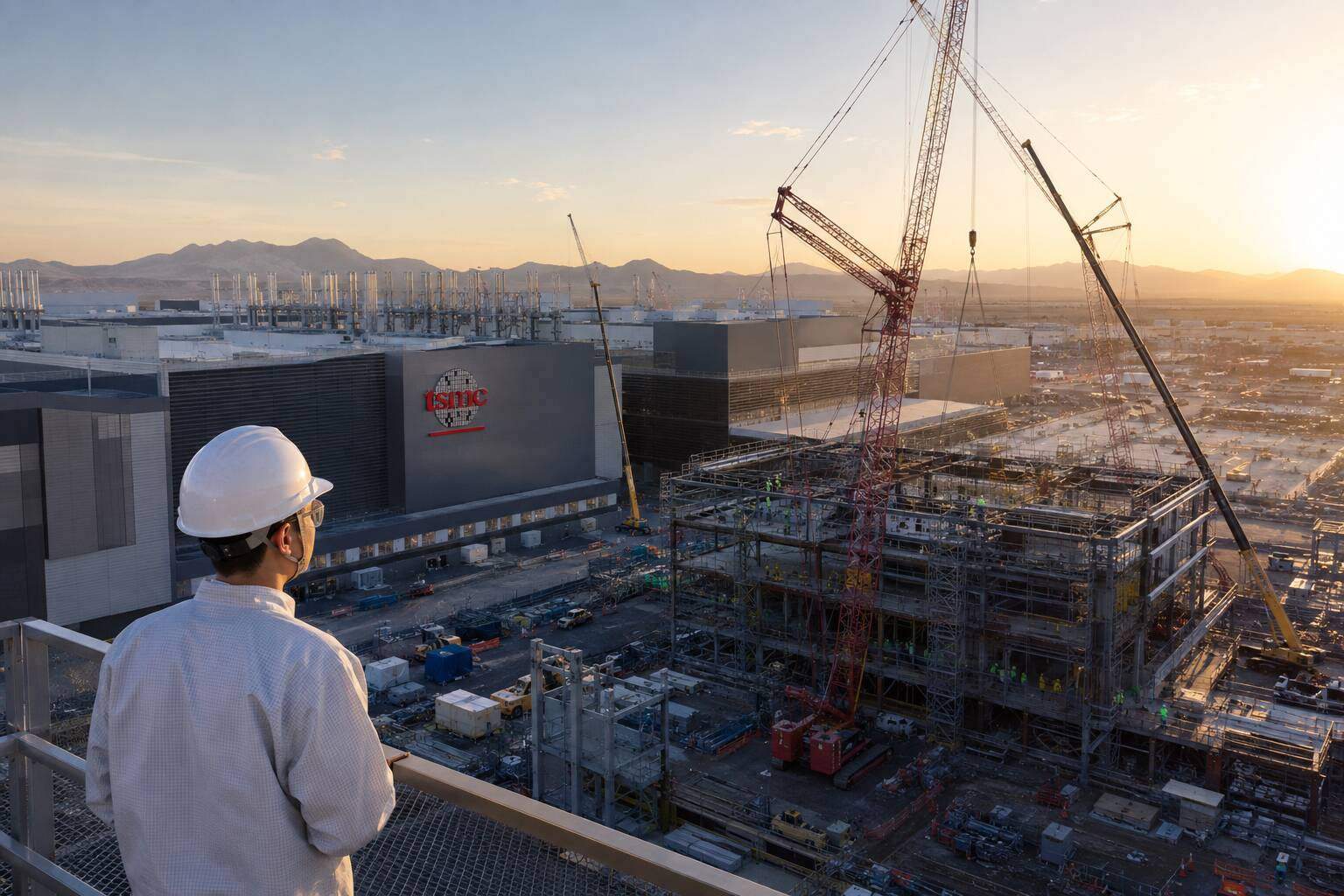

TAIPEI, September 5, 2026 at 7:53 p.m. CST — Taiwan Semiconductor Manufacturing Co. (TWSE:2330; NYSE:TSM) is building nearly 20 fabs. A senior executive says that still cannot satisfy the surge in artificial-intelligence demand.
The number sounds like a spending story. It is really a delivery story: TSMC can fund the expansion, but workers, equipment and start-up time now set the pace.
That distinction matters to shareholders. Scarce leading-edge capacity can support pricing and margins today. Delays also push revenue further behind the cash leaving for new plants.
Equipment plans changed twice in six months
TSMC’s internal requirement estimate, indexed to the year-end plan
The original 2026 procurement baseline.
The first upward reset as orders strengthened.
Planned equipment needs were nearly double the baseline.
This is an equipment-requirement index reported from the executive’s remarks. It is not wafer output or a revenue forecast.
Remarks by deputy co-COO Cliff Hou at SEMICON Taiwan, reported by TVBS World Taiwan; official event context from SEMI.
Deputy co-Chief Operating Officer Cliff Hou described the revisions at SEMICON Taiwan on Wednesday. An equipment-requirement index rose from 1.0 at year-end to 1.25 in the first quarter, then reached 1.9 by July.
Hou also put 13 fab projects in Taiwan and five to six overseas. Taiwanese coverage placed the total near 20, with construction running at roughly four to five times its earlier pace.
Those figures need care. A fab count does not disclose wafer starts, node mix or completion percentage, so it cannot be multiplied into an earnings estimate.
TSM rose, but Friday was a chip rally
Total return excluded; August 24 close = 100
TSMC’s American depositary receipts closed Friday at $428.91, up 2.9%. The iShares Semiconductor ETF NASDAQ:SOXX rose 3.5%. That wider move makes a one-day event attribution unsafe.
The Taiwan shares finished at NT$2,410, up 0.8%, before both exchanges closed for the weekend. TSM had gained 4.6% since August 24, versus 2.7% for SOXX.
The operating evidence is stronger. TSMC’s first seven months produced NT$2.872 trillion of unaudited revenue, up 37%; July alone grew 44.7%.
Construction count is not production capacity
The headline is immediate. The leading-edge output arrives in stages.
Volume production is scheduled first.
N3 volume production follows later.
The planned N3 start sits furthest out.
Construction count: Economic Daily’s report of the SEMICON discussion. N3 schedule: TSMC’s July earnings-call transcript.
TSMC already expected 2026 capital spending of $52 billion to $56 billion. Its midpoint is 32% above 2025, though the budget also covers advanced packaging and research.
Chief Executive Wei said “AI-related demand continues to be extremely robust” in July. Management lifted its 2026 U.S.-dollar revenue-growth forecast to slightly above 40%.
The economics can absorb a heavy build. Second-quarter revenue reached $40.2 billion. Gross margin was 67.7%, and operating margin was 60.3%.
A strong cash engine meets a bigger build
Latest reported growth and profitability beside the 2026 investment plan
High margins fund construction. They do not eliminate the lag between pouring concrete, installing tools and qualifying customer output.
Revenue and margins: TSMC’s second-quarter release and monthly revenue report. Spending plan: 2025 Form 20-F.
The near-term implication is constructive. Supply that trails demand can keep utilization high and protect pricing. The longer-term calculation is harder because overseas fabs cost more and ramp later.
Execution is the main risk. Worker shortages or delayed tools can strand spending before revenue arrives. A sudden AI slowdown would reverse the problem and leave expensive capacity underused.
Investors get a nearer test on Thursday, when TSMC is scheduled to publish August revenue. Another strong month would support the demand claim, though it would not measure the construction bottleneck.
Nearly 20 fabs is a striking total. The investable fact is less theatrical: several leading-edge additions will not produce until 2027 or 2028, making time TSMC’s scarce input.