
NEW YORK, Jan 3, 2026, 17:37 ET
U.S. President Donald Trump said the United States attacked Venezuela and captured President Nicolas Maduro on Saturday, a dramatic escalation that could feed oil-price volatility and spill into Indian oil stocks when markets reopen.
The immediate transmission channel is crude. Indian Oil Corp (IOC.NS) and its state-run peers Bharat Petroleum (BPCL.NS) and Hindustan Petroleum (HINDPETRO.NS) import most of their crude and sell fuel domestically, leaving earnings sensitive to sudden moves in global prices.
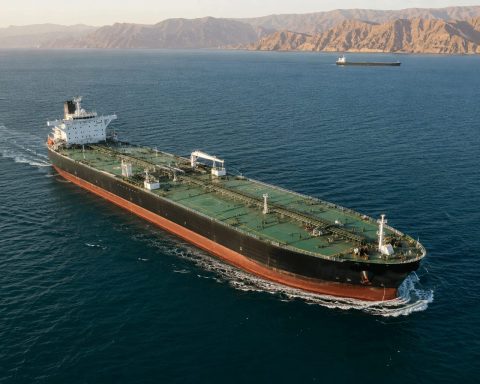
That sensitivity sharpened after Reuters reported Venezuela’s crude and fuel exports were effectively paralyzed because port captains had not authorized loaded ships to sail, following Washington’s embargo and its statement that it would oversee a political transition.
Brent settled on Friday at $60.75 a barrel and U.S. West Texas Intermediate at $57.32, after both benchmarks ended 2025 down nearly 20%, Reuters reported ahead of the Venezuela raid.
Venezuela’s state-run producer PDVSA kept producing and refining normally on Saturday and the U.S. strike caused no damage to oil facilities, two sources told Reuters. Even before the raid, a U.S. tanker blockade and cargo seizures in December had cut exports last month to about half of the 950,000 barrels per day (bpd) it shipped in November, the report said.
One near-term scenario for Indian oil stocks is straightforward: a higher crude bill squeezes marketing margins — the gap between pump prices and what fuel retailers pay for fuel — if retail price changes lag the move in oil.
Refining margins, the difference between the value of products such as diesel and gasoline and the cost of crude feedstock, can move either way because product prices often rise with crude. In a spike, working-capital needs and hedging costs tend to rise as well, adding another pressure point for refiners.
A second scenario creates a split inside the sector. Upstream producers such as Oil and Natural Gas Corp (ONGC.NS) usually gain from higher realised crude prices, while fuel retailers and refiners often feel the cost shock first.
A third scenario pushes the timeline out: some investors are weighing whether a U.S.-backed transition eventually brings capital back to Venezuela’s oilfields and lifts supply, which would temper global prices over time. Peter McNally, global head of sector analysts at Third Bridge, said it would take “tens of billions of dollars” to turn the Venezuelan oil industry around. Reuters
Venezuela holds about 303 billion barrels of reserves and produced about 1.1 million bpd last year, Reuters said, far below historic levels, with reserves dominated by heavy oil. Analysts have said any production recovery would take time even if sanctions ease and investment returns.
Oil traders also have a near-term pivot point on the calendar: OPEC+ meets on Sunday, and investors are watching for any signal on output policy as the Venezuela shock ripples through markets. Helima Croft, head of global commodity strategy at RBC Capital Markets, said the long decline in Venezuela’s oil sector makes any turnaround a major undertaking.
In India, refiners are already juggling geopolitics. New Delhi has asked refiners for weekly disclosures of Russian and U.S. crude purchases as it seeks a trade deal with Washington, and government sources told Reuters they expect Russian imports to dip below 1 million bpd; Russia supplied 35% of India’s imports in 2025 while the U.S. accounted for 6.6%, according to Kpler data cited by Reuters.
When Indian markets reopen, traders will watch early moves in Brent, signs that Venezuelan cargoes can sail, and any domestic signals on fuel pricing. For Indian Oil and its peers, the direction of crude is likely to set the tone for the first trade.

![US Stock Market Today 08/28/2026 [UPDATE: 02:04 EDT] [Marvell Stalls Near Overnight Low as Price Discovery Fades]](https://ts2.tech/wp-content/uploads/2026/08/US-market-dashboard-2026-08-28-0159-480x384.jpg "US Stock Market Today 08/28/2026 [UPDATE: 02:04 EDT] [Marvell Stalls Near Overnight Low as Price Discovery Fades]")